A growing coalition, with notable nuances
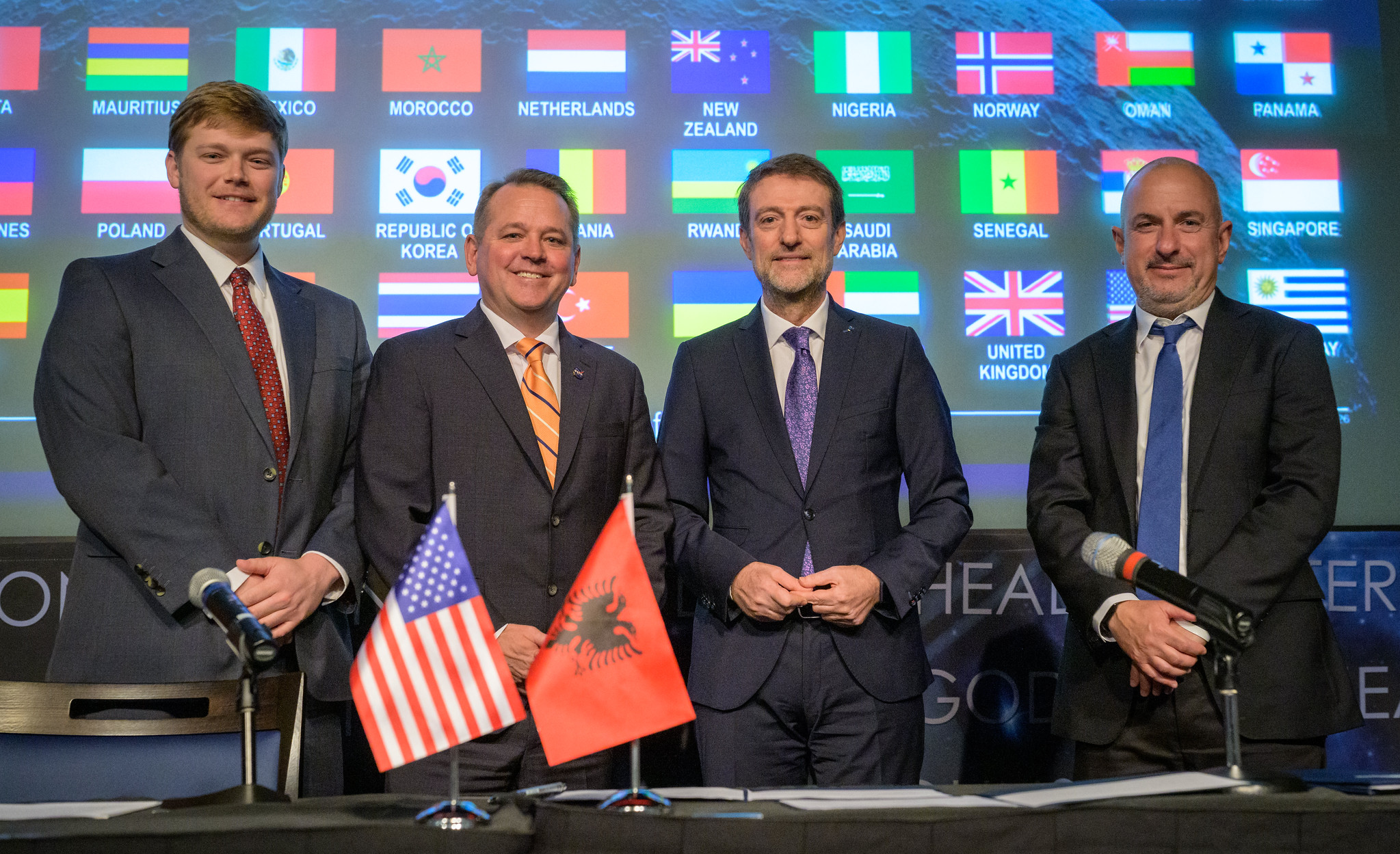
The Republic of Mauritius formally joined the Artemis Accords on July 17, 2026, during a signing ceremony held in the city of Ébène. With this step, Mauritius became both the 70th country to endorse the U.S.-led framework and the seventh African nation to do so. NASA Deputy Administrator Matt Anderson delivered video remarks for the occasion, welcoming the island state into what the agency describes as a global coalition for responsible space exploration.
Serbia had signed just one day earlier, on July 16, making the two adhesions nearly simultaneous. The Serbian case carries a geopolitical layer worth noting: the country had signed on to China and Russia's International Lunar Research Station project more than two years prior. Its decision to now also join the Artemis Accords reflects a broader trend among mid-sized spacefaring nations of maintaining ties with multiple blocs rather than committing to a single alignment.
First established in 2020 through a joint initiative by NASA and the U.S. State Department, the Artemis Accords set out a series of non-binding principles meant to guide responsible behavior in civil space activities. These include commitments to transparency, interoperability, scientific data sharing, protection of historic sites in space, and the use of safety zones around operations. In under six years, the framework has attracted signatures from every inhabited continent.
Artemis II crew meets the engineers behind Orion
On a different front, the four crew members of the Artemis II mission began a European tour on July 13, visiting the teams whose work directly supported their flight. The first stop was ESA's European Space Research and Technology Centre, known as ESTEC, located in Noordwijk in the Netherlands. The facility is where the European Service Module — the propulsion, power, and thermal control section of the Orion spacecraft — was designed, integrated, and tested.
The visit carried real weight for the engineers who spent years working on a component that the crew's safety depended on. ESA's contribution to Artemis II through the European Service Module represents the most operationally significant European involvement in the program to date, and the post-mission tour offered a rare face-to-face moment between the people who flew and the people who built the hardware.
Diplomatic momentum alongside operational progress
Taken together, these developments point to a program advancing on two parallel tracks. Diplomatically, reaching 70 Artemis Accords signatories in under six years is a measurable expansion of the framework's reach, even if several major space actors — including China, Russia, and India — remain outside it. Operationally, the Artemis II crew's European tour underscores the multinational engineering effort that underpins each mission.
What remains an open question is whether the growing signatory count signals genuine alignment with the principles embedded in the Accords, or whether it more often reflects a pragmatic desire to stay engaged with Washington without closing doors elsewhere. Serbia's dual affiliation — present in both the Artemis and the Chinese-Russian lunar frameworks — suggests the two approaches are not mutually exclusive, and likely will not be as the competition for partners in space intensifies.