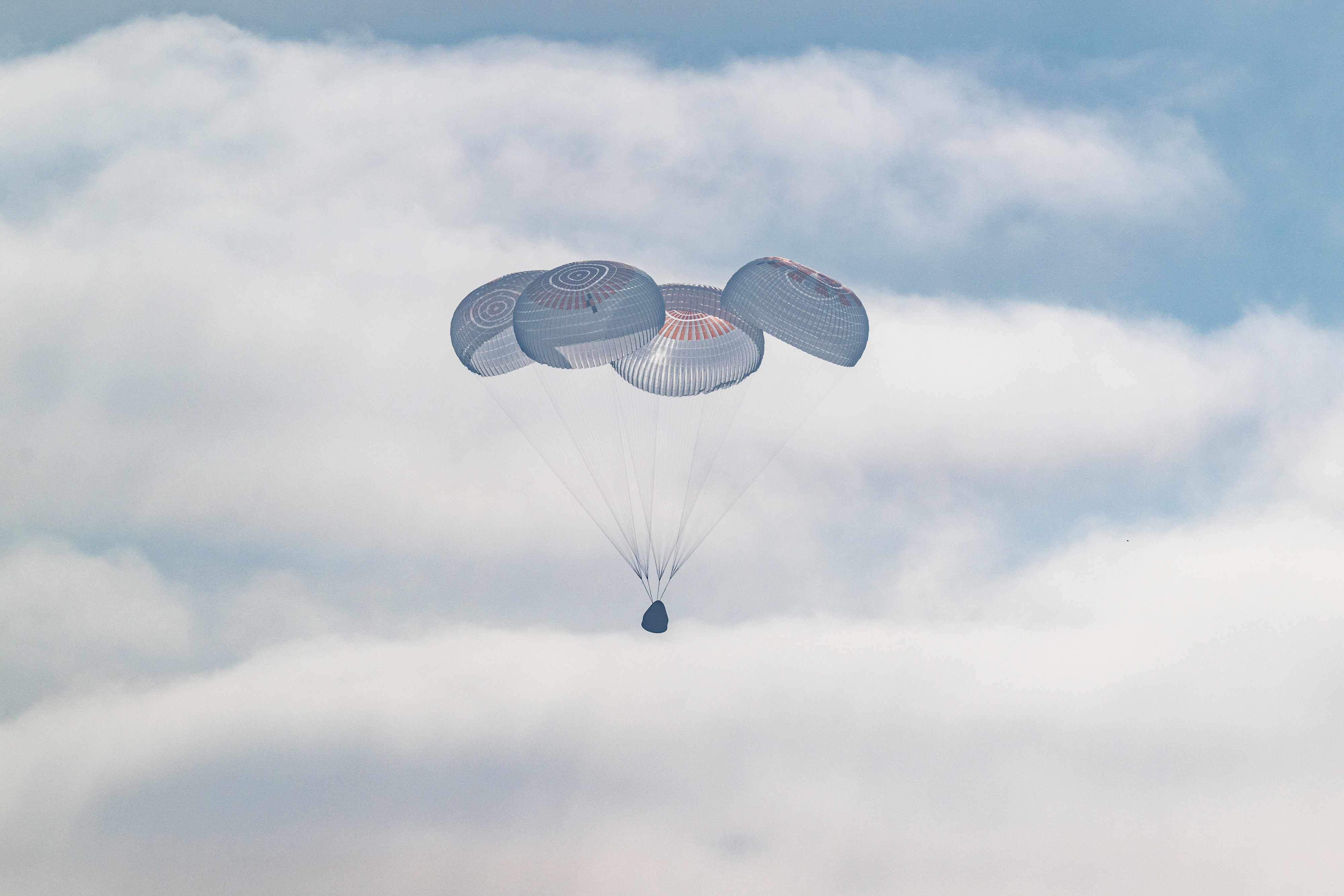
A Pacific landing ends a seven-month orbital posting
On October 8, 2026, the SpaceX Crew Dragon Freedom capsule touched down in the Pacific Ocean off the coast of California, bringing home the four crew members of NASA's Crew-12 mission. After spending 237 days aboard the International Space Station, the crew returned to Earth gravity following a mission marked by sustained scientific activity and seamless international cooperation.
The returning crew included NASA astronauts Jessica Meir and Jack Hathaway, ESA astronaut Sophie Adenot from the European Space Agency, and Roscosmos cosmonaut Andrey Fedyaev. The multinational makeup of the team reflects the enduring collaborative framework that has defined ISS operations since its earliest days.
Crew-13 already on board as the station stays busy
The handover was managed with the continuity that has become standard practice between NASA and SpaceX. Crew-13 had docked at the station roughly one week before Crew-12 departed, allowing for an overlap period during which outgoing and incoming crew members could exchange knowledge, brief each other on ongoing experiments, and ensure no scientific program was disrupted by the transition.
This handover model has proven effective across multiple rotations and keeps the station's research agenda running without interruption. During their time on board, the Crew-12 members contributed to investigations in areas including space biology, fluid physics under microgravity conditions, and Earth observation — a field in which ESA astronaut Sophie Adenot brought particular expertise developed through her European training program.
ESA and Roscosmos maintain active roles in low Earth orbit
The joint presence of a European Space Agency astronaut and a Russian cosmonaut on a single NASA-led mission is a detail worth noting, given the broader diplomatic pressures that have periodically strained relations between space agencies in recent years. Within the walls of the ISS, however, technical cooperation has remained largely intact, underpinned by bilateral and multilateral agreements that have so far outlasted the political turbulence surrounding them.
For Sophie Adenot, this mission represented her first long-duration spaceflight — a defining milestone in what may well be an extended career within ESA's astronaut corps. The European Space Agency continues to rotate crew members to the ISS under its agreements with NASA, signaling its sustained commitment to crewed operations in low Earth orbit ahead of future lunar and cislunar programs.
With Crew-12 safely home and Crew-13 now settled in for their own extended stay, the International Space Station continues to operate at full capacity — a reminder that, whatever the political weather, low Earth orbit remains the most active address in human spaceflight.