A targeted extension of ESA's Boost! programme
The European Space Agency (ESA) has signed a contract amendment with Rocket Factory Augsburg (RFA), the Augsburg-based launch vehicle startup, unlocking €2.7 million in additional co-funding. The support falls under ESA's Boost! initiative, a programme designed to nurture emerging European launch service providers by partially funding their development costs in exchange for defined technical milestones and reporting commitments.
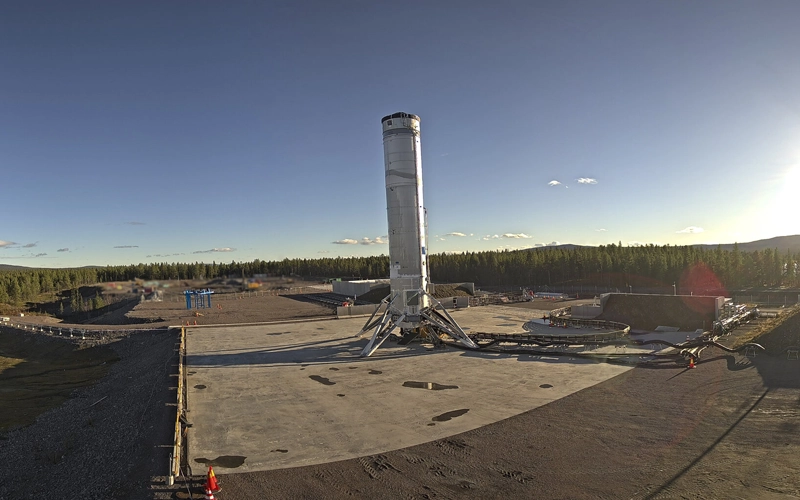
The funds are earmarked for expanding RFA's launch and test infrastructure at SaxaVord Spaceport on the Shetland Islands, off the northern tip of Scotland. According to ESA, the company is expected to use this injection to resume preparations for a static fire test of the RFA One first stage — a ground-level full-power engine ignition that keeps the rocket anchored to the pad and serves as one of the most demanding checkpoints before any attempt at orbital flight.
SaxaVord and the race for Britain's first orbital launch
SaxaVord is one of several launch sites that the United Kingdom has been developing under its ambition to host orbital launches from British soil. That ambition took a setback in early 2023 when Virgin Orbit failed to reach orbit on its sole UK mission, launched from Spaceport Cornwall. Since then, the field has shifted, and RFA has emerged as one of the more credible contenders for a first successful orbital liftoff from the UK.
The site's geography is a genuine asset: trajectories from Shetland are well-suited for polar and sun-synchronous orbits, which are in high demand for Earth observation and communications constellations. RFA One is being designed to carry up to 1,300 kilograms to low Earth orbit, powered at first stage by nine Helix engines running on liquid oxygen and kerosene. The company is targeting competitive per-launch pricing and high production cadence to carve out market share against established players like Rocket Lab and fellow European newcomers including Isar Aerospace.
ESA's deliberate strategy of backing multiple horses
This latest funding move reflects a conscious choice by ESA not to rely on a single commercial launch provider. While Arianespace continues to anchor Europe's institutional launch capacity with Ariane 6 — which has been building commercial flight frequency — the agency is simultaneously nurturing a handful of smaller ventures capable of serving different market segments, particularly dedicated rideshare missions for small satellites.
RFA had already received prior support through the Boost! programme; this September 2026 amendment signals that ESA remains confident in the company's industrial roadmap despite the inevitable delays that characterise early-stage rocket development. The extension is described as running through the pre-launch phase, positioning RFA One for what would be a significant milestone for European NewSpace.
No firm date for the static fire has been publicly announced. What is clear is that with fresh funding secured and infrastructure work resuming at SaxaVord, RFA is moving its timeline from paper to hardware — the only metric that ultimately matters in this industry.