A stellar nursery laid bare in infrared
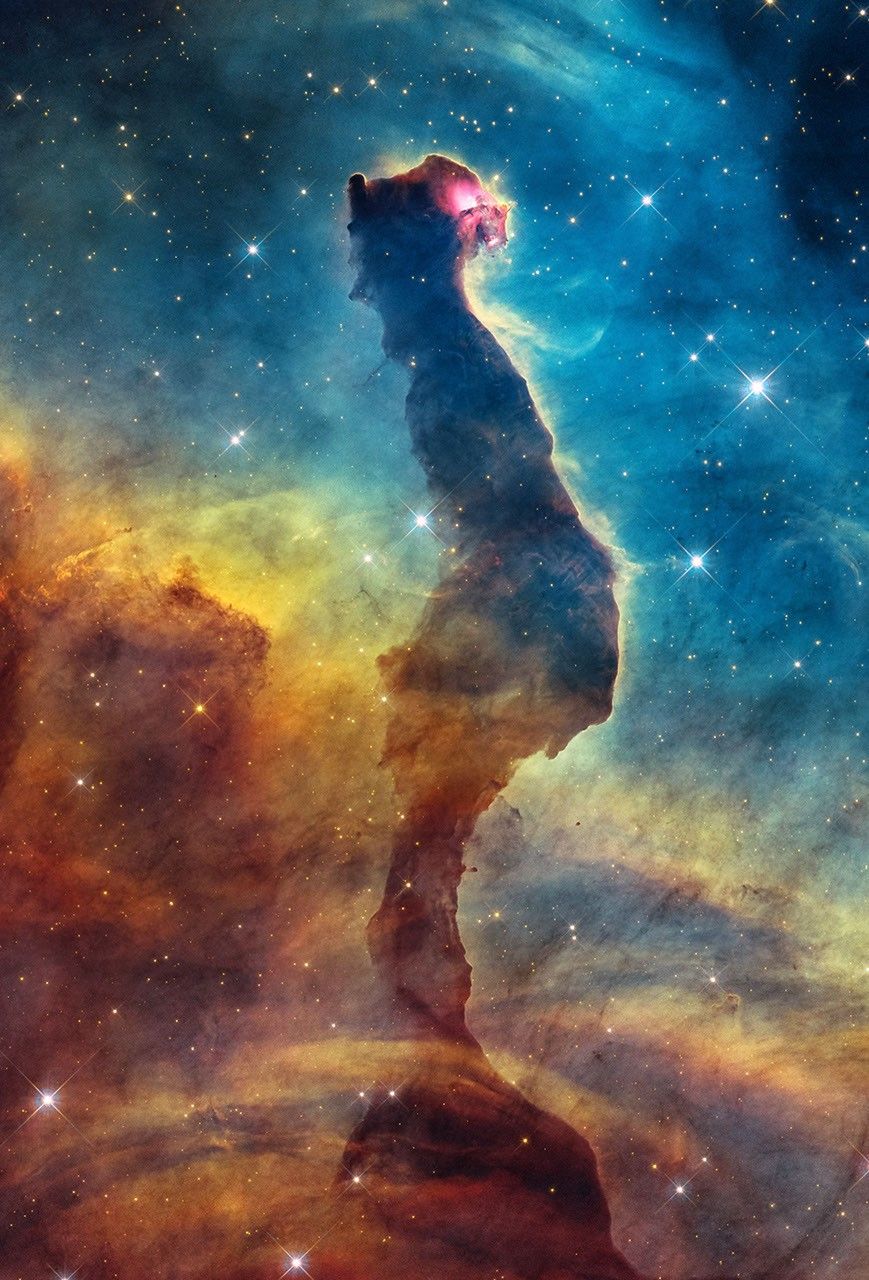
Tucked away in the constellation Cepheus, roughly 3,300 light-years from Earth, NGC 7129 is a dense molecular cloud teeming with young stars at various stages of formation. On November 16, 2026, NASA featured a new James Webb Space Telescope image of this region as its Astronomy Picture of the Day (APOD). The result is a detailed portrait of one of the sky's most active stellar nurseries, captured with a clarity that ground-based and earlier space observatories could not achieve.
The James Webb Space Telescope, a joint mission operated by NASA, ESA, and the Canadian Space Agency, sees the universe primarily in infrared wavelengths — a capability that proves essential when studying regions like NGC 7129, where thick curtains of dust block visible light almost entirely. Webb's instruments cut through that obscuring material to expose the intricate architecture beneath: glowing gas filaments, dusty envelopes surrounding newborn stars, and, most strikingly, narrow jets of material punching outward from several protostars.
What stellar jets reveal about planetary formation
Those jets are more than a visual centerpiece. They are among the most informative signatures astronomers can study when trying to understand how stars and planetary systems assemble themselves. As a protostar accumulates mass from its surrounding disk, it simultaneously expels material along its rotational poles in tightly collimated outflows. The velocity, chemical makeup, and geometry of these jets provide direct constraints on theoretical models of accretion — the process by which diffuse gas and dust collapse into a coherent stellar object.
NGC 7129 is particularly valuable because it appears to host protostars at several distinct evolutionary stages within the same field of view. That makes it possible for researchers to study the progression of star formation almost like reading chapters of the same book side by side. Data gathered by Webb on this region feeds into a broader NASA effort to map stellar nurseries across the Milky Way and determine how interactions between jets and their parent molecular cloud either suppress or trigger further star formation nearby.
Webb continues to expand the boundaries of astrophysics
Since beginning full science operations in late 2021, Webb has steadily transformed multiple fields of astrophysics, from characterizing the atmospheres of exoplanets to imaging galaxies from the universe's first few hundred million years. Images of star-forming regions like NGC 7129 add another dimension to that scientific output, addressing one of the discipline's most enduring questions: how do stars like the Sun form, and what conditions does that process create for the eventual emergence of planetary systems?
The APOD program, which NASA has run continuously since 1995, pairs each daily image with an explanation written by a professional astronomer, making frontier science accessible to a broad public audience. Three decades on, the program remains a trusted interface between research institutions and curious readers worldwide — and Webb is giving it some of its most compelling material yet.