Saturn at Its Best, and the Moon Beside the Pleiades
October opens with one of the most rewarding planetary events of the year: Saturn at opposition. When a planet reaches opposition, it sits directly opposite the Sun as seen from Earth, placing it closer to us and reflecting more sunlight than at any other point in its orbit. Even a modest backyard telescope will resolve the planet's ring system and, under steady skies, hint at the shadow the rings cast across Saturn's disk. NASA's skywatching guide for October 2026 highlights this as a prime window for planetary observers.
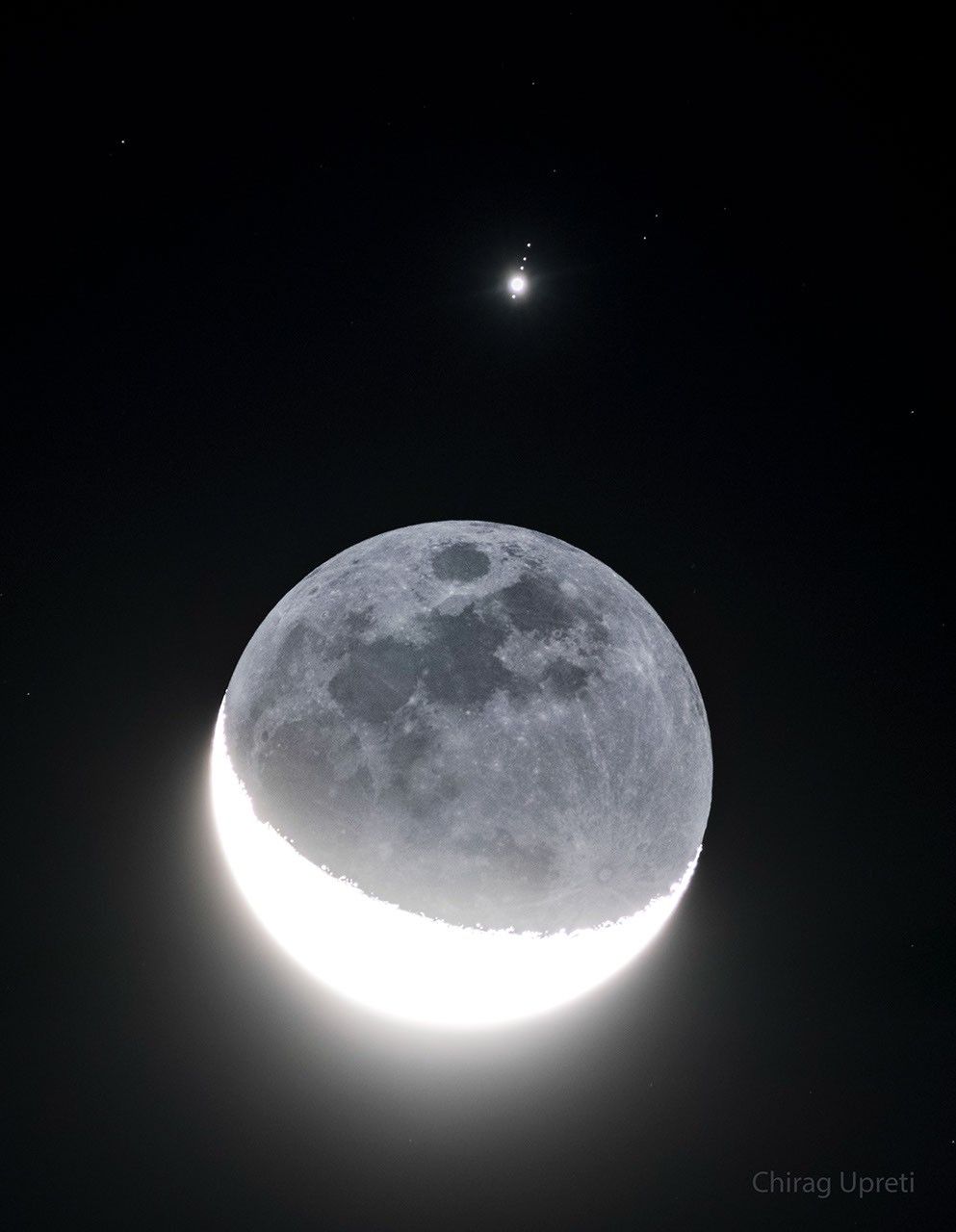
Adding to the month's visual appeal, the Moon makes a close pass near the Pleiades, the well-known open star cluster in Taurus sometimes called the Seven Sisters. The pairing is visible to the naked eye from the Northern Hemisphere and becomes genuinely photogenic through binoculars or a wide-angle camera lens mounted on a tripod. The contrast between the Moon's sharp, bright disk and the soft blue glow of the cluster is one of those alignments worth setting an alarm for.
The Orionid Meteor Shower Peaks Around October 21
Every autumn, Earth passes through the debris field left behind by Halley's Comet, producing the Orionid meteor shower. In 2026, activity is expected to peak near October 21, with rates of roughly twenty to twenty-five meteors per hour under dark, clear skies. The shower's radiant point lies within the constellation Orion, but individual meteors can streak across any part of the sky, so no particular direction is better than another.
NASA recommends moving well away from city lights, giving your eyes at least twenty minutes to adjust to darkness, and lying flat on your back to maximize your field of view. No optical equipment is needed — binoculars or a telescope actually narrow the field too much to be useful during a meteor shower. The Orionids are known for producing occasional bright, fast-moving meteors that sometimes leave glowing trails persisting for several seconds.
M104's Tidal Streams Rewrite the Sombrero's Past
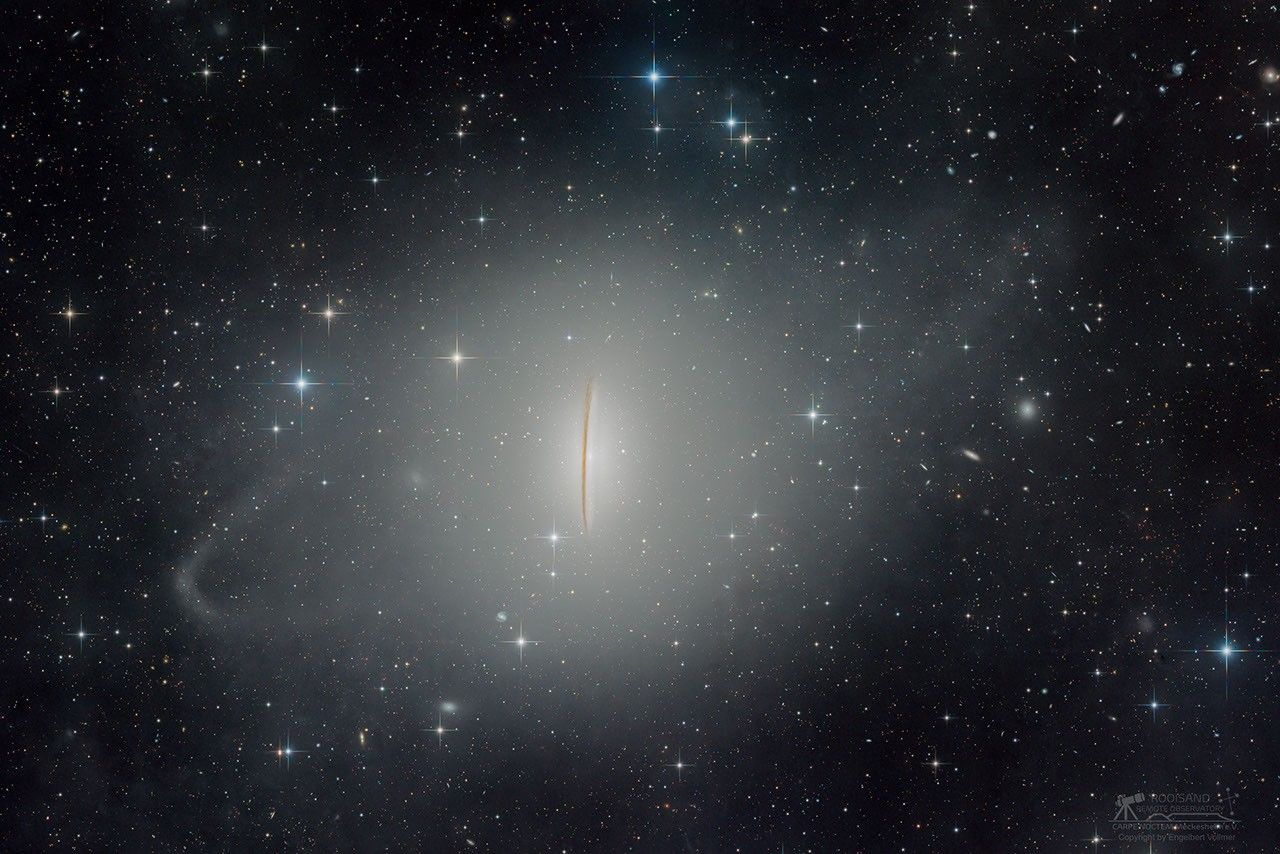
Beyond what's visible overhead, October 2026 brought a significant contribution to extragalactic astronomy. NASA's Astronomy Picture of the Day featured a deep image of Messier 104 — the Sombrero Galaxy — showing its tidal streams in remarkable detail. These extremely faint filaments of stars are the gravitational remnants of smaller satellite galaxies that M104 absorbed over billions of years.
Located roughly 28 million light-years away in the direction of the constellation Virgo, the Sombrero is already one of the most recognizable galaxies in the sky, defined by its prominent central bulge and the dark dust lane encircling it like a brim. But the tidal streams now visible around it suggest a more turbulent merger history than previously assumed. Detecting such low-surface-brightness structures requires exceptionally long exposure times and careful image processing to separate genuine signal from noise and instrumental artifacts.
The image serves as a reminder that even well-studied objects can still yield surprises when observed with sufficient depth. As imaging technology and data reduction techniques continue to improve, astronomers expect to find similar faint structures around many other nearby galaxies.
October 2026, then, offers two distinct but complementary experiences: the immediate, visceral pleasure of watching Saturn hang in a dark sky or catching a Halley-born streak of light, and the slower, more intellectual satisfaction of seeing a galaxy's hidden scars slowly come into focus. Both are worth your time.