Saturn at opposition: the ringed planet in its prime
Once a year, Saturn lines up directly opposite the Sun as seen from Earth, a configuration astronomers call opposition. In October 2026, this geometry means the planet is above the horizon all night long, rising at sunset and setting at dawn. At opposition, Saturn also sits at its closest point to Earth for the year, making it appear brighter and slightly larger through any telescope than at any other time.
Even a modest backyard telescope is enough to reveal the iconic ring system, which is tilted at a favorable angle this year. NASA suggests looking south in the early evening hours for the best view. Observers with binoculars will notice that Saturn shows a clearly flattened disk rather than the pinpoint of a star, a simple but striking distinction.
The Orionid meteor shower: Halley's legacy lights up the sky
Running from mid-October through the final days of the month, the Orionid meteor shower is one of autumn's most reliable celestial displays. These meteors are produced when Earth's orbit carries it through a trail of debris shed by Halley's Comet over countless centuries. The particles strike the upper atmosphere at roughly 66 kilometers per second, generating some of the fastest and brightest streaks of any annual shower.
The shower is expected to reach its peak around October 21. Under favorable conditions — a clear sky away from city lights and with the Moon setting early — observers can reasonably expect to count around 20 meteors per hour. The radiant point lies within the constellation Orion, but individual meteors can appear anywhere across the sky. No equipment is needed; dark-adapted eyes are the only requirement.
The Moon visits the Seven Sisters
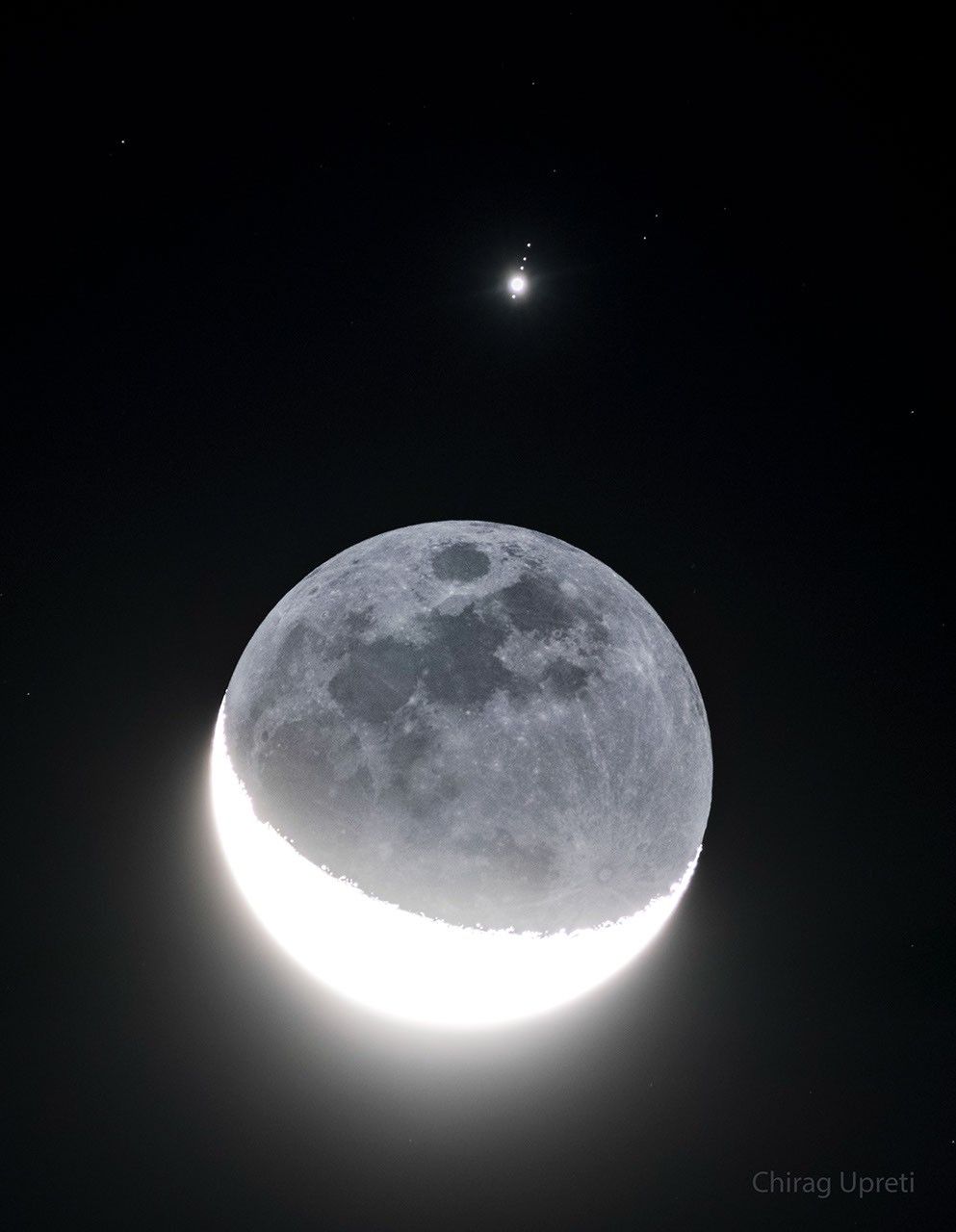
October 2026 also brings a visually striking close approach between the Moon and the Pleiades, an open star cluster in the constellation Taurus. Commonly known as the Seven Sisters, the Pleiades contains several hundred young, blue-white stars, a handful of which are visible to the naked eye under a reasonably dark sky.
As the Moon passes near this cluster during its monthly journey across the sky, the juxtaposition of the bright lunar disk and the delicate web of surrounding stars creates a compelling scene. Astrophotographers equipped with a tripod, a wide-angle lens, and a camera set to a high ISO should find this conjunction a rewarding target.
Taken together, these three events — a planetary opposition, a meteor shower, and a lunar close approach — make October 2026 an unusually rich month for anyone willing to spend time under the open sky. NASA publishes its skywatching tips monthly through its solar system exploration portal, providing free and accessible guidance for both casual observers and dedicated amateur astronomers. No rocket required.