SpaceX bolsters the Pentagon's low-orbit data network
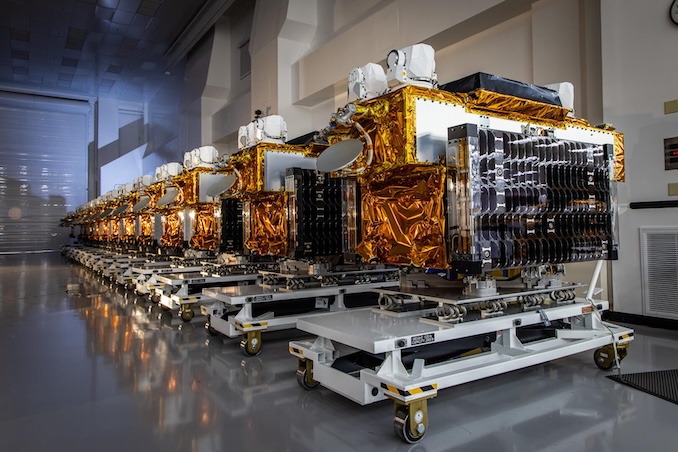
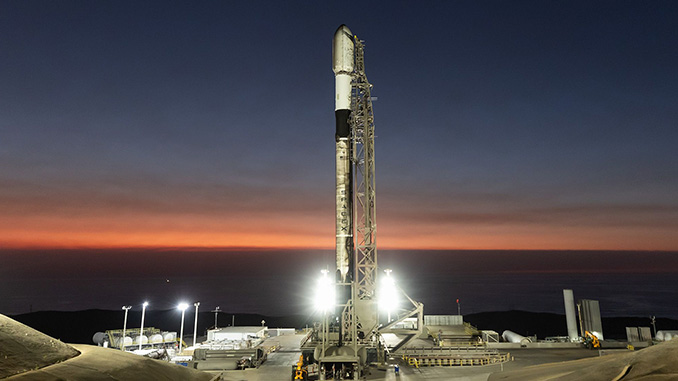
A SpaceX Falcon 9 rocket lifted off from Space Launch Complex 4E at Vandenberg Space Force Base in California at 1:17 a.m. PDT on October 5, carrying 21 data transport satellites on behalf of the Space Development Agency (SDA). The mission, formally known as Tranche 1 Transporter Layer A, represents the fourth dedicated flight supporting the Proliferated Warfighter Space Architecture (PWSA), the SDA's flagship orbital program.
The transport layer — distinct from the agency's separate tracking layer — is designed to relay data between sensors, decision-makers and ground-based warfighters at low latency. Rather than relying on a small number of large, expensive satellites, the SDA has deliberately pursued a proliferated approach: dozens of smaller spacecraft spread across low Earth orbit, reducing single points of failure and increasing overall system resilience.
SpaceX has become the primary launch partner for this effort, its Falcon 9 production tempo and launch cadence making it well-suited to place large batches of small satellites in orbit on a recurring basis. With this fourth flight completed, the PWSA constellation continues to grow toward operational density.
South Korea and China in the queue
The American military launch was not the only event on this week's manifest. Both South Korea and China were listed as planning orbital missions in the days ahead, reinforcing the increasingly global nature of the launch business.
Seoul has been steadily building its independent launch capability through the Nuri rocket (KSLV-II), developed by the Korea Aerospace Research Institute (KARI). Each successful flight adds to the country's technical credibility and reduces its dependence on foreign launch providers for future government and commercial payloads.
China, meanwhile, continues to sustain one of the world's most active launch schedules, with the China National Space Administration (CNSA) and state-affiliated industrial partners supporting a wide range of missions — from Guowang broadband constellation replenishment to Earth observation and technology demonstration flights. Precise mission details for both the South Korean and Chinese launches had not been officially confirmed at press time.
A global cadence that keeps accelerating
Taken together, this week's slate of missions reflects a broader structural shift in the space industry. The barrier to orbit has lowered significantly over the past decade, and the number of nations and organizations capable of conducting launches on a regular, self-sufficient basis continues to rise. Rocket Lab, Arianespace, ISRO and JAXA all maintain active calendars alongside the headline players.
The expansion of military constellations like the PWSA also raises questions that go beyond logistics. As low Earth orbit becomes increasingly populated with defense-oriented infrastructure, the geopolitical dynamics of space are shifting in ways that will take years to fully understand. Each launch adds another piece to a picture that is still very much being drawn.