Venus and the Moon lead a planetary parade
September 2026 opens with Venus commanding attention in the evening sky. The planet is reaching a particularly high level of brightness this month, making it the most luminous object visible to the naked eye after sunset — outshining every star and rivaling aircraft lights for anyone unfamiliar with the night sky. It is the kind of presence that turns a casual glance upward into a genuine moment of curiosity.
The Moon, meanwhile, serves as a reliable guide through the month's highlights. As it tracks through Scorpius, it passes close to Antares, the red supergiant that anchors the constellation's heart and gives it its distinctive reddish glow. A few nights later, the Moon drifts toward the Teapot, the well-known asterism within Sagittarius whose spout points roughly toward the galactic center. These temporary alignments make September an excellent opportunity for introducing newcomers to the basic landmarks of the southern sky.
NASA's public outreach program has released its monthly skywatching guide to help general audiences take advantage of these events. The agency's guidance is notably accessible: most of what September has to offer requires nothing more than a clear horizon and a pair of binoculars. Patience, as always, remains the most essential piece of equipment.
The Harvest Moon rises near ringed worlds
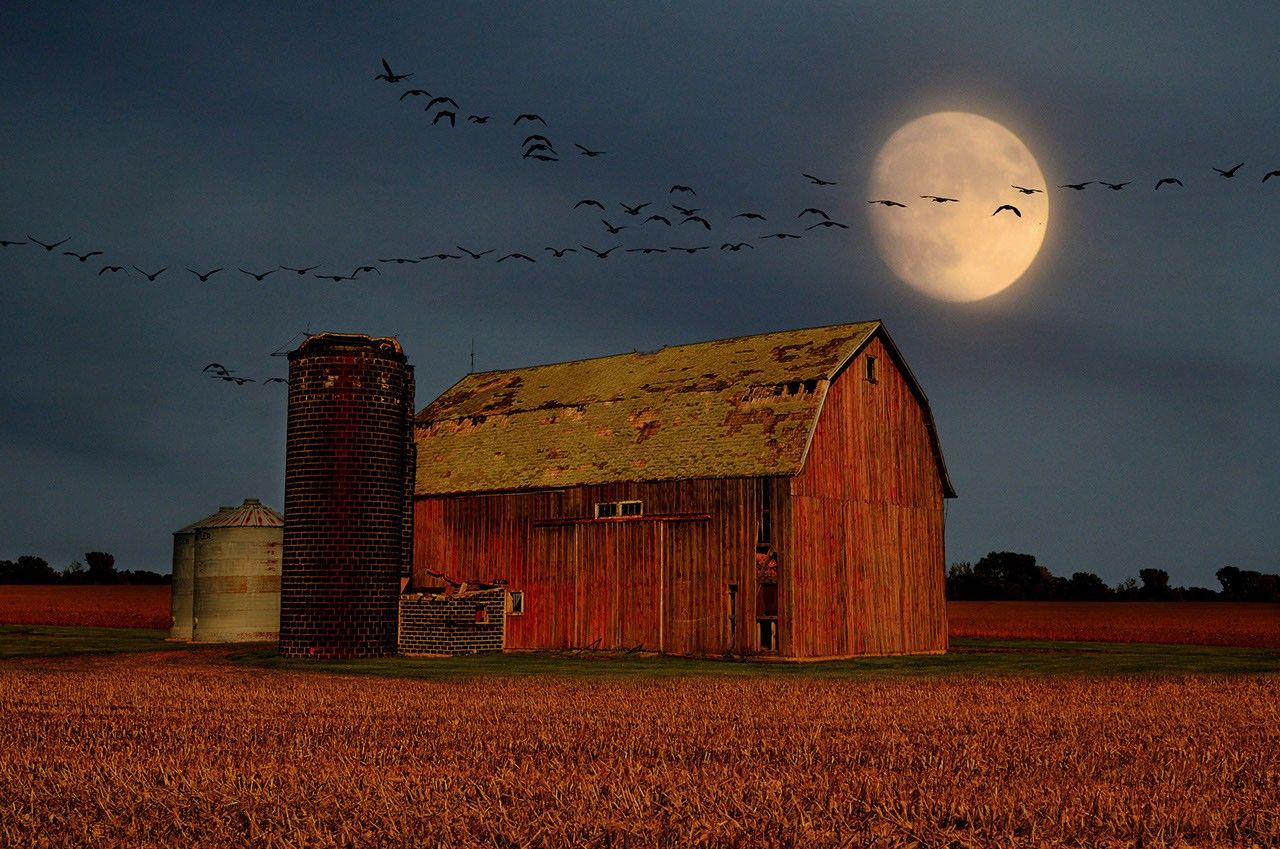
The undisputed centerpiece of the month is the Harvest Moon. This full Moon — defined as the one occurring closest to the autumnal equinox in the Northern Hemisphere — carries its name from an agricultural tradition: its early rising and extended visibility once gave farmers extra hours of natural light to work their fields after sunset. In 2026, the Harvest Moon rises in particularly good company.
Saturn appears nearby in the sky, recognizable by its steady golden hue and its refusal to twinkle, a reliable way to distinguish planets from stars. It is visible without any optical aid. Neptune, much dimmer, sits at the very edge of naked-eye perception and benefits considerably from binoculars or a small telescope. Its proximity to the Harvest Moon on these evenings gives observers an easy excuse to sweep that region of the sky with an instrument.
On September 1st, NASA's Astronomy Picture of the Day featured a striking image of a lunar eclipse photographed from a commercial aircraft in flight. The unusual vantage point — high above weather and atmospheric distortion — produced an image that combined scientific documentation with a genuinely rare compositional perspective. The alignment of flight path and eclipse geometry was, by all accounts, fortuitous.
The equinox and the policy backdrop
The autumnal equinox falls within September, marking the point at which the Sun crosses the celestial equator moving southward. On that date, day and night reach near-equal length across the entire planet before nights begin to grow noticeably longer at northern latitudes. It is a moment that space agencies and educational institutions often use to revisit the mechanics of Earth's axial tilt and its consequences for seasons — a foundational piece of planetary science with direct relevance to climate and agriculture.
Beyond the sky itself, the week of August 30 through September 5, 2026 carried several significant items on the U.S. space policy calendar, according to SpacePolicyOnline's weekly tracker. With the House of Representatives in session, various budget and regulatory discussions bearing on NASA's programs were in progress. The outcomes of those deliberations shape everything from deep-space mission funding to the public education initiatives that help people make sense of what they are seeing overhead.
For the casual observer, though, September 2026 needs no political rationale. Step outside after dark. The sky makes its own case.