Introducing a new SpaceX vehicle
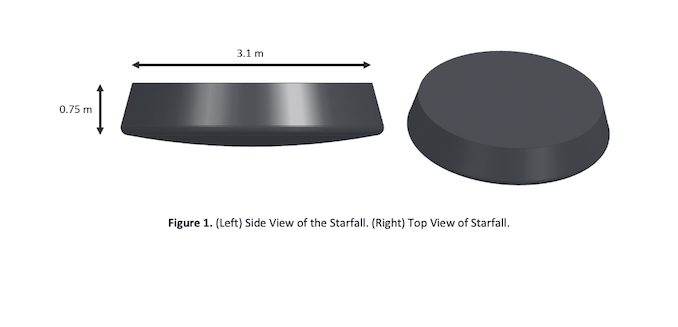
On June 23, 2026, a SpaceX Falcon 9 rocket lifted off from Launch Complex 40 at Cape Canaveral Space Force Station at 10:43 UTC, carrying a spacecraft that had never flown before: Starfall. Developed entirely in-house by SpaceX, this reentry capsule weighs approximately 2,100 kilograms and represents the company's first foray into a dedicated orbital return vehicle distinct from its Dragon spacecraft. The mission marks a deliberate step toward broadening SpaceX's commercial service portfolio.
Starfall is not designed to carry astronauts. Rather, it is a cargo return platform built to bring payloads — scientific experiments, manufactured goods, or sensitive equipment — back from orbit under controlled conditions. The target market is the orbital return services segment, which remains underdeveloped relative to growing demand from commercial space station operators and microgravity research clients.
What the demonstration aims to validate
A demonstration flight of this nature pursues several technical goals at once. Chief among them is validating the capsule's thermal behavior during atmospheric reentry, a phase that subjects any vehicle to intense heat loads and rapid deceleration. The integrity of the heat shield, the accuracy of the descent trajectory, and the reliability of the final recovery system are all critical data points that SpaceX engineers will scrutinize from this inaugural flight.
SpaceX has not disclosed detailed information about the specific payload configuration carried aboard Starfall for this demonstration, nor has the company confirmed the exact recovery method — whether splashdown or a land-based retrieval — that will be used. Those details are expected to emerge as the program matures toward operational status.
The flight comes as competition in the orbital return segment quietly intensifies. Varda Space Industries has already conducted reentry missions using Rocket Lab's reentry capsule, while several European initiatives are advancing development programs of their own. By introducing Starfall, SpaceX is positioning itself to capture a share of what many industry analysts consider an underserved but growing market.
Broader implications for commercial spaceflight
Should this demonstration yield positive results, Starfall could eventually slot into regular logistics cycles supporting commercial stations such as those being developed by Axiom Space or Vast. The ability to routinely return experiments from low Earth orbit is widely regarded as one of the key operational requirements for making future commercial outposts economically viable.
That said, a single demonstration flight does not constitute full qualification for high-frequency, high-value return missions. SpaceX will likely need to complete additional validation flights before Starfall can be offered as a reliable commercial service. The parallel is instructive: Dragon began as a cargo demonstrator before evolving into one of the most trusted vehicles in the industry. Whether Starfall follows a similar arc remains to be seen, but the foundation laid on Tuesday is a credible starting point.