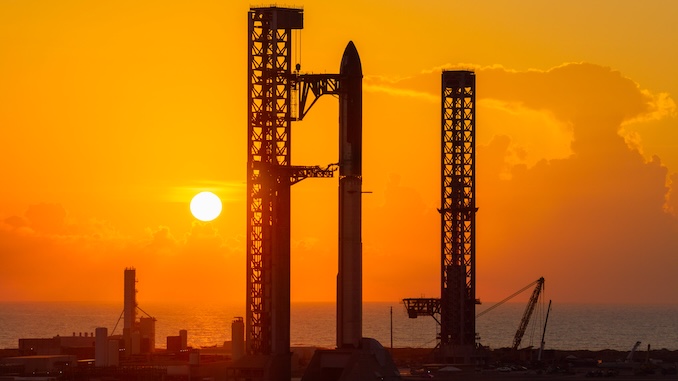
The Integrated Stack Takes Shape at Starbase
SpaceX transported Ship 41 to Launch Pad 2 at Starbase in South Texas, where it was stacked atop Super Heavy Booster 21 to form the fully integrated Starship launch system. Standing well over a hundred meters tall and generating thrust figures that surpass any rocket previously flown, the assembled vehicle represents the most capable launch system ever brought to a pad. The rollout marks the final major hardware milestone before a launch attempt can be made.
One detail drew particular attention from the observer community: Ship 41 arrived at the pad carrying two heat shield tiles previously flown on Ship 40. Far from a symbolic gesture, this reflects SpaceX's broader reuse philosophy for the Starship program. Flying tiles that have already survived the thermal and mechanical stress of atmospheric reentry allows engineers to gather real-world data on how the thermal protection system holds up across multiple missions — a key requirement for any vehicle intended to fly repeatedly.
Late September Target, FAA Approval Pending
SpaceX has set a launch target of no earlier than September 28, 2026, contingent on receiving a launch license from the Federal Aviation Administration. The FAA's review process — which encompasses safety, environmental impact, and compliance assessments — has historically introduced delays to the Starship schedule, and no final authorization had been publicly confirmed at the time of publication. The agency's decision remains the primary variable outside SpaceX's direct control as the window approaches.
This flight is categorically different from the previous Starship test campaigns. Earlier attempts, some of which ended in planned or unplanned vehicle loss, were designed to validate discrete phases of the flight profile. The upcoming mission targets a complete orbital trajectory, encompassing stage separation, orbital insertion, controlled reentry of the Ship, and — depending on mission objectives — attempted recovery of the Super Heavy booster at the launch site.
A Busy Week Across the Launch Industry
The Starship attempt is not the only significant event on the manifest. The same week saw SpaceX planning multiple Falcon 9 missions, while Rocket Lab had an Electron launch queued up as well. With five orbital launches scheduled within a single seven-day window, the sheer operational tempo reflects how dramatically the commercial space sector has matured over the past decade.
For SpaceX, a successful orbital Starship flight would validate the entire architecture underpinning some of the company's most consequential commitments: the NASA Human Landing System contract that requires Starship to land astronauts on the Moon, the deployment of next-generation Starlink batches to low Earth orbit, and the long-term vision of crewed missions to Mars. Whatever happens on or after September 28, the stakes extend well beyond a single launch date.