Two pads, two coasts, one well-oiled machine
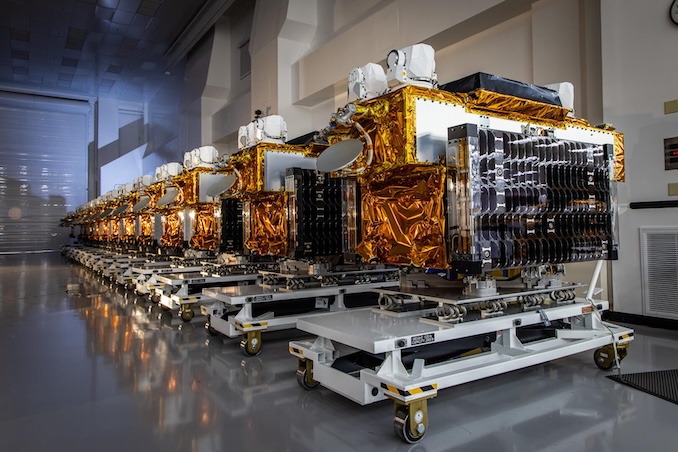
June 3, 2026 offers a vivid snapshot of just how industrialized Starlink deployment has become. SpaceX has two Falcon 9 rockets on the schedule within a single morning: the first lifting off from Launch Complex 40 at Cape Canaveral Space Force Station in Florida at 6:11 a.m. EDT (1011 UTC), the second rising from Space Launch Complex 4E at Vandenberg Space Force Base in California at 7:36 a.m. PDT (1436 UTC). Between the two missions, 53 additional Starlink satellites are set to reach low Earth orbit before noon on the West Coast.
The Florida flight, designated Starlink 10-43, follows a north-easterly trajectory suited to the orbital shells typically populated from the Eastern Range. Out at Vandenberg, Starlink 17-47 heads southward on a path consistent with the higher-inclination orbits serviced from California. Each satellite slotting into its designated shell adds another layer of capacity to the broadband network SpaceX has been selling commercially under the Starlink brand for several years.
A 200th drone ship landing — routine achievement, meaningful number
Beyond its payload, the Vandenberg mission carries a specific operational footnote. SpaceX is targeting its 200th landing aboard the autonomous spaceport drone ship Of Course I Still Love You, stationed in the Pacific to catch first stages returning from California launches. Reaching that figure — assuming the recovery goes as planned — underlines how thoroughly the company has normalized a technique that looked experimental when it first worked in April 2016.
Booster recovery is the economic backbone of SpaceX's launch model. A single first stage can fly 20 or more missions, compressing the cost per kilogram to orbit in ways that no competitor has yet matched at scale. That cost structure is what enables the company to sustain launch frequencies that would have seemed implausible even five years ago — and it is what keeps Starlink's unit economics viable as the constellation grows toward its licensed capacity of tens of thousands of satellites.
A launch week shaped by internet satellite rivalry
The two SpaceX missions do not stand alone. The week of June 1, 2026 features at least six orbital launches from five sites worldwide, with Chinese operators filling much of the remaining manifest alongside SpaceX. China's own megaconstellation programs — including initiatives such as Qianfan and Guowang — are accelerating their deployment schedules, adding satellites to low Earth orbit on a trajectory that closes the numerical gap with Starlink quarter by quarter.
The broader picture is one of structural competition, not merely a satellite count contest. Sovereign, affordable broadband connectivity from space has become a strategic priority for governments and a commercial battleground for private operators simultaneously. SpaceX holds a substantial lead in operational satellites and active coverage, but the pace of Chinese launches is rising steadily, and the geopolitical stakes attached to who controls the orbital high ground are growing accordingly.
In isolation, a Tuesday morning with two Falcon 9s heading skyward from opposite ends of the country might not make headlines. Taken in context, it is a precise measure of where the space launch industry stands in 2026 — and of how far the distance is between the current leaders and everyone else.