Satellites built, rockets scarce
Amazon finds itself in a paradoxical position: its Kuiper broadband constellation is rolling off the production line faster than the global launch industry can handle. According to reports, the company currently has hundreds of satellites waiting for a ride to orbit, with no immediate solution to absorb that backlog at the pace Amazon requires.
The Kuiper program aims to deliver high-speed internet from low Earth orbit, in direct competition with SpaceX's Starlink. Amazon has secured launch agreements with multiple providers — including SpaceX, United Launch Alliance, and Arianespace — but the combined manifest still falls short of what is needed to meet the constellation's deployment schedule. The bottleneck is not a manufacturing problem; it is a launch market problem.
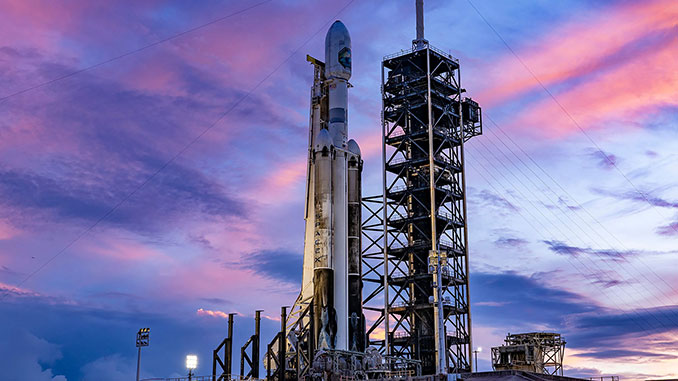
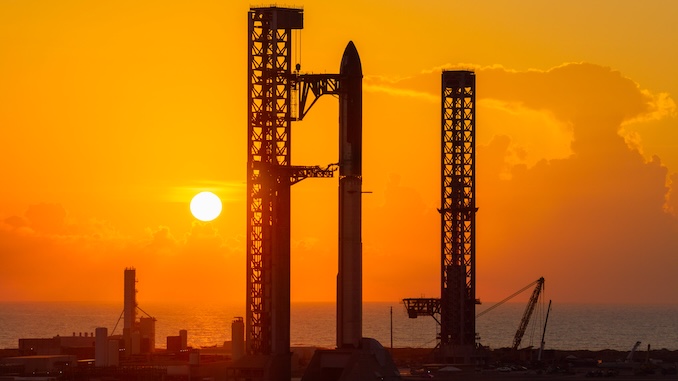
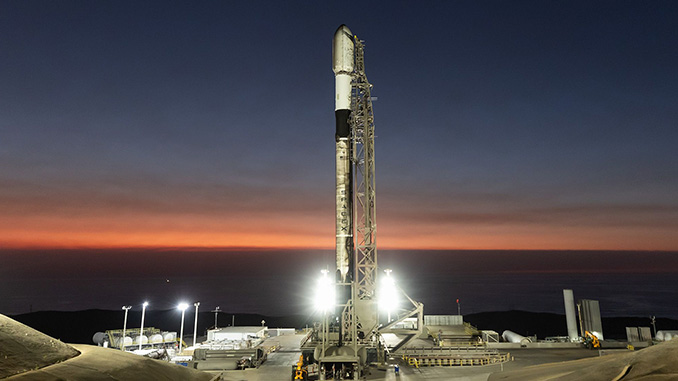
This situation reflects a broader tension across the industry. As satellite production scales up, driven by both commercial ambitions and institutional programs, the supply of available launch slots has not kept pace. SpaceX's Falcon 9 has set a high bar for launch cadence through reusability, but even that vehicle is stretched across Starlink's own replenishment needs and third-party customers.
Arianespace weathers a labor dispute at Kourou
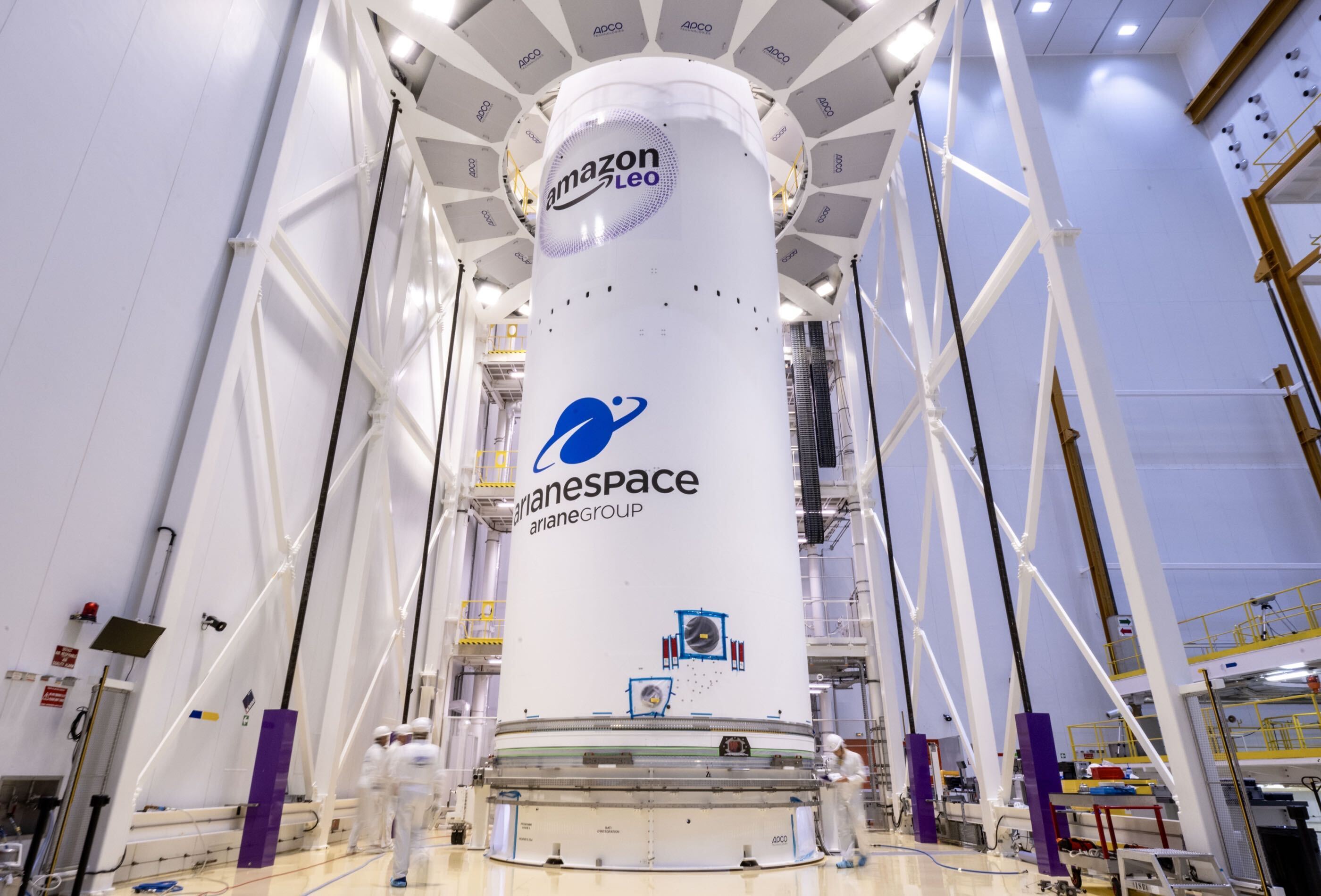
Against this backdrop, Arianespace's role in the Kuiper manifest carries real weight. On June 14, the Union of Guyanese Workers, known as the UTG, filed notice of an indefinite general strike, leading to blockades at the entrances of the Guiana Space Centre in Kourou. The timing raised immediate questions about the upcoming Ariane 6 mission.
Arianespace CEO David Cavaillolès moved quickly to reassure stakeholders: the labor dispute was resolved without disrupting launch preparations, and the scheduled Ariane 6 flight would proceed as planned. The speed of that resolution matters — not just for this particular mission, but for Arianespace's standing as a reliable commercial operator at a time when Amazon and others are evaluating where to place their next contracts.
Observers close to the Kuiper program have noted that Arianespace has «definitely stepped up» in recent months, a notable shift in tone compared to the difficult early phase of Ariane 6's commercial debut, which only began in 2024 following years of development delays.
A market under structural strain
Amazon's predicament is unlikely to be unique for long. Eutelsat's OneWeb constellation, various ISRO and JAXA-backed initiatives, and a growing number of government procurement programs are all competing for the same finite pool of launch vehicles. Rocket Lab's Neutron and other mid-size launchers under development could eventually ease the pressure, but none are operational today.
For Europe, Ariane 6 represents both a strategic asset — sovereign access to space — and a commercial opportunity. If Arianespace can sustain and increase its launch cadence, the vehicle is well-positioned to capture a larger share of the Kuiper manifest and similar large-constellation contracts. Whether Kourou's operational rhythm can match those ambitions remains the central question.
The swift end to the Guiana strike is an encouraging sign for the site's reliability. But the structural imbalance between satellite production rates and launch capacity will not resolve itself through goodwill alone. The industry has a building problem, and the solutions are still years away.