Three Milestones, One Rover
Late August and early September 2026 proved to be an unusually eventful stretch for NASA's Curiosity rover. Within the space of a few weeks, the spacecraft surpassed its 5,000th sol on the Martian surface, marked fourteen years since its landing in Gale Crater on August 6, 2012, and crossed the one-kilometer elevation threshold above its touchdown point. Each of these figures carries its own weight, but taken together they underline just how far this mission has traveled — in every sense of the word.
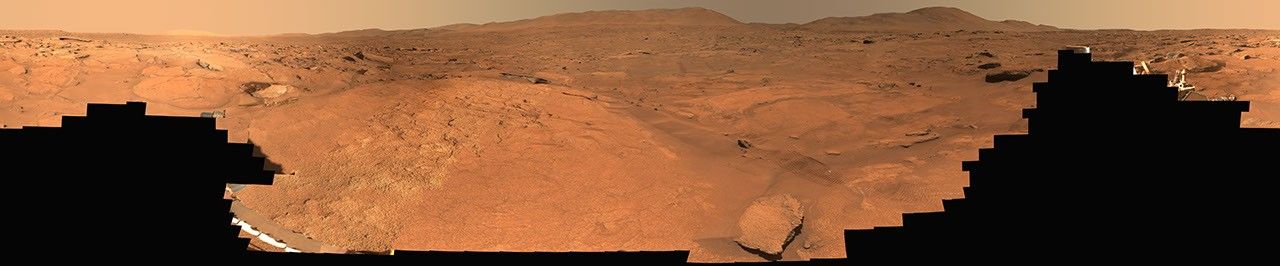
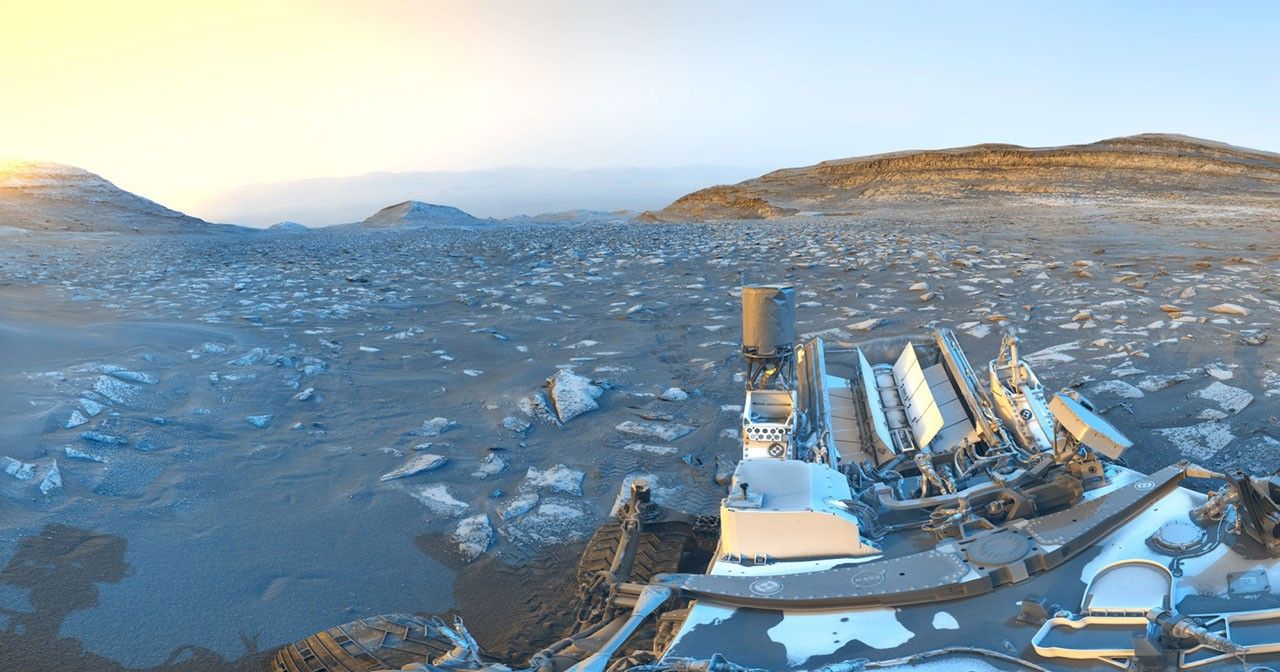
To commemorate the occasion, the team chose an approach that was equal parts scientific and aesthetic. While parked at a sand ridge the crew had informally named Chocolatal, Curiosity used its black-and-white navigation cameras to shoot panoramas at two distinct moments in the Martian day: the first on August 30, 2026, at roughly 9:56 a.m. local Mars time, and the second on September 2 at around 5:39 p.m. The pair of images functions as a kind of dual postcard, showing how dramatically the low morning light and the warmer late-afternoon glow can transform the appearance of the same stretch of desert terrain.
What One Kilometer of Climbing Actually Means
Among the three milestones, the elevation gain may be the one that resonates most directly with researchers. Since leaving the flat floor of Gale Crater, Curiosity has been steadily ascending the lower flanks of Mount Sharp — formally known as Aeolis Mons — a layered mound whose sedimentary strata serve as a geological record of Mars's ancient past. Each meter of altitude brings the rover into rock formations deposited during progressively different eras, widening the timeline the science team can study.
Benjamin Tutolo, a professor at the University of Calgary who contributes to mission planning, noted in recent mission logs that these commemorative moments, meaningful as they are, sit within a much more demanding day-to-day reality. Planning each sequence of activities for Curiosity remains a careful balancing act. During the sols surrounding the 5,000-day mark, the team was working to characterize wind-blown sediments in the area, requiring constant trade-offs between the rover's various scientific instruments and the available power and time budgets.
A Mission That Keeps Redefining Robotic Longevity
Curiosity was originally designed for a two-year prime mission. That it continues to operate, collect atmospheric data, drill rock samples, and return imagery more than fourteen years later is largely attributable to its power source: a radioisotope thermoelectric generator fueled by the decay of plutonium-238, which frees the rover from dependence on sunlight in ways that solar-powered predecessors like Opportunity were not.
Engineers at NASA's Jet Propulsion Laboratory in Pasadena continue to monitor the rover's systems closely. Some components show the expected signs of wear after years of operation in a cold, dusty environment, but Curiosity retains enough capability to keep contributing scientifically meaningful results. How high it will ultimately climb on Mount Sharp remains an open question — one that may not be answered for several thousand sols yet to come.