An Unexpected Find Written in Rock
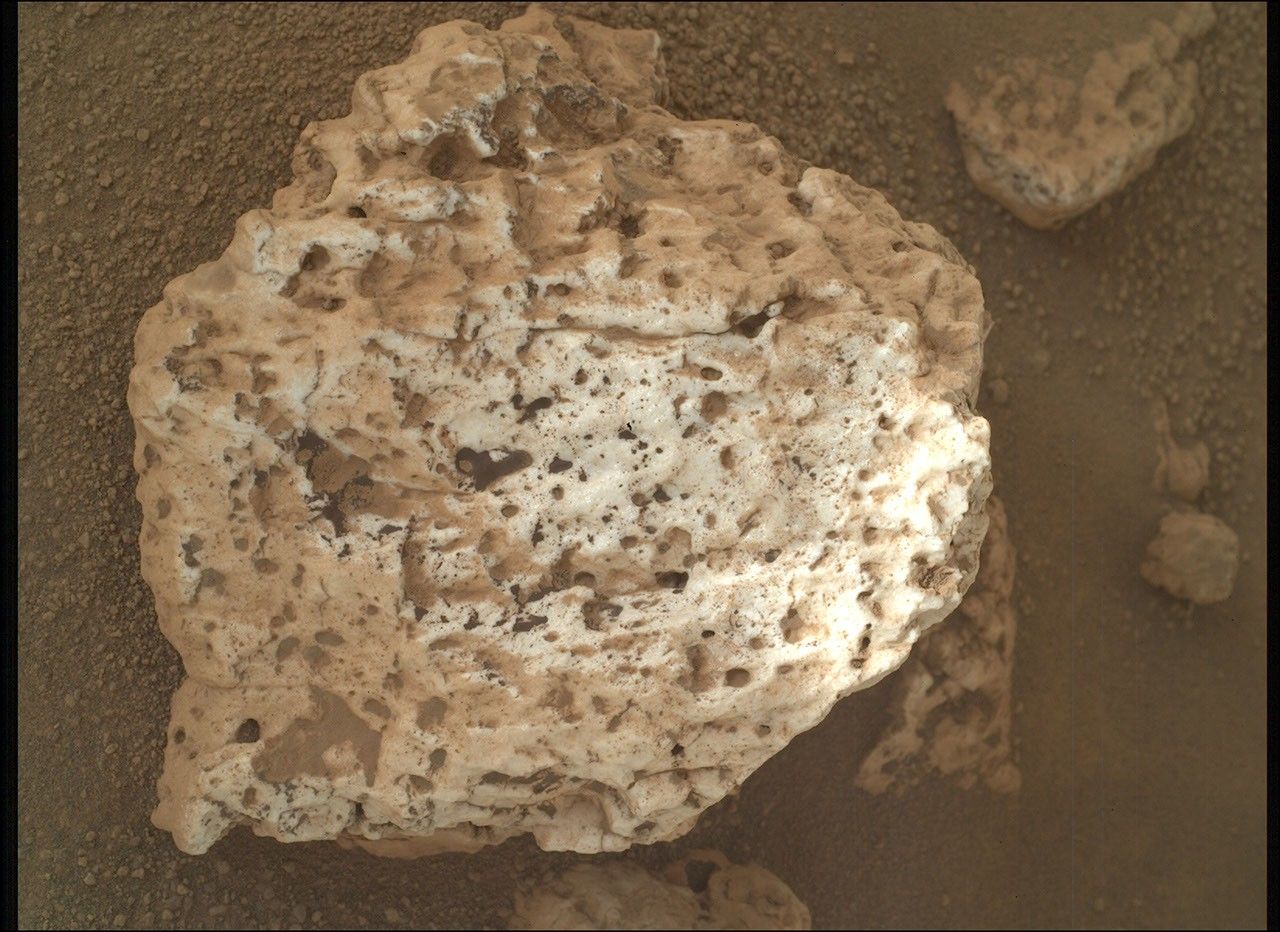
Mars has a long history of defying expectations, and a discovery announced in early November 2026 adds another chapter to that story. Roger C. Wiens, a researcher at Purdue University and the principal investigator for the SuperCam instrument aboard NASA's Perseverance rover, reported the detection of unusual chemical signatures in ancient rock formations on the Martian surface. Those signatures are consistent with minerals belonging to the corundum family — the same mineral group that includes rubies and sapphires here on Earth.
The find is a direct product of Perseverance's carefully chosen instrument suite. SuperCam fires laser pulses at rock targets and reads their elemental composition through spectroscopic analysis, while PIXL (Planetary Instrument for X-ray Lithochemistry) maps surface chemistry at the scale of individual grains. Working in tandem, the two tools identified signatures that neither instrument could have pinpointed alone.
What These Minerals Could Tell Us About Mars's Deep Past
On Earth, corundum forms under very specific geological conditions: high temperatures, elevated pressures, and silica-poor environments. Its potential presence on Mars therefore raises meaningful questions about the internal processes that shaped the Martian crust billions of years ago. Metamorphic or plutonic activity could be implicated — conditions that, if confirmed, would substantially broaden the known range of geological processes that operated on the red planet.
Caution is warranted, however. The data collected by Perseverance point strongly in this direction, but definitive identification would require laboratory analysis back on Earth. That is precisely the kind of work planned for the Mars Sample Return campaign, a joint effort by NASA and the European Space Agency (ESA). The carefully sealed rock core samples that Perseverance has been collecting since landing in Jezero Crater in 2021 may ultimately provide the clearest answers.
A Rover That Keeps Rewriting the Textbook
More than five years into its surface mission, Perseverance continues to demonstrate that landmark discoveries rarely follow a script. SuperCam, developed through a Franco-American partnership involving the CNES and multiple university laboratories, has already catalogued igneous rocks, hydrated minerals, and diverse sedimentary structures across the crater floor and delta region. The possible detection of corundum-type minerals adds another layer to that increasingly detailed geochemical portrait.
Each new chemical signature identified by Perseverance feeds into a broader scientific strategy: understanding whether Mars ever harbored conditions suitable for life requires, first and foremost, a precise reconstruction of its geological history. These potential Martian rubies will never sit in a display case, but their existence — if confirmed — could illuminate four billion years of planetary evolution in ways that reframe how scientists think about rocky worlds across the solar system.