Ukrainian President Volodymyr Zelensky confirmed on August 15, 2026, that Ukrainian-made Flamingo cruise missiles had struck the Progress production center in Samara, deep inside Russian territory. Describing the operation with restrained satisfaction — "A good achievement" — Zelensky publicly framed the target as a hub for military electronics manufacturing. But the site's role in producing Soyuz launch vehicles makes the strike one of the most consequential attacks on Russian space infrastructure since the war began.
Samara's Progress Center: The Birthplace of Soyuz
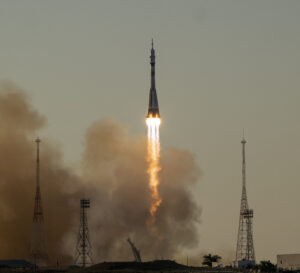
The Progress Center is not a peripheral facility. It is the primary manufacturing site for Soyuz rockets, one of the most flown launch vehicles in the history of spaceflight, with a heritage stretching back to the 1960s. The modernized Soyuz-2 variant, still used for both crewed and uncrewed orbital missions, is also assembled there. The plant represents a critical node in the Russian space industrial chain — one that is difficult to replicate quickly, given the specialized workforce and tooling involved.
As of publication, Roscosmos had issued no official statement regarding the extent of the damage. Open-source imagery and independent analysts indicated that multiple structures within the complex sustained hits, though the precise nature of what was destroyed — assembly halls, testing equipment, warehoused hardware — remained unclear. Russia's space agency has maintained near-total information blackout on its production capabilities throughout the conflict.
Potential Fallout for Civil and Military Space Programs
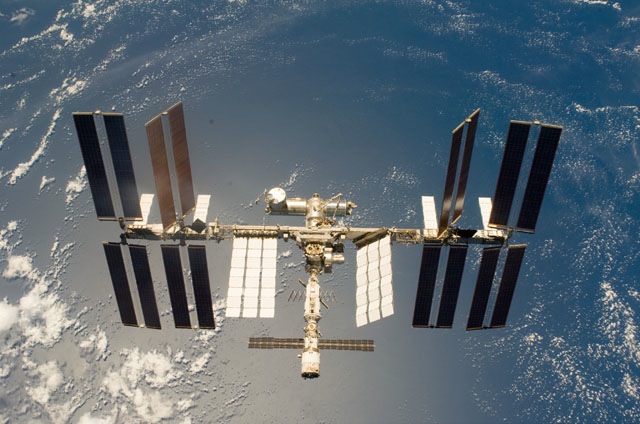
The implications, if the damage is substantial, extend across both military and civilian spheres. Russia's armed forces rely on domestically produced reconnaissance and communications satellites, many of which flow through Samara's manufacturing ecosystem. On the civil side, crewed missions and cargo runs tied to the International Space Station have historically depended on hardware originating from this supply chain — though international partnerships with Roscosmos have been significantly curtailed since 2022.
NASA now routes its crew rotation missions to the ISS through SpaceX's Crew Dragon, having effectively stepped back from Soyuz-based crew transport. Arianespace suspended its cooperation with Roscosmos on Soyuz launches from the Guiana Space Centre in March 2022, following the invasion of Ukraine. The European Space Agency similarly walked away from several joint projects. In practical terms, the Western space community had already been decoupling from Russian launch infrastructure — but the Samara strike underscores how fragile that infrastructure now is even for Russian operators themselves.
A Strike With Strategic and Symbolic Weight
Beyond the immediate military calculus, the attack on Samara carries a pointed message. By hitting one of the most historically significant sites in the Russian space program, Ukraine demonstrated that its Flamingo missiles — among the first documented large-scale deployments of this system — can reach well beyond the front lines and strike hardened industrial targets. That represents a meaningful shift in Ukrainian long-range strike capability.
For those tracking the global space industry, the event serves as a stark reminder that even the most technologically advanced aerospace infrastructure is not insulated from the realities of armed conflict. The true extent of the damage to the Progress Center is yet to be established. Upcoming Soyuz launches on the Russian manifest will likely be the clearest indicator of how severely Roscosmos's production capacity has been set back.