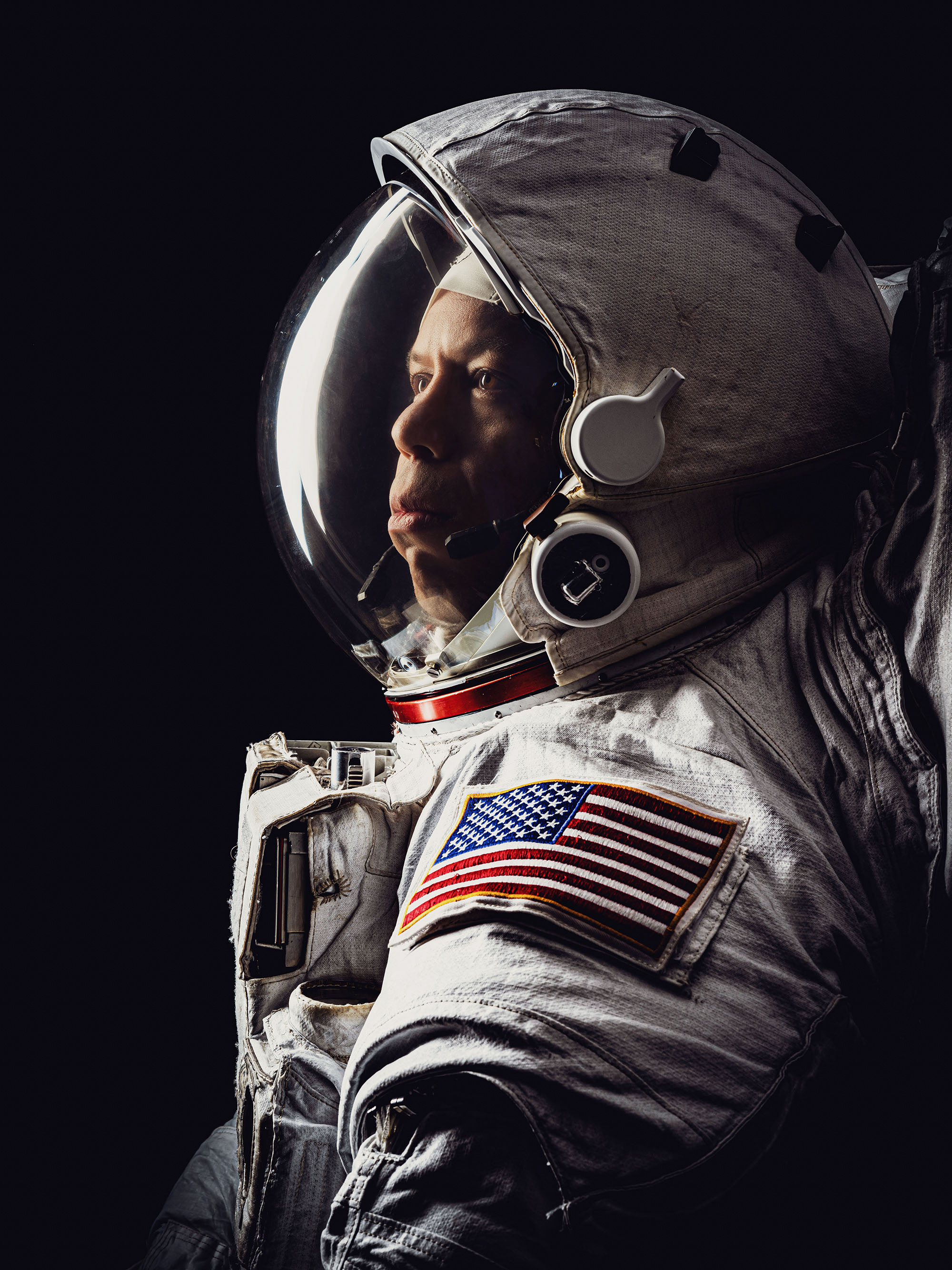
A joint crew closes out a long orbital stay
NASA astronaut Chris Williams and Roscosmos cosmonauts Sergey Kud-Sverchkov and Sergei Mikaev spent 241 days together aboard the International Space Station before preparing to undock on Sunday, July 26. Their Soyuz MS-28 spacecraft was scheduled to detach from the station's Rassvet module at 3:02 a.m. EDT, with a parachute-assisted touchdown on the Kazakh steppe expected at 6:26 a.m. EDT — 3:26 p.m. local time. For Williams, a member of NASA's 2017 astronaut class, this marks the conclusion of his first spaceflight.
The international makeup of this crew reflects the ongoing cooperative framework between NASA and Roscosmos, maintained through cross-seat agreements that allow both agencies to sustain a continuous human presence on the orbiting laboratory. Despite broader geopolitical friction between the United States and Russia, this channel of collaboration has remained largely uninterrupted aboard the ISS.
Cancer research and advanced materials in microgravity
Williams, who holds a medical degree, was an active contributor to biomedical experiments during his time on the station. A significant portion of his research focused on potential avenues for new cancer treatments, taking advantage of microgravity conditions to observe cellular behavior that cannot be replicated with the same fidelity in ground-based laboratories. This kind of work is central to NASA's broader strategy for leveraging the ISS as a platform for human health research.
Williams also participated in experiments aimed at improving the production of materials used in computers and electronics. Growing certain semiconductor crystals in a weightless environment can yield more uniform structures than those produced on Earth, a finding with potential implications for the microprocessor and electronics manufacturing industries. Together, these two research streams — biomedical and materials science — highlight the practical breadth of sustained human activity in low Earth orbit.
Two spacewalks and a full operational record
Beyond laboratory work, Williams completed two extravehicular activities during his assignment. Conducted in the vacuum of space roughly 400 kilometers above Earth, EVAs rank among the most physically and technically demanding tasks any astronaut can perform. The specific objectives of Williams's spacewalks were not detailed in official NASA communications available at the time of publication, but such activities typically involve station maintenance, hardware installation, or infrastructure upgrades.
As Williams prepares to readapt to Earth's gravity, his first mission leaves a solid professional record. What comes next — further ISS rotations, a role in NASA's Artemis lunar program, or other assignments — remains to be seen. What this eight-month stint does confirm is that the International Space Station, now well into its third decade of continuous occupation and facing an uncertain future beyond 2030, continues to function as a productive scientific and diplomatic asset unlike any other in orbit today.


