Dawn launch closes out a years-long power upgrade
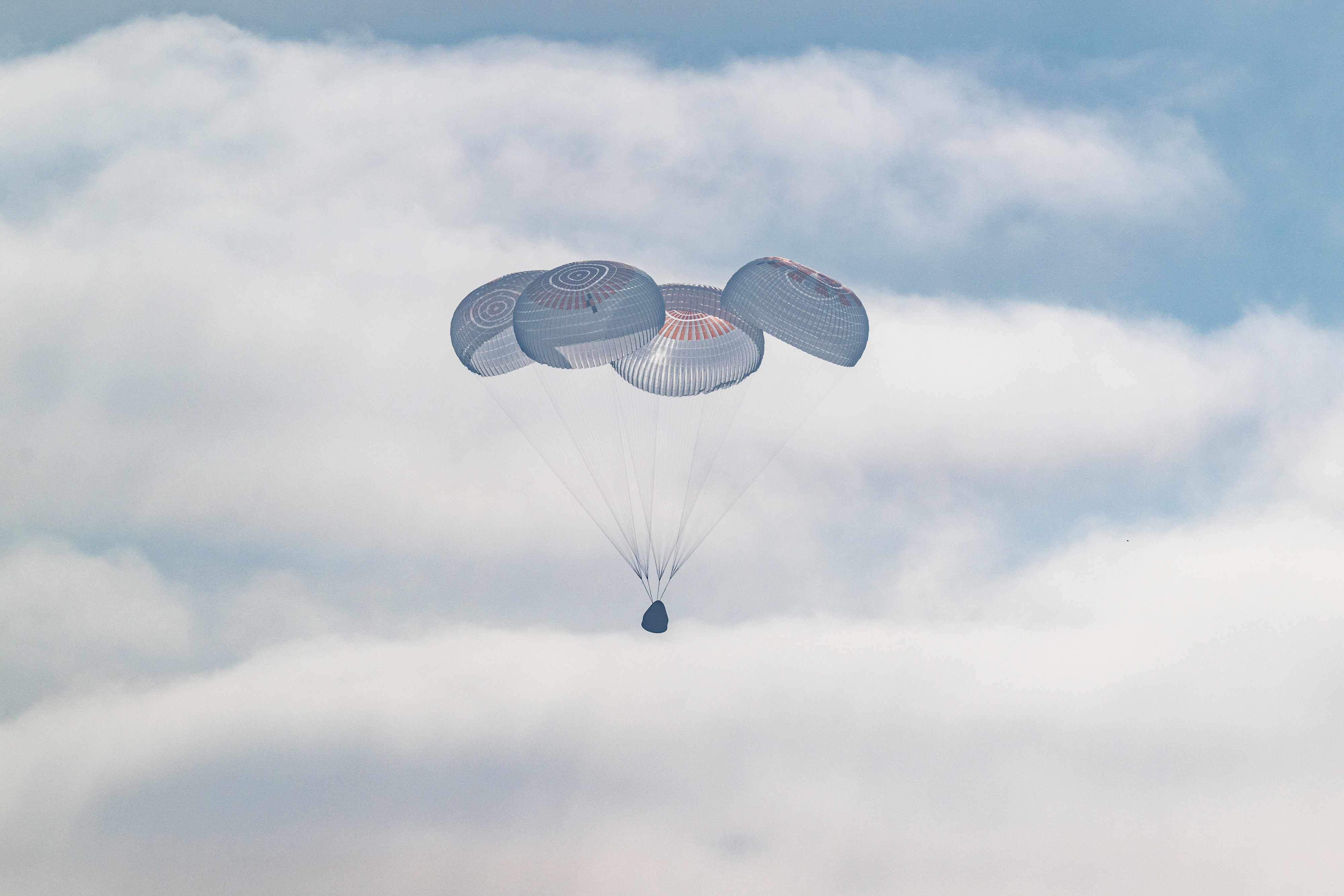
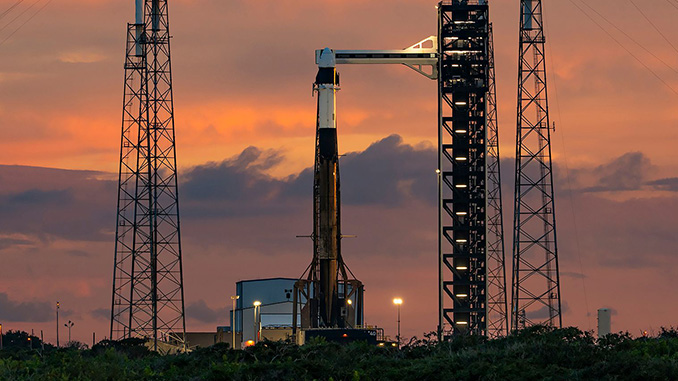
A SpaceX Falcon 9 rocket lifted off from Launch Complex 40 at Cape Canaveral Space Force Station, Florida, at 6:33 a.m. EDT on Tuesday, October 13, 2026, carrying the Cargo Dragon spacecraft on the CRS-35 mission. The vehicle is hauling roughly 6,300 pounds — approximately 2,850 kilograms — of supplies and hardware bound for the International Space Station. Following a standard two-day orbital transit, Dragon was set to berth with the station, where a freshly rotated crew had recently settled in following the return of the Crew-12 mission.
The timing of this resupply flight carries particular significance. CRS-35 is delivering the final pair of iROSA — International Space Station Roll-Out Solar Array — panels, closing out a multi-year infrastructure program that has progressively upgraded the station's electrical generation capacity. Earlier iROSA sets had already been ferried up on previous Dragon missions and installed through a combination of robotic arm operations and spacewalks.
Completing the station's electrical backbone
The original solar arrays fitted to the ISS during its assembly phase in the late 1990s and early 2000s have aged considerably over the intervening decades. The iROSA panels, designed to deploy over the existing wing structures, are more efficient per unit area and significantly boost total power output. Once the final arrays delivered by CRS-35 are installed, the station will reach its upgraded electrical baseline — a prerequisite for supporting increasingly power-hungry research payloads as the ISS moves through its final operational years.
The installation procedure, whether carried out by robotic systems or through extravehicular activity, follows a well-rehearsed sequence developed over the course of the iROSA program. NASA and its international partners have not yet specified the exact timeline for mounting the new panels, though the work is expected to be completed within weeks of Dragon's arrival.
Biomedical science at the core of the research manifest
Alongside the solar hardware, CRS-35 is carrying a curated set of scientific experiments with a strong focus on human and biological health. NASA has highlighted three broad research threads within the mission's science manifest:
- Studies examining how extended exposure to microgravity affects astronaut physiology, with the goal of identifying countermeasures applicable to future deep-space missions;
- Plant biology experiments designed to support the development of reliable food production systems for long-duration crewed exploration beyond low Earth orbit;
- Research into drug-resistant microorganisms, particularly antibiotic-resistant bacteria, whose behavior in the microgravity environment may shed light on resistance mechanisms that remain poorly understood on Earth.
That last area carries implications well beyond spaceflight. Antibiotic resistance is recognized as one of the most pressing public health challenges of the coming decades, and the space station's controlled microgravity environment provides conditions that cannot be replicated in ground-based laboratories. Data gathered aboard the ISS could feed directly into therapeutic research efforts worldwide.
CRS-35 thus serves a dual purpose: it wraps up a critical hardware upgrade while pushing forward a scientific agenda with clear terrestrial relevance. Whether the ISS will remain operational long enough to fully harvest the benefits of both investments depends on decisions that agencies and commercial operators are still working through as the station's post-2030 future remains an open question.