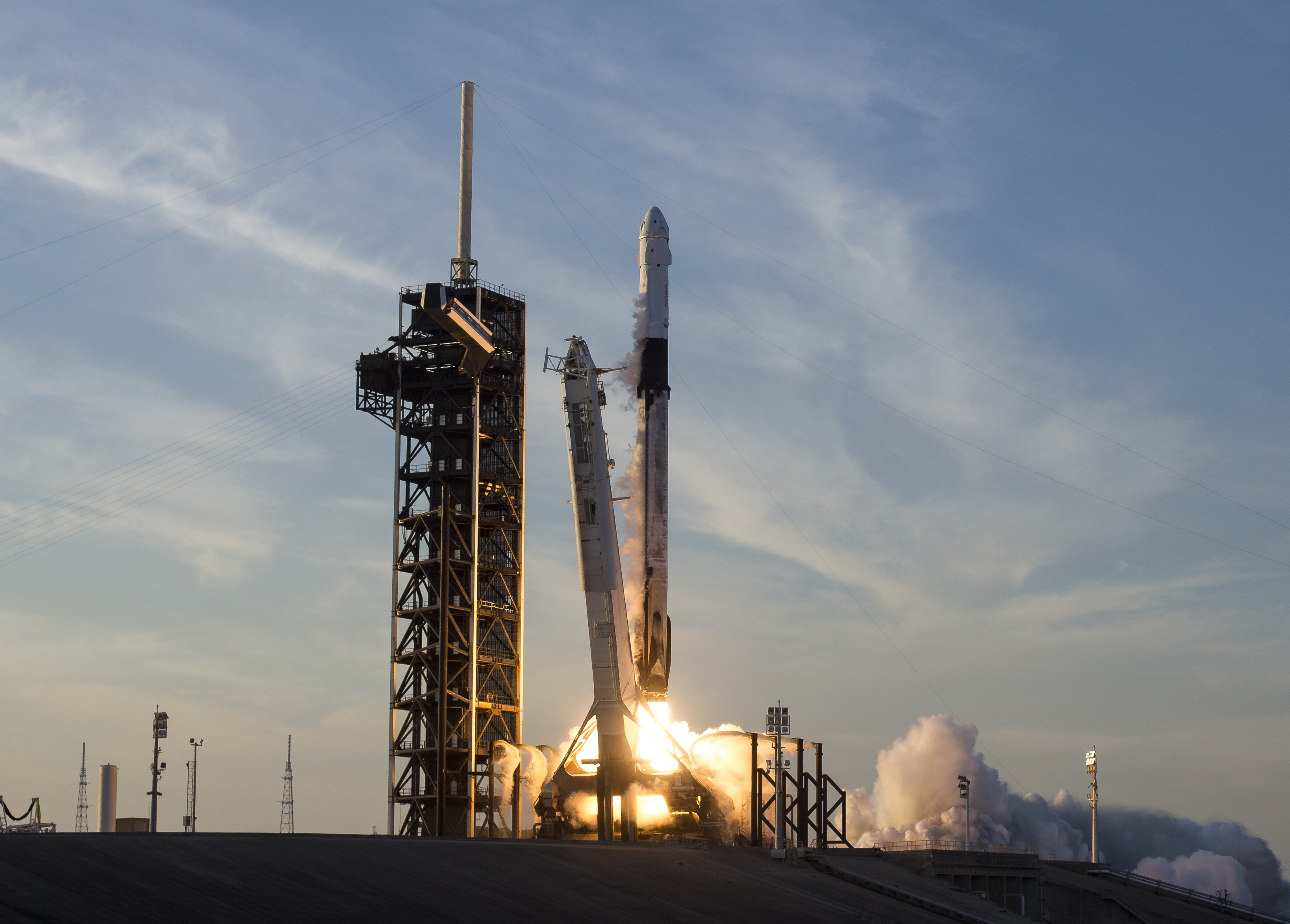
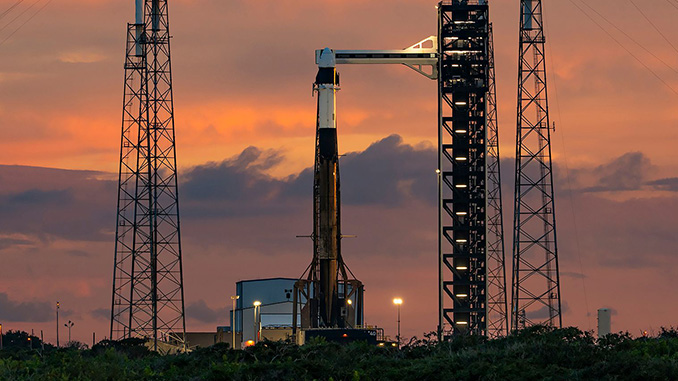
Falcon 9 lights up the Florida sky at dawn
At 6:33 a.m. EDT on Tuesday, October 13, 2026, a SpaceX Falcon 9 rocket rose from Space Launch Complex 40 at Cape Canaveral Space Force Station in Florida, carrying a Cargo Dragon spacecraft loaded with more than 6,300 pounds of supplies, hardware, and research payloads destined for the International Space Station. The mission, designated CRS-35, marks the 35th flight SpaceX has completed under NASA's Commercial Resupply Services 2 contract — a program that has become one of the most reliable logistical pipelines in human spaceflight. The Falcon 9's first stage returned to a drone ship in the Atlantic Ocean following a nominal entry and landing burn.
Dragon was expected to reach the station approximately two days after liftoff, following a standard phasing trajectory before berthing at the Harmony module. The station's crew had recently seen a change in composition following the return of the Crew-12 mission.
Closing the chapter on iROSA upgrades
Among the most significant hardware flying aboard CRS-35 are the final pair of iROSA panels — short for International Space Station Roll-Out Solar Arrays. These lightweight, deployable photovoltaic arrays were developed specifically to compensate for the degraded output of the station's original solar wings, which have been operating for more than two decades and have lost a substantial fraction of their generating capacity over time.
Previous iROSA pairs have already been installed during spacewalks conducted over the past few years, steadily boosting the station's available electrical power. With this final delivery, the full set of iROSA upgrades will be complete, giving the ISS a more robust power budget as it continues operations through the end of the decade. Installing the new panels will require additional extravehicular activities by the current crew.
Biomedical and biological science takes center stage
Beyond infrastructure hardware, CRS-35 carries a meaningful portfolio of scientific investigations. NASA researchers have prioritized studies on antibiotic-resistant microorganisms in microgravity — a field with direct implications for crew health during long-duration missions to the Moon or Mars, where medical resources will be severely constrained. The behavior of bacteria in weightlessness is known to differ from Earth-based conditions, and understanding those differences could help develop more effective countermeasures.
Additional experiments focus on plant biology in space, examining how crops grow and respond to the orbital environment — research relevant both to feeding future crews and to supporting astronaut psychological wellbeing on extended missions. Human physiology studies rounding out the manifest include investigations into cardiovascular adaptation and bone density loss, two of the most persistent challenges of long-duration spaceflight. Findings from these experiments have documented benefits for terrestrial medicine as well, including insights applicable to osteoporosis treatment.
CRS-35 launched during a relatively quiet week on the global launch calendar, with China's LandSpace preparing to orbit its ZhuQue-2E rocket in a separate commercial mission. Together, these activities reflect an industry in which routine orbital access — once a rare achievement — has become an operational expectation for a growing number of spacefaring nations and private companies.