A Canadian-American team steps outside
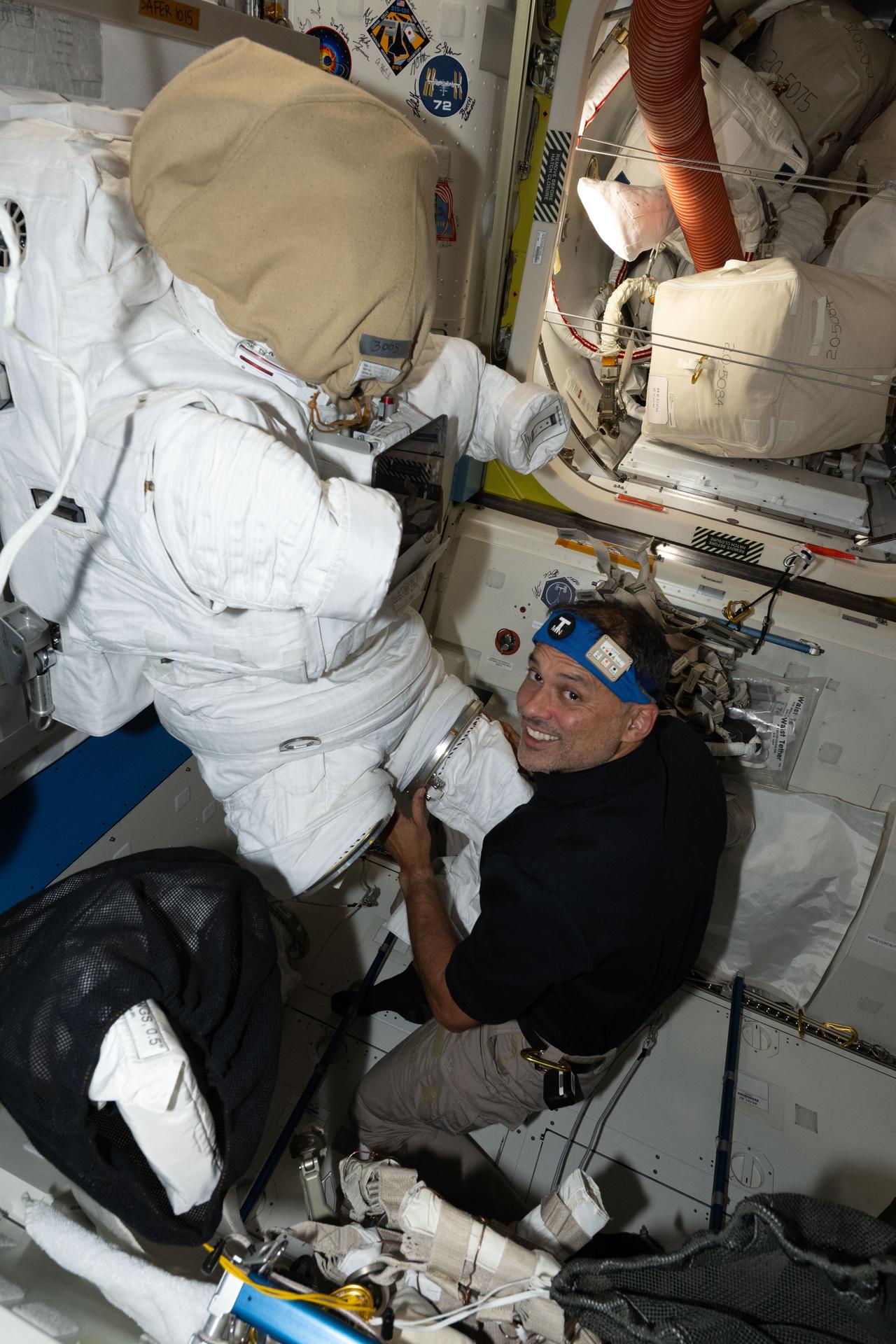
On October 29, 2026, Canadian Space Agency (CSA) astronaut Joshua Kutryk and NASA astronaut Anil Menon ventured outside the International Space Station for a scheduled extravehicular activity. At the time one of the mission's photographs was taken, the station was passing roughly 267 miles above the South Atlantic Ocean — a detail that serves as a reminder of just how far from the ground these routine-sounding operations actually take place.
The central task of the outing was the installation of a roll-out solar array (ROSA), a next-generation photovoltaic panel designed to fold compactly for launch and deploy in a single motion once in orbit. Lighter and more space-efficient than the rigid arrays fitted to the station at its inception in the early 2000s, these newer panels have been added incrementally over recent years to offset the natural degradation of the original hardware and to meet the growing power demands of station systems and visiting spacecraft.
The crew also used remaining time outside to carry out so-called get-ahead tasks — preparatory work earmarked for future spacewalks but completed early when the schedule allowed. It is a standard practice on the ISS, designed to make the most of every minute spent in the vacuum, where suited operations involve significant logistical and physiological cost.
Orbit as a teaching tool
A few days after the spacewalk, NASA announced a live in-flight call linking Anil Menon aboard the station with students around the United States, timed to coincide with National STEM Day. Joining the event from the ground was Mark Rober, a science communicator and founder of the ClassCrunchLabs Foundation, whose online audience runs into the tens of millions.
The session was organised by NASA's Office of STEM Engagement, a branch of the agency dedicated to turning the human presence in space into a tangible source of inspiration for younger audiences. Direct calls between ISS crew members and school groups have been a fixture of station operations for years, but pairing an astronaut with a prominent digital science educator represents a deliberate step toward reaching students through the platforms they already use.
Europe's stake in low Earth orbit
Against this backdrop of continued activity on the ISS, the European Space Agency published a discussion piece on the same day addressing Europe's longer-term position in low Earth orbit. The full content of that document was not publicly detailed at the time of writing, but it reflects a strategic question the ESA and its member states have been wrestling with for some time: what comes after the ISS?
The station is currently expected to be deorbited before the end of the decade. Options under consideration for European participation in what follows include involvement in privately operated commercial stations — several of which are in development by US companies — or the pursuit of independent European orbital infrastructure. No firm commitment has been made, and funding discussions among member states remain ongoing.
Taken together, the week of October 29 illustrated in compact form the multiple layers of activity surrounding the ISS: hands-on engineering work hundreds of miles up, outreach efforts aimed at the next generation of scientists, and the quieter but consequential planning for a post-ISS era that will shape human spaceflight for decades.