Sustaining human activity beyond low Earth orbit demands far more than spacecraft and spacesuits. It requires reliable communications, data exchange between surface assets, and a clear picture of what is moving through orbital space at any given moment. Two contracts awarded by NASA in late September 2026 address exactly those needs, drawing a clearer outline of what a permanent lunar presence might actually look like in practice.
Building a 5G Network on the Moon
NASA has selected Modulate Space Corporation to develop core elements of a 5G communications architecture intended for operation directly on the lunar surface. The work is managed through NASA's Glenn Research Center in Cleveland and is structured around two primary technical areas, both aimed at delivering a scalable, standards-based communications framework.
The system will incorporate Wi-Fi 6, the current generation of the wireless standard, enabling high-throughput local connectivity between habitat modules, scientific instruments, rovers, and any other surface assets that future missions deploy. The choice to build on established industry standards rather than proprietary protocols is deliberate: it lowers barriers to integration with commercial and international partners and makes the system easier to upgrade as requirements evolve.
The initiative fits squarely within the Artemis program, which aims to establish recurring human presence near the lunar south pole. Each infrastructure layer added now — power, communications, logistics — reduces the overhead cost of successive missions and transforms exploration from a series of discrete events into something closer to sustained operations. Whether this 5G network will be operational before the first crewed Artemis landing remains to be confirmed, but the contract signals that NASA is no longer treating surface communications as an afterthought.
Keeping Orbital Paths Clear
Separately, NASA awarded Omitron Inc. an indefinite-delivery contract worth approximately $23.5 million over a five-year period to provide orbital safety analysis services. The scope covers all of NASA's uncrewed spacecraft and extends support to crewed missions as well.
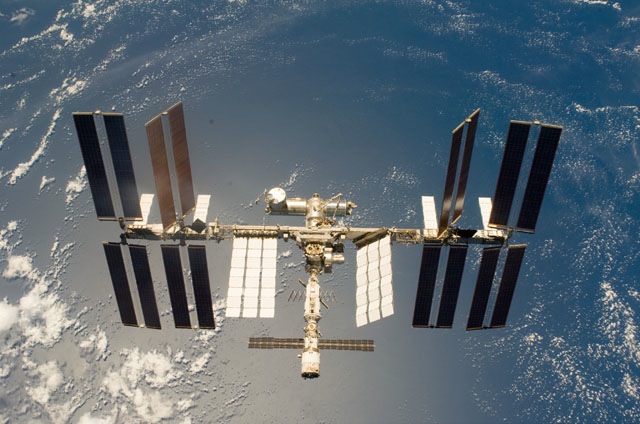
At its core, the work involves conjunction assessment screening — systematically identifying situations where a piece of debris or another satellite could come uncomfortably close to a NASA asset. When a potential close approach is flagged, mission teams receive the analysis needed to decide whether to execute an avoidance maneuver, protecting both hardware and, where applicable, crew aboard the International Space Station or future vehicles.
The urgency of this kind of service has grown considerably in recent years. The proliferation of commercial satellite constellations operated by companies such as SpaceX and others has added thousands of objects to low Earth orbit, making conjunction screening a near-continuous operational requirement rather than an occasional precaution. For an agency managing decades of scientific and operational investments in orbit, that analysis capacity is a form of insurance that cannot be treated as optional.
Infrastructure Before Exploration
Taken together, these two contracts reflect a broader shift in how NASA approaches the next chapter of exploration. Rather than planning missions in isolation, the agency is methodically building the services — communications, orbital safety, logistics — that will allow any given mission to benefit from what came before it.
In both cases, NASA is relying on specialized private firms to deliver engineering services, a model that has become increasingly standard across the American space sector. The agency sets the requirements and integration standards; industry provides the execution. Whether that division of labor holds up as missions grow more complex is a question the coming years will answer.