Nyx passes a critical recovery milestone
The Exploration Company confirmed on June 4, 2026, that it had successfully carried out a drop test to validate the recovery system of its Nyx spacecraft. In this type of trial, the capsule is released from altitude under representative conditions to verify that parachutes and landing or splashdown mechanisms perform within required parameters. Passing this milestone is a prerequisite for certifying any reusable vehicle intended for cargo or crew transport, as the capsule's ability to fly again hinges entirely on the integrity of its recovery hardware.
Nyx is designed to ferry supplies to low Earth orbit, with a longer-term option for crewed missions. Founded in 2021 and headquartered in Germany, the company has structured its business around orbital logistics services, primarily targeting the International Space Station and, down the line, the commercial stations expected to replace it. The successful drop test brings Nyx one step closer to a flight-ready configuration, tightening the timeline toward an operational first mission.
A heavy-lift rocket surfaces without fanfare
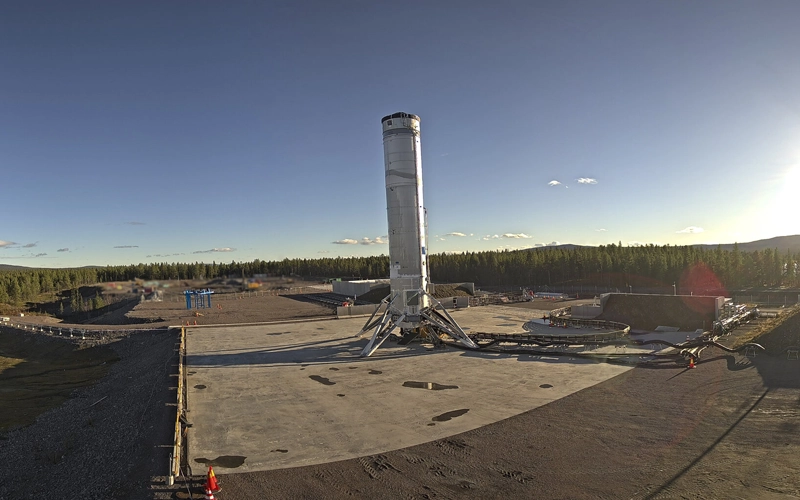
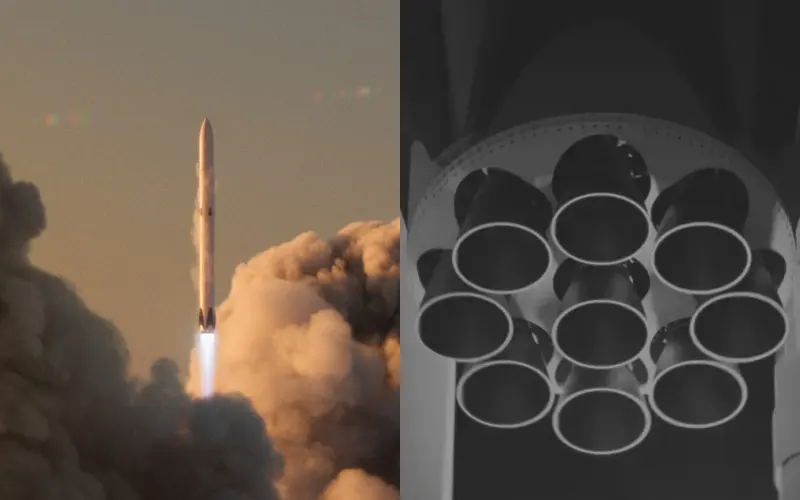
On the same day, a quiet update to the company's website introduced an entirely new element: the development of a reusable heavy-lift rocket powered by the Storm engines the startup has been working on in parallel. No press release accompanied the disclosure, and no spokesperson elaborated publicly. Payload capacity targets, vehicle architecture, and development schedule remain undisclosed at this stage.
The low-key nature of the announcement is notable. It points either to a program still in early design maturity, or to a deliberate communications strategy aimed at managing expectations before key technical milestones are secured. Either way, the implication is significant: The Exploration Company is no longer positioning itself solely as a capsule operator. A proprietary launch vehicle would give it control over the full mission chain, from engine ignition to capsule recovery — a level of vertical integration that very few companies worldwide have achieved.
What this means for European launch ambitions
Should both programs mature as implied, The Exploration Company would enter a very small group of operators capable of offering complete, reusable access to orbit. SpaceX remains the benchmark, pairing Dragon with Falcon 9 in a tightly integrated stack. Rocket Lab is pursuing a comparable path with Neutron and its existing smallsat infrastructure. In Europe, Arianespace anchors institutional launch capability through Ariane 6, but no European startup has yet demonstrated a functional heavy-lift reusable rocket.
The timing matters. European institutions and commercial operators are actively seeking alternatives that reduce reliance on non-European launch providers, and investment in homegrown capability has been growing steadily. If The Exploration Company can substantiate its heavy-lift ambitions with concrete technical progress, it could claim a strategically important position in that market. The months ahead — and in particular any follow-up communications about the rocket program — will be the real test of whether these dual announcements mark a turning point or simply a placeholder on a roadmap still taking shape.