Ten launches were scheduled across global spaceports during the week of June 16, 2026, making it one of the most active stretches in recent memory. Two storylines cut through the noise: Arianespace's milestone flight for Amazon's Leo constellation, and a flurry of Chinese launches marred by an unsettling communications blackout following one of them.
Arianespace sets a payload record for Amazon
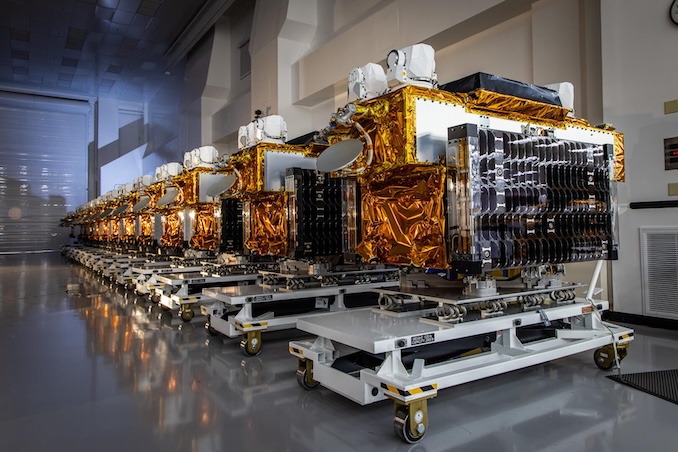
At 11:53 UTC on June 17, Ariane 6 lifted off from Europe's Spaceport in Kourou, French Guiana, carrying 36 satellites for Amazon's low Earth orbit internet constellation in what Arianespace has designated flight VA269, or Leo Europe 03. The mission marked the heaviest payload Arianespace has ever attempted, and the first time Ariane 6 flew with its P120C solid rocket boosters in their highest-thrust configuration.
The launch comes against a broader backdrop of acute launch capacity pressure. Industry sources indicate Amazon has accumulated hundreds of satellites ready for deployment, waiting for available rocket slots. That backlog reflects a structural imbalance now apparent across the commercial launch market: demand has outpaced supply. Arianespace CEO David Cavaillolès acknowledged the urgency while defending his company's reliability — including its handling of a short-lived labor dispute. The Union of Guyanese Workers had filed an open-ended general strike notice on June 14, temporarily blocking access roads to the spaceport. The standoff was resolved before launch day without any schedule impact.
For Ariane 6, VA269 represents a meaningful step forward. The rocket has had a slow operational ramp-up since its inaugural flight, and securing a slot in Amazon's manifest — alongside SpaceX's dominant Falcon 9 — signals growing commercial confidence in the European launcher.
China's sprint raises questions
China executed four orbital launches within a 72-hour window, maintaining the breakneck annual cadence that has placed the country among the world's top launch nations by volume. Three of those missions were followed by prompt official announcements and confirmation of success — standard practice for Chinese state and commercial space entities.
The fourth launch, however, stands apart. The Kuaizhou-11 solid-fueled rocket, operated by commercial launch provider Expace, lifted off on Wednesday but was followed by an unusually prolonged silence from both the company and Chinese state media. No confirmation of mission success was published in the hours that followed — a notable departure from the norm. While no source has formally declared a failure, the absence of any statement strongly suggests something may have gone wrong during or after the ascent phase. The situation remains unresolved at the time of publication.
SpaceX advances AST SpaceMobile's BlueBird fleet
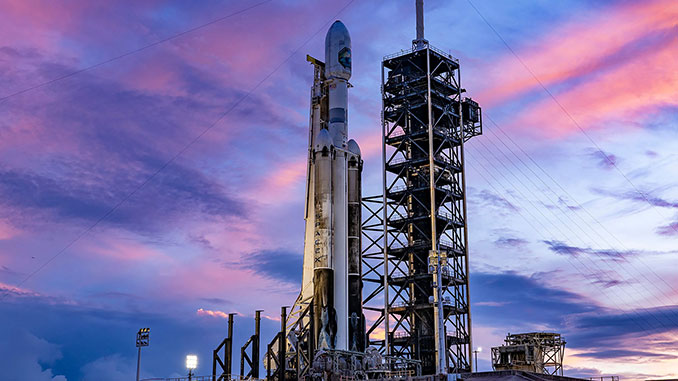
SpaceX added to the week's activity on the night of June 16, launching three next-generation BlueBird satellites for AST SpaceMobile from pad 40 at Cape Canaveral Space Force Station. The mission, timed for 06:39 UTC on June 17, marked the debut of the Block 2 variant of the BlueBird platform — an upgraded design compared to the earlier batch — and the third dedicated SpaceX launch for the constellation overall. AST SpaceMobile is developing a network intended to deliver cellular broadband directly to standard mobile handsets from orbit.
The week as a whole underlines a central tension now shaping the global launch industry: operators across North America, Europe, and Asia are all accelerating their cadence, yet bottlenecks persist. Amazon's satellite backlog is perhaps the most visible sign that even an active launch market cannot yet keep pace with the ambitions of the new space economy. Whether Ariane 6, Falcon 9, and emerging vehicles can collectively close that gap remains one of the defining questions of the decade.