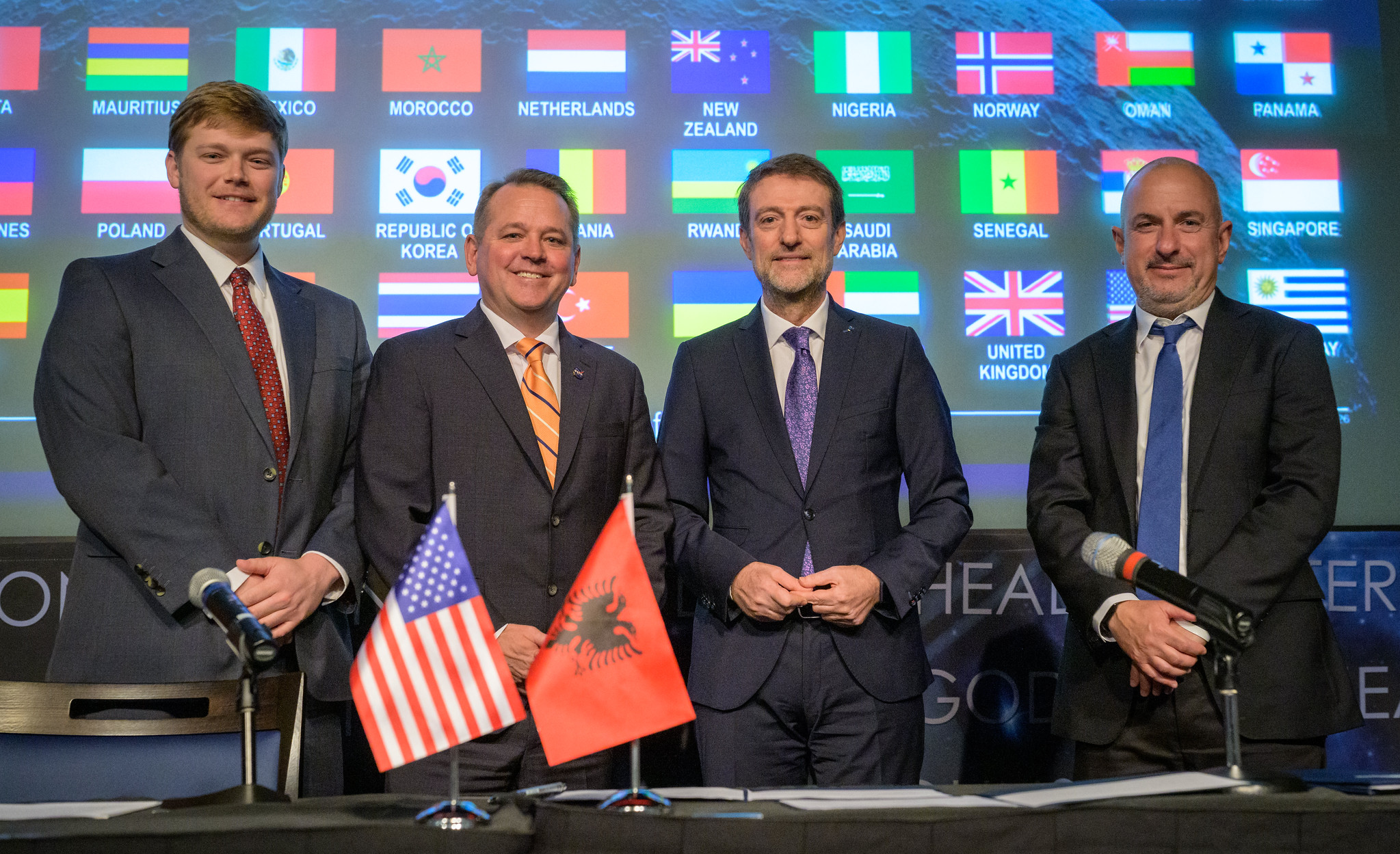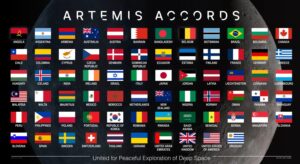
The Artemis Accords crossed a new threshold this week as two countries joined in rapid succession. Serbia signed the document on Thursday, July 17, during a formal ceremony held at NASA Headquarters in Washington, D.C., becoming the 69th nation to commit to the principles outlined in the accords. The following day, the Republic of Mauritius held its own signing ceremony in the city of Ébène, bringing the total to 70 signatories.
A milestone for U.S.-led space diplomacy
Launched in 2020 by NASA and the U.S. Department of State, the Artemis Accords establish a set of non-binding principles intended to guide civil space activities: operational transparency, open sharing of scientific data, interoperability of rescue systems, protection of historic sites in space, and responsible handling of in-situ resources. Reaching 70 signatories underscores the framework's continued appeal, even as critics consistently point to its non-binding nature as a structural limitation.
NASA Deputy Administrator Matt Anderson delivered video remarks at the Mauritius ceremony, reaffirming the agency's commitment to broad international cooperation. Mauritius also becomes the seventh African country to sign the Accords, joining Nigeria, Rwanda, Angola, Ethiopia, Togo, and Egypt — a notable development for a continent whose space ambitions are steadily gaining institutional shape.
Serbia navigates competing geopolitical alignments
Serbia's accession carries distinct geopolitical weight. More than two years ago, Belgrade signed a cooperation agreement tied to China's International Lunar Research Station (ILRS) project, the initiative developed jointly by CNSA and Roscosmos as a direct counterpart to NASA's Artemis program. By now signing the Artemis Accords, Serbia is signaling either a careful balancing act or a strategic pivot — interpretations vary depending on which diplomatic lens one applies.
NASA noted at the Washington ceremony that Serbia's relationship with the agency stretches back to the Apollo era, framing the signing as a return to a longstanding partnership. The Artemis Accords impose no formal exclusivity on their signatories, which allows nations like Serbia to pursue cooperation with multiple space powers without triggering a legal contradiction — a flexibility that is both a feature and a point of contention.
A growing list, and the questions that come with it
Seventy signatories make the Artemis Accords one of the broadest multilateral frameworks ever assembled around space governance. Yet several major spacefaring nations remain notably absent: China, Russia, and India have not signed, though the possibility of Indian accession has circulated in diplomatic channels without materializing so far.
The steady expansion of the signatory list strengthens the political legitimacy of the U.S.-centered approach, but also sharpens a persistent question: can a non-binding framework produce norms with real traction as lunar activity intensifies? With crewed Artemis missions still on the roadmap — Artemis III aims to land astronauts on the Moon's surface — the practical value of these diplomatic commitments will ultimately be tested not in ceremony halls, but in orbit and on the lunar surface itself.