A threshold science considered uncrossable
The boundary between life that can endure extreme heat and life that cannot has long been drawn along a clear biological line. Single-celled organisms without a nucleus — bacteria and archaea — have long been known to tolerate scorching conditions. Their simpler architecture gives them an edge: less to protect, less to lose. But eukaryotes, the category of life that includes everything from yeast to humans, carry their genetic material inside a dedicated nucleus. That structure is fragile under intense heat, and protecting it while every surrounding molecule is under thermal assault presents an enormous biochemical challenge.
For decades, scientists assumed that challenge was simply insurmountable beyond a certain temperature. Research funded by NASA has now demonstrated otherwise. A team of scientists working in Lassen Volcanic National Park in northern California has identified a eukaryotic microorganism living and reproducing in hydrothermal waters at temperatures that exceed what was thought possible for organisms of its biological complexity. The findings were published in September 2026.
Lassen's boiling waters as an unlikely laboratory
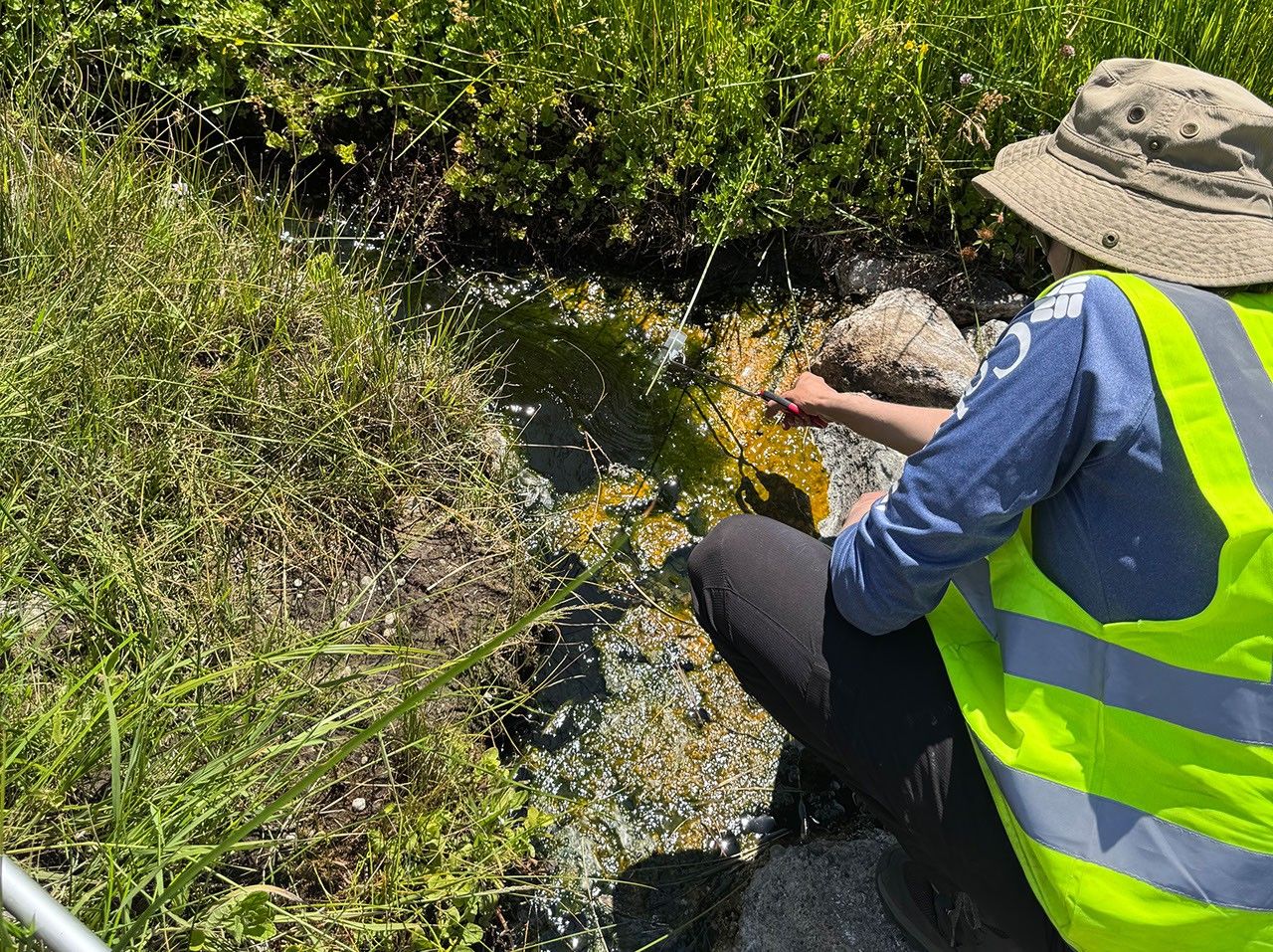
Lassen Volcanic National Park has long attracted researchers studying life at the edge. Its acidic pools, steaming fumaroles, and superheated springs create conditions that mirror, in some respects, what planetary scientists theorize might exist on ocean worlds elsewhere in the solar system. It was in this natural laboratory that the research team collected samples and isolated an organism that sets a new heat tolerance record for eukaryotic life.
Full taxonomic details and precise temperature measurements from the study were not yet entirely disclosed in available summaries at the time of writing, but the core finding is unambiguous: the organism possesses a functional nucleus. That structural feature is what makes the discovery significant. Archaea and thermophilic bacteria breaking heat records would be remarkable but expected. A nucleus-bearing cell doing the same forces a fundamental reassessment of thermal biology.
What this means for the search for life beyond Earth
NASA's investment in this line of research is not incidental. The agency's astrobiology programs are built around a central question: where else in the universe could life exist, and under what conditions? Worlds like Europa and Enceladus are compelling targets precisely because they are believed to host subsurface liquid water, possibly warmed by hydrothermal activity at their seafloors. If complex life can withstand volcanic heat on Earth, the range of potentially habitable environments across the solar system becomes broader by extension.
Beyond planetary science, the discovery carries weight for our understanding of life's adaptability on this planet. The catalogue of extreme environments where biology has found a way keeps growing — polar ice, hyper-acidic lakes, crushing deep-sea pressures. Volcanic heat can now be added to that list, at least for organisms more structurally sophisticated than a bacterium.
The next phase of research is expected to focus on the molecular mechanisms behind the organism's thermal resilience. Understanding how its cellular machinery — and particularly its nucleus — remains functional at such temperatures could yield insights for biotechnology as well as for the frameworks scientists use to assess habitability on other worlds.