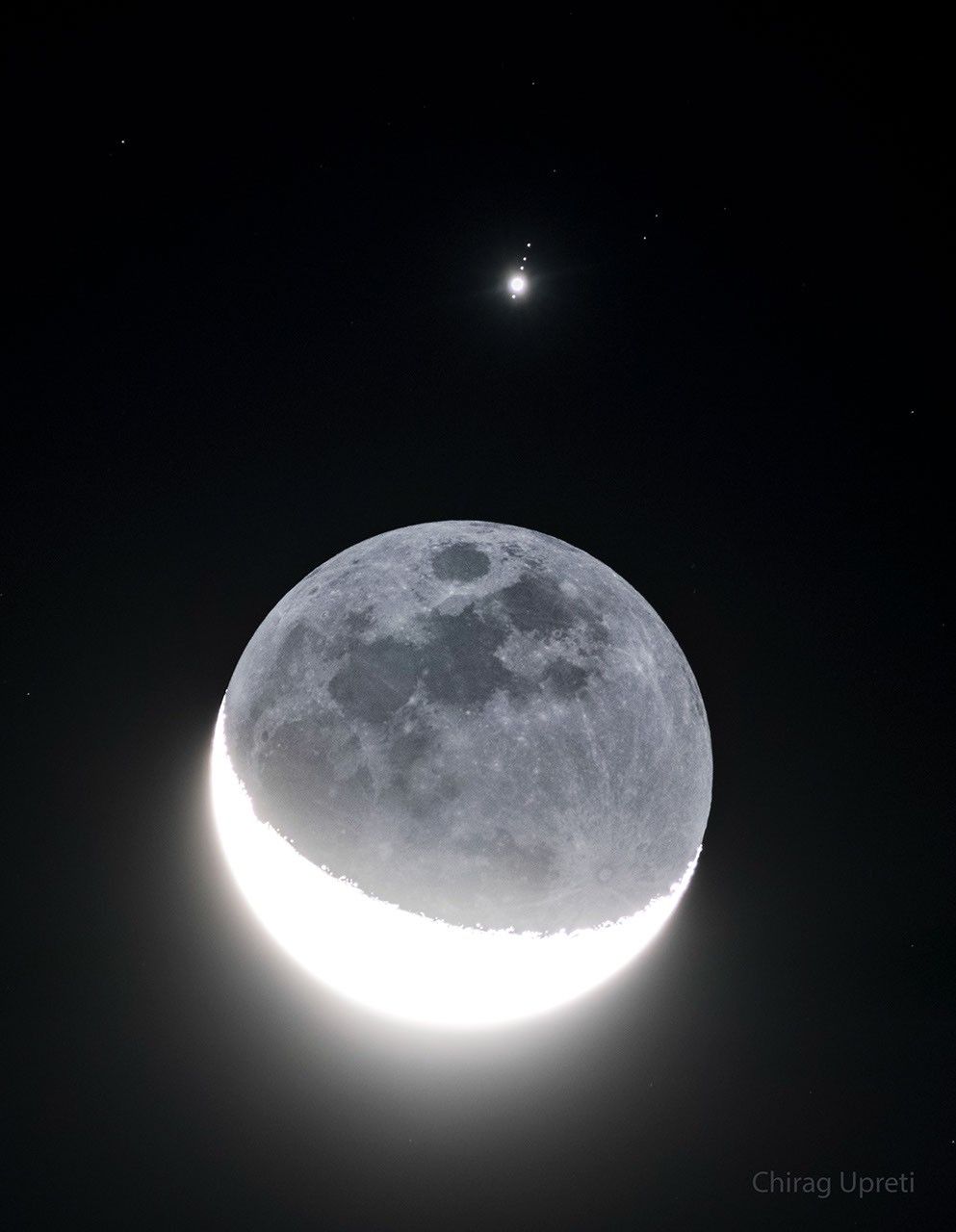
Some subjects in astronomy never grow old. Jupiter is one of them. Featured as NASA's Astronomy Picture of the Day on October 12, 2026, the gas giant and its family of natural satellites serve as a reminder that the solar system's most massive planet is far from fully understood — and that it is currently at the center of some of the most ambitious planetary science missions ever launched.
A miniature solar system worth watching
Jupiter's retinue of moons is, in itself, a study in diversity. The four Galilean satellites — Io, Europa, Ganymede, and Callisto — were identified by the Italian astronomer Galileo Galilei in the early 1600s using a rudimentary spyglass. Four centuries later, they remain among the most scientifically compelling objects in the solar system. Europa, in particular, draws sustained attention: mounting evidence suggests that a vast liquid-water ocean lies beneath its frozen crust, shielded from the vacuum of space and potentially harboring conditions compatible with microbial life.
The image selected by NASA's APOD program captures the visual relationship between Jupiter and its moons as seen through ground-based equipment — the kind of view accessible to dedicated amateur astronomers under good observing conditions. Since its launch in 1995, APOD has served as a daily bridge between professional astronomy and the wider public, featuring contributions from observers around the world.
Two missions heading for the Jovian system
The scientific appetite for Jupiter is far from satisfied. The European Space Agency's JUICE mission — Jupiter Icy Moons Explorer — has been en route since 2023, with Ganymede, Europa, and Callisto as its primary targets. The spacecraft is expected to enter Jovian orbit in 2031 following a series of gravitational assist maneuvers. Meanwhile, NASA's Europa Clipper, launched in October 2024, is on its way to perform dozens of close flybys of Europa, beginning in 2030.
Though developed independently by their respective agencies, JUICE and Europa Clipper are widely seen as complementary endeavors. Together, they represent a coordinated push to determine whether liquid-water environments beyond Earth could support life — making the Jovian system a focal point of astrobiology research for at least the next decade.
Amateur observers as part of the scientific fabric
October marks a favorable period for observing Jupiter from both hemispheres, with the planet well-placed in the night sky. This seasonal window draws amateur astronomers to their eyepieces in large numbers. Even modest telescopes — those with apertures of 15 to 20 centimeters — can reveal Jupiter's cloud bands and, under steady seeing conditions, the iconic Great Red Spot.
The contribution of amateur observers to planetary science is more than symbolic. Organizations such as the Association of Lunar and Planetary Observers (ALPO) systematically collect visual and photographic data on Jupiter's atmospheric dynamics, providing a continuous monitoring record that professional facilities cannot always match in temporal coverage.
As JUICE and Europa Clipper continue their long journeys through interplanetary space, the eyes of amateur and professional astronomers alike remain fixed on Jupiter. The APOD image of October 12 is a small but meaningful prompt to keep looking — because the answers to some of science's biggest questions may lie in the clouds of that distant, churning world.