Saturn at Its Best, the Moon Among the Pleiades
Saturn is the undisputed centrepiece of October's night sky. The ringed giant reaches opposition this month, meaning Earth sits directly between Saturn and the Sun. At that geometry, Saturn rises in the east right around sunset, climbs high through the night, and doesn't set until dawn. For telescope owners, it is the prime opportunity of the year: the rings remain noticeably tilted toward Earth, making them a crisp and rewarding sight even at modest magnification.
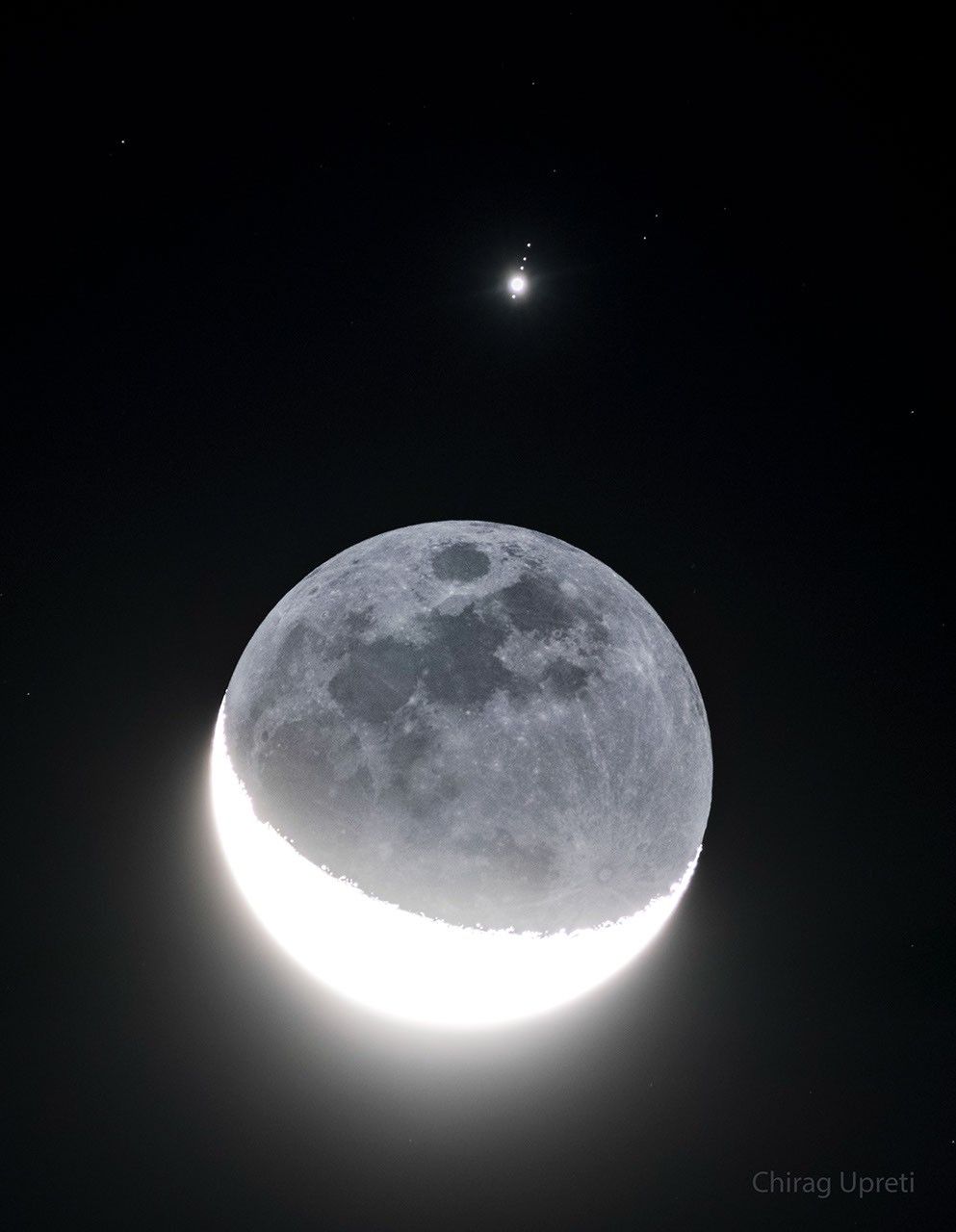
NASA's monthly skywatching guide also flags a lunar highlight worth tracking. The Moon will drift close to the Pleiades — the compact star cluster in Taurus sometimes called the Seven Sisters — during the course of the month. The two objects share no physical connection, of course, but the visual pairing is one of those effortlessly beautiful alignments that reward anyone who simply steps outside on a clear evening with a pair of binoculars.
Orionids: Debris from a Famous Comet Lights Up Autumn Nights
Every October, Earth sweeps through the dust trail left behind by Halley's Comet on its repeated passes through the inner solar system. The particles that strike our upper atmosphere at roughly 66 kilometres per second create the Orionid meteor shower, one of the swiftest and most consistent of the year. The shower peaks around October 21st, with rates of up to around 20 meteors per hour expected under dark skies.
The shower's radiant point lies in Orion, near the distinctive reddish star Betelgeuse, but individual meteors can streak across any part of the sky. No equipment is needed — in fact, a wide-open field of view works better than a telescope. The main requirements are darkness, patience, and about 20 minutes for your eyes to fully adjust before the shower becomes apparent.
Supernumerary Rainbows: Atmospheric Optics Meets Fine Art
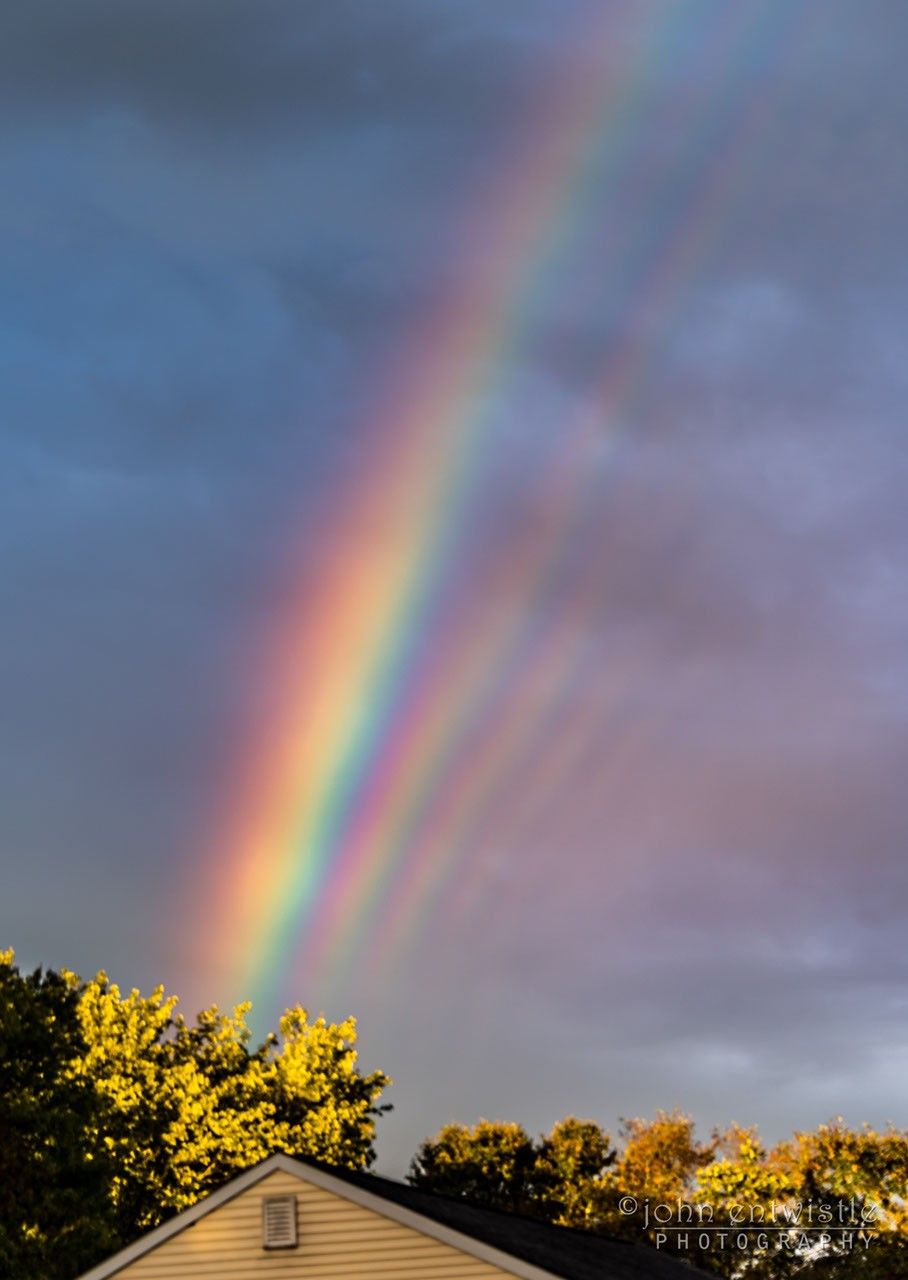
On October 4th, 2026, NASA's Astronomy Picture of the Day featured a photograph taken over New Jersey that stopped scrolling thumbs in their tracks. The image captured supernumerary rainbows, a lesser-known optical phenomenon that even many regular rainbow-spotters have never consciously identified.
Unlike the familiar primary arc produced by a single internal reflection inside water droplets, supernumerary bands appear as pastel stripes — alternating pinks and greens — tucked just inside the main bow. They arise from wave interference: when airborne droplets are unusually uniform in size, typically between roughly 0.5 and 1 millimetre across, light rays exiting each droplet either reinforce or cancel each other depending on wavelength. The result is those delicate extra arcs that seem painted on the sky just after rain.
The image is a timely reminder that Earth's own atmosphere, not just the reaches of the solar system, holds phenomena worth understanding and seeking out. October 2026 offers a rare double invitation: to scan the heavens for Saturn's rings and incoming meteors, and to look toward the horizon just as a rain shower ends.