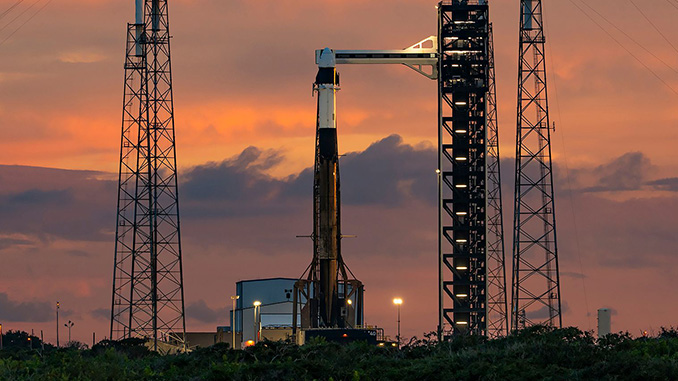
What began as a straightforward commercial payload delivery contract has taken on a larger name and a heavier symbolic weight. On June 16, 2026, Pittsburgh-based Astrobotic formally presented its Griffin lunar lander to the public — a vehicle that NASA has rebranded Moon Base 2, signaling the agency's intent to frame future lunar surface operations in terms of lasting infrastructure rather than one-off landings.
Griffin in the context of NASA's CLPS program
Griffin is one of the most ambitious deliveries under NASA's Commercial Lunar Payload Services (CLPS) program, through which the agency contracts private companies to ferry scientific and technological payloads to the Moon. Rather than building and operating landers in-house, NASA has opted to stimulate a commercial market, distributing risk and reducing costs — at least in theory.
Astrobotic's track record with CLPS is one of perseverance. Its first attempt, the Peregrine Mission One lander, launched in early 2024 but never reached the lunar surface due to a propulsion anomaly. Griffin is a larger, more capable vehicle, designed to deliver heavier payloads and, if all goes to plan, mark Astrobotic's first successful touchdown on the Moon.
Following the public unveiling, the lander is scheduled to be shipped to NASA's Jet Propulsion Laboratory in Southern California, where it will undergo a full environmental test campaign. These tests — covering thermal extremes, acoustic loads, vibration, and vacuum conditions — are designed to verify the hardware can withstand the rigors of launch and deep-space transit before it ever leaves Earth.
Moon Base 2: a name with implications
The decision to rename the mission Moon Base 2 is notable. It positions this particular CLPS delivery not merely as a payload drop, but as a foundational step toward sustained human presence near the lunar south pole — the primary target region for NASA's broader Artemis architecture. The area is of particular scientific and strategic interest because of the water ice believed to exist in permanently shadowed craters, a potential resource for future crewed operations.
Details on the full payload manifest remain limited at this stage. It is likely to include instruments focused on surface characterization and resource prospecting, though neither NASA nor Astrobotic has released a comprehensive breakdown. The choice of launch vehicle has also not been formally confirmed.
- Program: NASA CLPS / Artemis
- Prime contractor: Astrobotic Technology
- Target: lunar surface, probable south polar region
- Launch window: late 2026
- Next milestone: environmental testing at JPL, California
A tight schedule and open questions
Late 2026 is an assertive target. Between JPL testing, launch vehicle integration, and range scheduling, timelines in this sector have a well-documented tendency to shift. Neither party has publicly committed to a specific launch date, and the full scope of the payload remains to be disclosed.
Still, Griffin's unveiling marks a concrete step forward. It will be the third CLPS vehicle to attempt a lunar landing, following Peregrine and Intuitive Machines' IM-1 lander. Each mission has added to the collective understanding of what it takes to land commercially on the Moon. Whether Griffin becomes the mission that finally delivers on Astrobotic's lunar ambitions — and on the Moon Base 2 name — remains to be seen.