A new name for a high-stakes mission
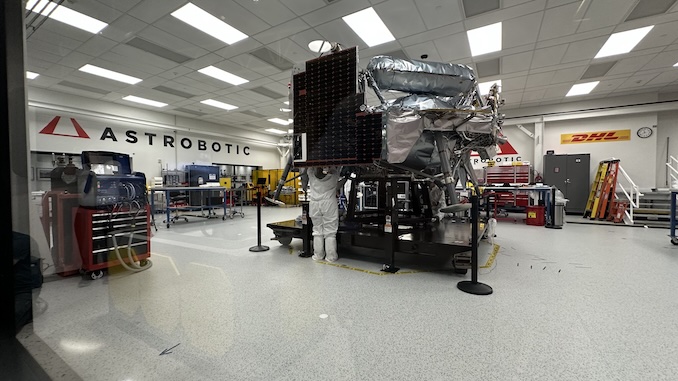
On June 16, 2026, Astrobotic pulled back the curtain on its Griffin lunar lander during an official unveiling at the company's Pittsburgh facilities. Originally designated Griffin-1 under NASA's Commercial Lunar Payload Services (CLPS) program, the spacecraft has since been rechristened Moon Base II by the agency — a name that signals broader ambitions for sustained lunar surface operations.
Griffin is a large-class lander designed to deliver substantial payloads to the lunar surface. Its most prominent cargo is NASA's VIPER rover (Volatiles Investigating Polar Exploration Rover), tasked with mapping water ice deposits in the permanently shadowed regions near the Moon's south pole. That data is considered critical groundwork for future crewed landings under the Artemis program.
Next stop: JPL's environmental test chambers
With the unveiling complete, the spacecraft is scheduled to be transported to NASA's Jet Propulsion Laboratory in Pasadena, California, where it will undergo a rigorous series of environmental qualification tests. These procedures are designed to simulate the punishing conditions of spaceflight: acoustic and vibration loads during launch, thermal cycling between extreme heat and cold, hard vacuum exposure, and radiation checks. Passing this gauntlet is a mandatory step for any vehicle intended to operate beyond Earth's atmosphere.
Astrobotic and NASA are both publicly committed to a late-2026 launch window, though no specific date has been confirmed. The choice of launch vehicle had not been officially disclosed in information available at the time of publication, and the exact landing site coordinates remain subject to mission planning updates.
CLPS, commercial stakes, and lessons learned
Moon Base II fits squarely within NASA's broader commercial lunar strategy, which relies on private companies to ferry scientific instruments and technology demonstrators to the lunar surface, reducing the burden on the agency's own development budget. The CLPS framework has already produced mixed results: Astrobotic's first mission, the smaller Peregrine lander, suffered a propellant leak shortly after launch in January 2024 and never reached the Moon.
That setback makes Griffin Moon Base II all the more consequential for the company. A successful landing would validate Astrobotic's engineering capabilities, shore up its standing within the CLPS ecosystem, and potentially unlock follow-on contracts. It would also provide a meaningful proof of concept for the commercial model that underpins NASA's entire near-term lunar roadmap. The coming months of ground testing will offer the first real indication of whether the 2026 schedule is achievable.