A collaborative effort that left the ground
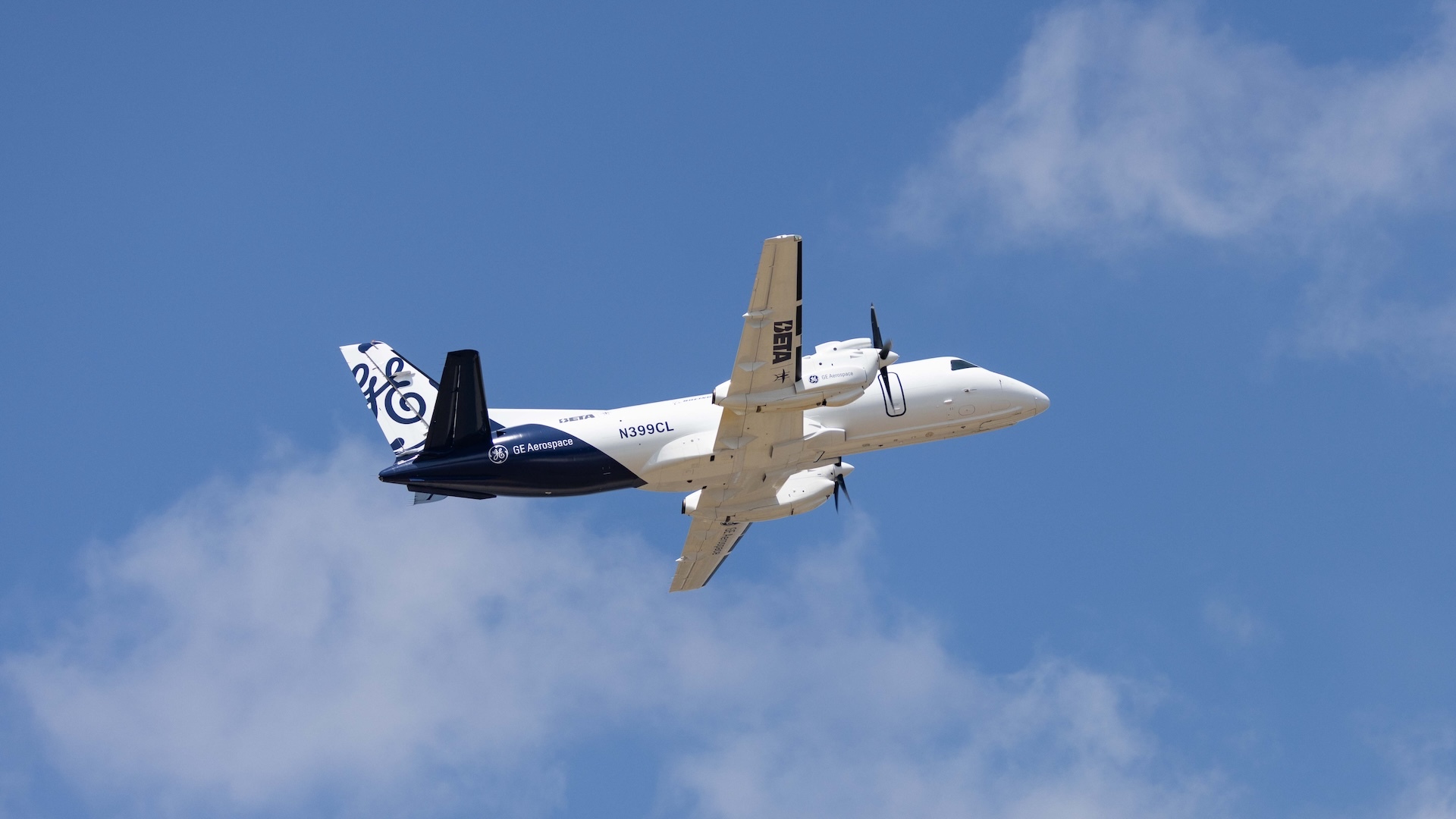
Years of joint work between NASA and GE Aerospace translated into a tangible milestone in July 2026: a megawatt-class hybrid-electric propulsion system completed a flight demonstration in front of a live audience at the Farnborough International Air Show in the United Kingdom. The event marked the first public, real-flight validation of a hybrid-electric engine at this power level.
The system was integrated onto a Saab 340B, a twin-turboprop regional aircraft used here as an airborne testbed. The platform was selected for its structural compatibility with high-power electrical systems and its well-understood flight envelope, making it a practical choice for integrating cutting-edge propulsion hardware.
The program falls under NASA's broader Electrified Aircraft Propulsion research initiative, which aims to chart a credible path toward meaningfully lower fuel burn for commercial air transport. GE Aerospace contributed its propulsion engineering depth to ensure the hybrid architecture could be built and operated to rigorous aerospace standards.
Why one megawatt matters
Among propulsion engineers, the megawatt threshold represents more than a round number. Below it, onboard electric systems remain largely confined to auxiliary functions or small unmanned platforms. Cross it, and the technology becomes relevant for aircraft carrying dozens of passengers — precisely the segment responsible for the bulk of commercial aviation's carbon footprint.
A hybrid-electric engine at this power scale combines a conventional thermal source — in this case a turbogenerator — with high-power electrical components. The goal is not to eliminate jet fuel in the near term, but to manage energy flow dynamically across all phases of flight, cutting overall consumption particularly during climb and cruise.
NASA has indicated that the data gathered during the Farnborough flight will be made available to the broader aerospace industry. This open-data approach is consistent with the agency's role as a research enabler rather than a commercial developer, allowing airframers and engine manufacturers to build on the findings independently.
A proof point, not yet a product
Staging this demonstration at one of the most visible events in global aerospace was a deliberate choice. NASA and GE Aerospace are signaling to the industry that megawatt-scale hybrid-electric propulsion has moved out of the laboratory and onto the flight line.
That said, a technology demonstrator and a certified, production-ready system are separated by a considerable gap. Regulatory pathways for novel propulsion architectures remain complex in both the United States and Europe. Outstanding engineering challenges — thermal management of high-power electrical components, energy storage density, and line-maintenance procedures — have not been fully resolved.
Still, this flight establishes something the industry needed: empirical proof that the megawatt class is achievable under real operating conditions. What remains to be seen is how quickly this class of technology can move toward certification and fleet integration, and which players — from North America, Europe, or Asia — will be first to bring a hybrid-electric regional aircraft to market.