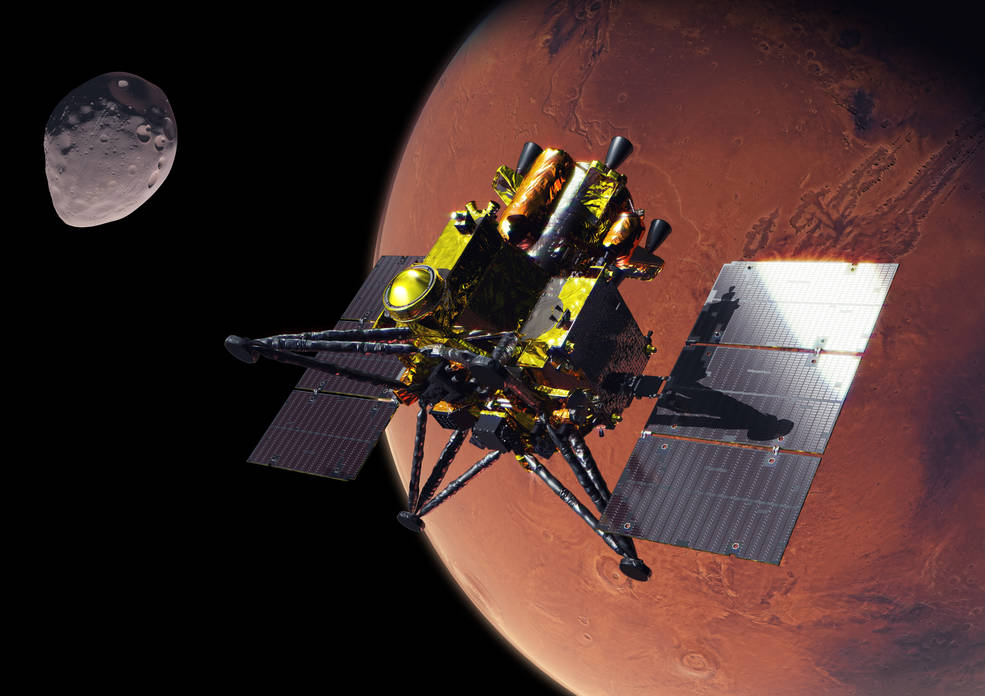
A long silence brings an era to a close
NASA has officially declared the end of operations for the Mars Atmosphere and Volatile Evolution spacecraft, better known as MAVEN, after engineers spent six months attempting to restore a communication link with the probe. Launched in November 2013 and placed into Martian orbit in September 2014, MAVEN was designed to investigate the upper atmosphere of Mars and determine how the planet shed most of its atmospheric gases over billions of years.
Despite sustained efforts by teams at the Jet Propulsion Laboratory and Goddard Space Flight Center, the spacecraft could not be brought back online. NASA formally announced the mission's conclusion, drawing the curtain on one of the most scientifically fruitful robotic missions in the history of Mars exploration.
A final discovery hidden in the data
Before contact was lost for good, MAVEN had already transmitted enough data for scientists to identify an atmospheric phenomenon that had never previously been documented at Mars. The precise nature of this newly observed process has not yet been fully detailed in available scientific literature, but its identification underscores the enduring value of the extensive dataset MAVEN accumulated over more than ten years of continuous observation.
During its operational life, MAVEN produced some of the most consequential findings in planetary science. Chief among them was the confirmation that the solar wind — a continuous stream of charged particles flowing from the Sun — is the dominant driver behind the gradual stripping of the Martian atmosphere. That process is now understood to be a primary reason why Mars, once a world with flowing liquid water, became the cold, arid environment it is today. Those findings have since informed both planetary climate models and broader discussions about habitability conditions on exoplanets.
A legacy that will outlast the mission itself
MAVEN's data archive, built over more than a decade of in-situ measurements, represents a resource the global scientific community will continue to draw on for years to come. The mission produced detailed maps of the interactions between Mars's residual crustal magnetic fields, the solar plasma environment, and the charged-particle population of the planet's magnetosphere — all essential components in modeling atmospheric escape processes.
NASA continues to operate other assets in Martian orbit, including Mars Reconnaissance Orbiter and the veteran Mars Odyssey spacecraft. The European Space Agency maintains Mars Express and the Trace Gas Orbiter, the latter a joint mission with Roscosmos. However, MAVEN was unique in its focus on the upper atmosphere and ionosphere; its loss leaves a measurable gap in ongoing Martian atmospheric surveillance that no current mission is fully equipped to fill.
Whether NASA will prioritize a dedicated aeronomy follow-on mission for Mars remains an open question. The agency faces competing demands: the Artemis lunar program, early-stage planning for crewed Mars missions, and the need to sustain a broad portfolio of robotic science. For now, the instruments are silent, but the science MAVEN made possible is far from finished.