Primary mirror cleared after rigorous final inspection
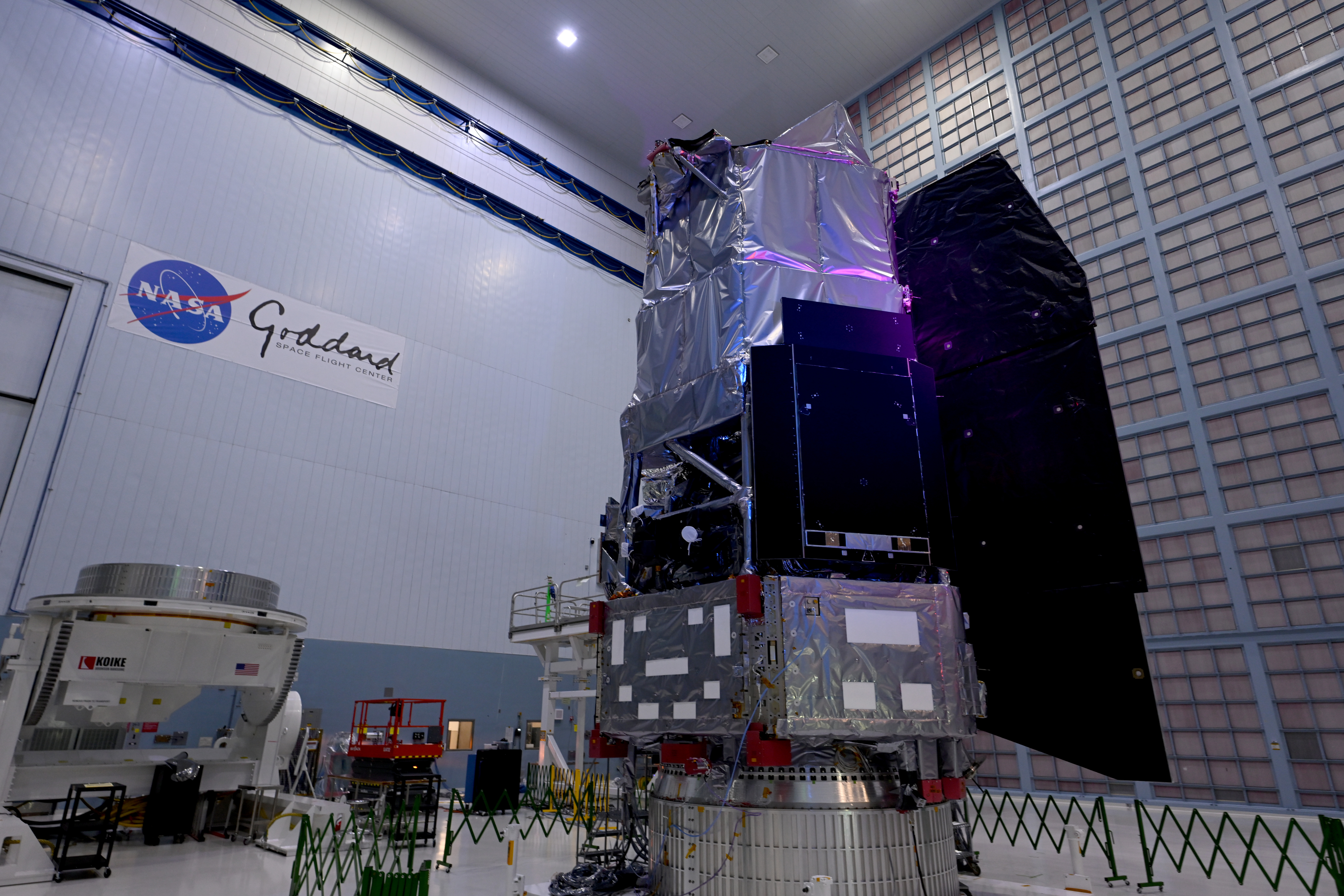
Engineers at NASA's Goddard Space Flight Center in Greenbelt, Maryland, have signed off on the primary mirror of the Nancy Grace Roman Space Telescope following a thorough final review. The mirror measures 2.4 meters across — the same aperture as the Hubble Space Telescope — and serves as the observatory's central optical element, gathering and focusing light from cosmic sources across a vast range of distances.
Completing this inspection represents the last major technical gate in Roman's assembly and testing phase at Goddard. The sign-off confirms that the mirror meets all optical and structural requirements needed to proceed toward launch. Roman is no longer a hardware program in progress: it is now a fully assembled observatory, verified and ready for the next phase of its journey.
The Pegasus barge will carry Roman south to Florida
The telescope is set to depart Goddard in the coming weeks aboard NASA's Pegasus barge, a dedicated transport vessel that has previously carried other large and sensitive payloads to Kennedy Space Center in Florida. Barge transport is the preferred method for hardware of this scale and fragility, as it minimizes the mechanical stress that road or air transport could impose on precision optical components.
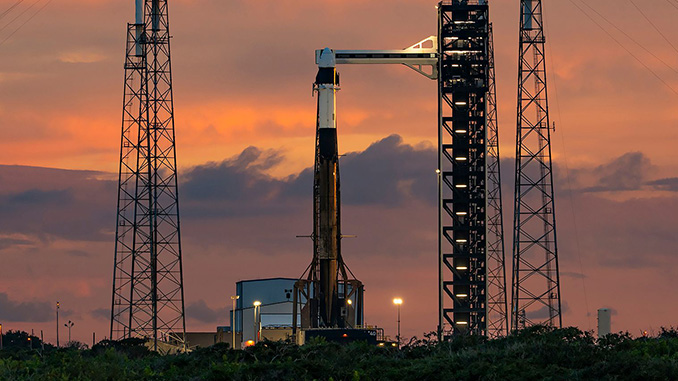
NASA has opened media accreditation for journalists wishing to document the observatory's arrival at Kennedy. The handover from Goddard to Kennedy marks the formal start of pre-launch operations in Florida, where Roman will be mated to its launch vehicle and subjected to a final round of integrated testing before being cleared for flight.
Wide-field surveys designed to reshape cosmology
Roman is built to deliver sky surveys with a field of view roughly one hundred times wider than Hubble's, at comparable image sharpness. Its primary science objectives span several of the most pressing open questions in modern astrophysics: the properties and distribution of dark energy and dark matter, the detection of exoplanets through gravitational microlensing, and the large-scale structure and evolution of galaxies across cosmic time.
The telescope carries the name of Nancy Grace Roman, who served as NASA's first Chief of Astronomy and played a foundational role in making the Hubble Space Telescope a reality. Roman is considered one of the agency's flagship missions for the current decade, with a target launch date in 2027. The specific launch vehicle has not been formally confirmed at the time of writing.
As the observatory prepares to leave Maryland for the Florida coast, the international research community moves into a period of anticipation. The datasets Roman is expected to generate will likely support decades of investigation in cosmology, galactic astrophysics, and planetary science.