Crew-13 lifts off with an international quartet
On October 1, 2026, a Falcon 9 rocket lifted off from Space Launch Complex 40 at Cape Canaveral Space Force Station in Florida, carrying a Dragon capsule and four crew members bound for the International Space Station. The Crew-13 mission brought together NASA astronauts Jessica Watkins and Luke Delaney, Canadian Space Agency astronaut Joshua Kutryk, and Roscosmos cosmonaut Sergey Teteryatnikov.
The flight is part of NASA's Commercial Crew Program, which has relied on SpaceX to ferry astronauts to the ISS on a rotating basis for several years. The multinational composition of the crew — representing American, Canadian, and Russian space agencies — reflects the enduring collaborative spirit aboard the station, even as diplomatic relations between Washington and Moscow remain strained on the ground.
Watkins, who first visited the ISS in 2022, returns with considerable orbital experience. Delaney is flying to space for the first time. Kutryk, meanwhile, joins a small group of Canadian astronauts to have reached the station aboard a commercially operated Dragon spacecraft. Their mission is expected to last several months, contributing to ongoing scientific research and station maintenance.
Tranche 1 Transporter Layer A: the Pentagon builds out its orbital backbone
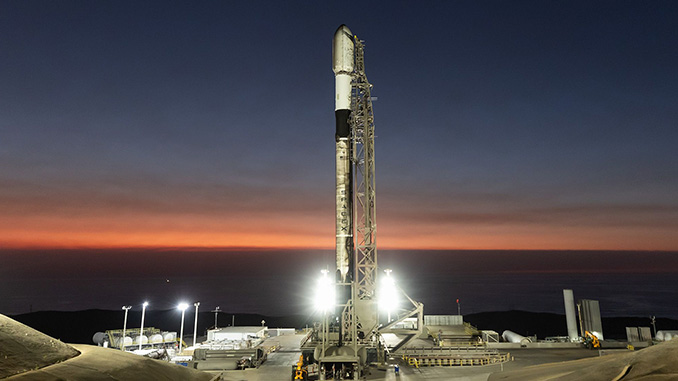
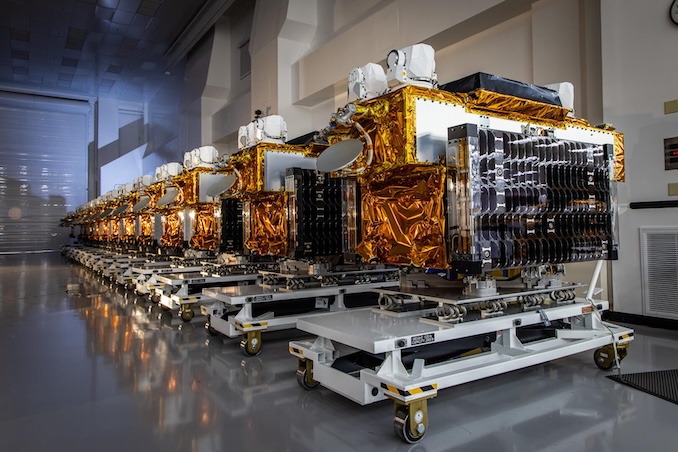
Just days later, SpaceX was set to conduct another launch — this time from Vandenberg Space Force Base in California. Liftoff from pad 4E was scheduled for 1:17 a.m. local time on October 5, with the goal of deploying 21 data-transport satellites on behalf of the Space Development Agency (SDA), the Pentagon office overseeing the development of military satellite constellations.
Known as Tranche 1 Transporter Layer A, this mission marks the fourth flight supporting the Proliferated Warfighter Space Architecture (PWSA). The PWSA concept is built around resilience: rather than relying on a handful of high-value satellites that could be targeted in a conflict, the SDA is populating low Earth orbit with a large number of smaller, less expensive spacecraft designed to maintain communications and data links even under adversarial conditions.
SpaceX's proven ability to launch frequently and deploy satellites in bulk — honed through years of Starlink operations — makes it a natural fit for this kind of proliferated architecture. The company has become the SDA's primary launch provider as the agency races to field an operational constellation.
Falcon 9's grip on orbital access shows no sign of loosening
Taken together, these two missions capture something essential about the state of spaceflight in late 2026: a single commercial rocket, the Falcon 9, underpins both NASA's human spaceflight ambitions and the U.S. military's evolving orbital strategy. Few vehicles in the history of rocketry have served such varied and demanding customers simultaneously.
That concentration of launch capability in one operator's hands is not without consequence. Competitors such as Rocket Lab and United Launch Alliance are working to capture a larger share of the government launch market, but neither currently matches SpaceX's launch tempo. Whether that dynamic shifts in the coming years will depend in part on how quickly next-generation vehicles — from multiple providers — mature into reliable operational systems. For now, Falcon 9 remains the workhorse that no one has yet managed to unseat.