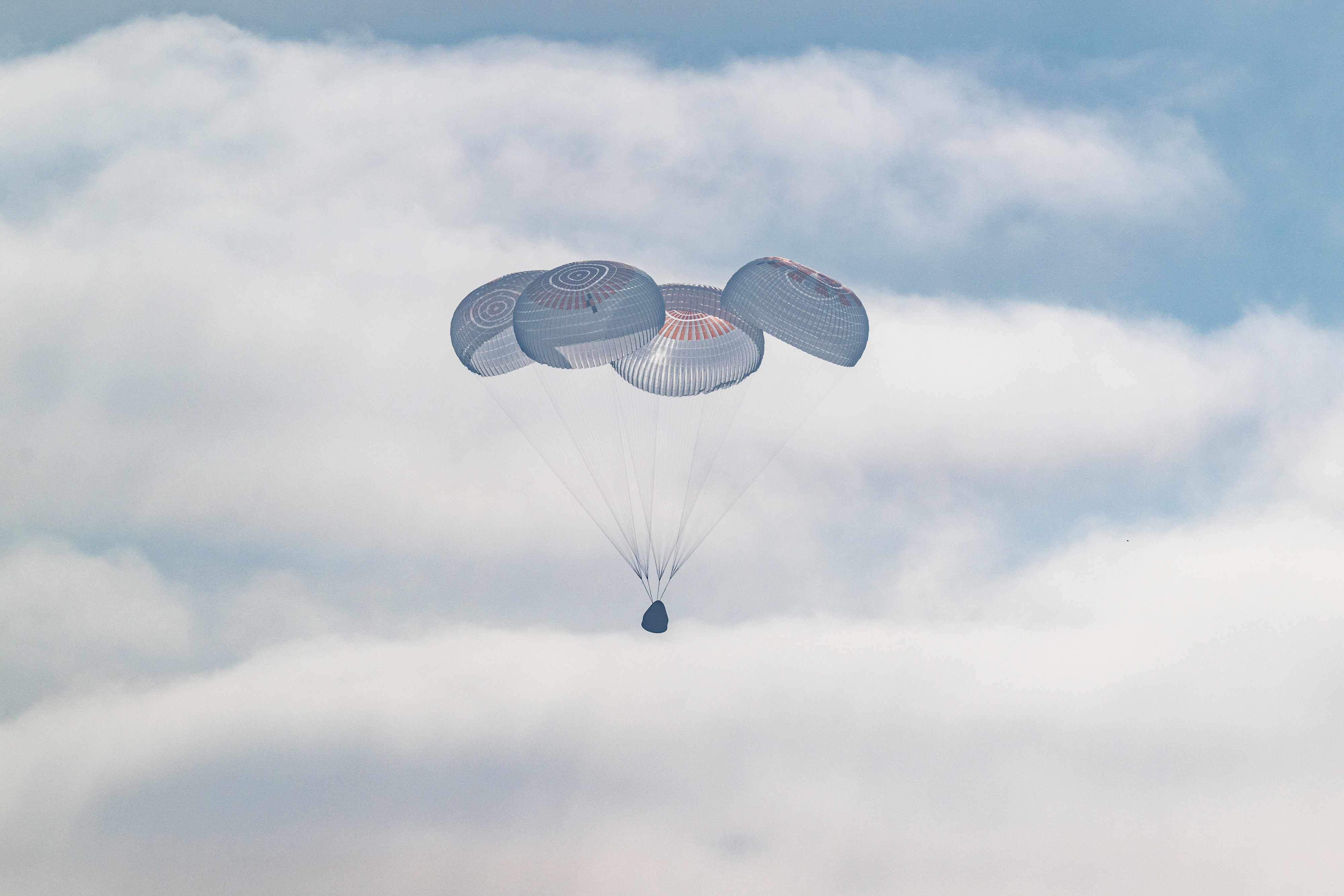
Starfall takes flight for the first time
On June 24, 2026, a SpaceX Falcon 9 rocket lifted off from Launch Complex 40 at Cape Canaveral Space Force Station, carrying a vehicle unlike anything the company has publicly flown before. Starfall — a dedicated reentry capsule tipping the scales at approximately 2,100 kilograms — separated from the upper stage and began its demonstration mission in low Earth orbit. Liftoff occurred at 10:43 UTC, on schedule.
Starfall is not a crewed vehicle. It sits outside the Dragon family entirely, representing what appears to be a new category of hardware for SpaceX: a purpose-built orbital return platform. The company has not fully disclosed the nature of the payload carried aboard this inaugural flight, nor has it provided a detailed description of the planned recovery operations. What is known is that the primary objective is to validate the capsule's behavior during atmospheric reentry and splashdown.
A busy week across the global launch industry
The Starfall demonstration is one of six orbital launch attempts scheduled worldwide during this period, underlining the relentless pace of the space industry heading into the second half of 2026. Alongside additional Falcon 9 missions from SpaceX, Chinese launch providers are also active on the manifest, continuing the country's sustained cadence of orbital flights.
One mission drawing particular attention from the spaceflight community is the return to flight of the Pegasus XL, the air-launched rocket built by Northrop Grumman. The Pegasus deploys from a modified L-1011 carrier aircraft at high altitude rather than from a ground-based pad — a capability that offers flexibility in both launch site and inclination. The vehicle had not flown for several years, making this week's mission a notable moment for small-lift launch options.
Reading between the lines of SpaceX's strategy
The emergence of a standalone reentry vehicle, separate from Crew Dragon and Cargo Dragon, invites questions about where SpaceX intends to take this technology. Industry observers have speculated that Starfall could be positioned for missions requiring the return of high-value or sensitive payloads — in-space manufactured materials, scientific samples, or defense-related hardware — under contracts with agencies such as NASA or the U.S. Department of Defense.
Those applications remain unconfirmed at this stage, and it would be premature to read too much into a single demonstration flight. SpaceX has consistently developed hardware before announcing its full commercial intent.
Still, the context matters. Companies like Varda Space Industries have already begun building a business around manufacturing in microgravity and returning products to Earth. Sierra Space continues to develop the Dream Chaser spaceplane for cargo return missions. SpaceX, with Starfall, appears determined to establish a presence across every segment of the orbital economy — including the one that ends with a splashdown.