Drilling into Nazca's geological secrets
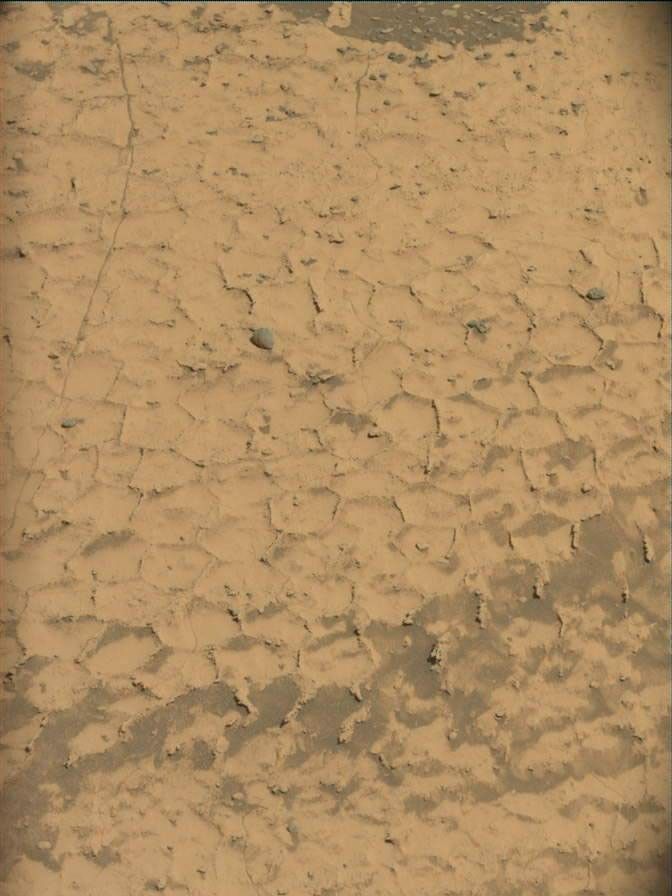
In late October 2026, NASA's Curiosity rover completed its 49th drilling operation on the Martian surface, at a location the science team has named Nazca. The choice of site was deliberate. During earlier traverses through this area, the rover's cameras had detected unusual disc-shaped inclusions embedded in the surrounding rocks. Scientists tentatively interpreted these features as potential ancient crystals — structures that may have formed billions of years ago when liquid water was present in the region.
Susanne P. Schwenzer, a professor of planetary mineralogy at The Open University in the United Kingdom and a member of the Curiosity science team, highlighted the significance of returning to this specific location. If the inclusions do turn out to be crystals, their chemical makeup could reveal a great deal about the physical and chemical conditions that once prevailed in this part of Mars — conditions that may have been conducive to habitability. By drilling below the surface-weathered layer, the team can access rock material that is better shielded from cosmic radiation and therefore more chemically pristine.
Energy constraints shape every decision
Drilling on Mars is far from routine, particularly for a rover well past its original two-year design life. Each operation sets off a chain of instrument activity: the percussive drill on the robotic arm extracts a powdered sample, which is then funnelled into the CheMin mineralogy instrument and the SAM chemistry suite. Together, these tools provide a detailed portrait of the rock's composition. The process, however, is energy-intensive — and that matters enormously for Curiosity.
The rover runs on a Multi-Mission Radioisotope Thermoelectric Generator, which converts heat from decaying plutonium into electricity. After more than fourteen years of operation, its power output has declined noticeably. To compensate, mission planners at NASA's Jet Propulsion Laboratory have built dedicated recharging periods into the schedule. Between sols 5060 and 5062 — the equivalent of several days in early November 2026 — Curiosity was placed in a low-activity mode to let its batteries recover. Remington Free, an operations systems engineer at JPL, confirmed that these rest periods are now a standard part of the planning cycle, ensuring the rover retains enough energy reserves to conduct the full analytical sequence after each drill campaign.
Looking ahead to hole number fifty
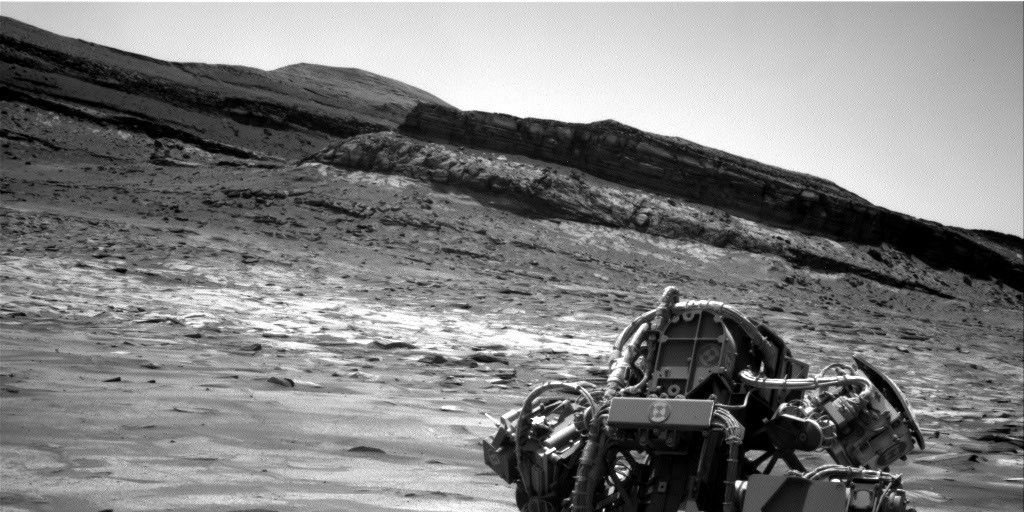
With 49 drill holes completed, the team is quietly aware that the 50th is not far off. Beyond the milestone value, each new sample adds a data point to the geochemical map of Mount Sharp, the layered mound at the center of Gale Crater that Curiosity has been ascending since 2014. The successive rock strata preserve a record of Mars's environmental evolution over hundreds of millions of years.
The current drilling area sits at a mineralogical transition zone between sulfate-bearing and clay-bearing rocks — a boundary believed to mark a major shift in Martian climate and water availability. Results from Nazca, once fully processed, are expected to refine existing geological models of that transition. The team is careful to note that the disc-shaped inclusions have not yet been confirmed as crystals; chemical analysis from CheMin and SAM is still ongoing, and definitive conclusions will follow in due course.
Launched in 2011 and landed in Gale Crater in August 2012, Curiosity continues to extend one of the longest and most productive chapters in robotic planetary exploration — one drill hole at a time.