Fourteen years of drilling, one hole at a time
When NASA's Curiosity rover touched down in Gale Crater in August 2012, its drill was one of its most consequential tools. By November 2026, that drill has punched 49 distinct holes into the Martian surface — a milestone documented in a collage released by the Jet Propulsion Laboratory. Each circular bore represents a carefully chosen sampling site, selected for its potential to illuminate how Mars evolved over billions of years.
The process is methodical and time-consuming. After identifying a promising rock target, the science team plans a drilling sequence that unfolds over several Martian sols. The drill, mounted at the end of Curiosity's robotic arm, grinds rock into fine powder and delivers it to two onboard laboratories: CheMin, which uses X-ray diffraction to identify mineral phases, and SAM, which performs chemical analysis and searches for organic compounds. Together, these instruments have produced a dataset with no equivalent anywhere else in planetary science.
What Basque Lakes and Nazca added to the record
The rover's most recent campaign centered on two sites named Basque Lakes and Nazca, both located in the upper sedimentary layers of Mount Sharp — the towering mound at the center of Gale Crater whose strata record hundreds of millions of years of Martian climate history. According to Abigail Fraeman, deputy project scientist at JPL, the samples gathered at these locations yielded meaningful scientific returns, though detailed findings have yet to appear in peer-reviewed publications.
What the team can confirm is that both sites contributed new data points to the broader picture of ancient wet environments on Mars. Whether those data point to aqueous mineral alteration, specific chemical signatures, or something else entirely will become clearer as analysis continues. Mars science rarely delivers its answers quickly.
Polygons ahead, mission still going strong
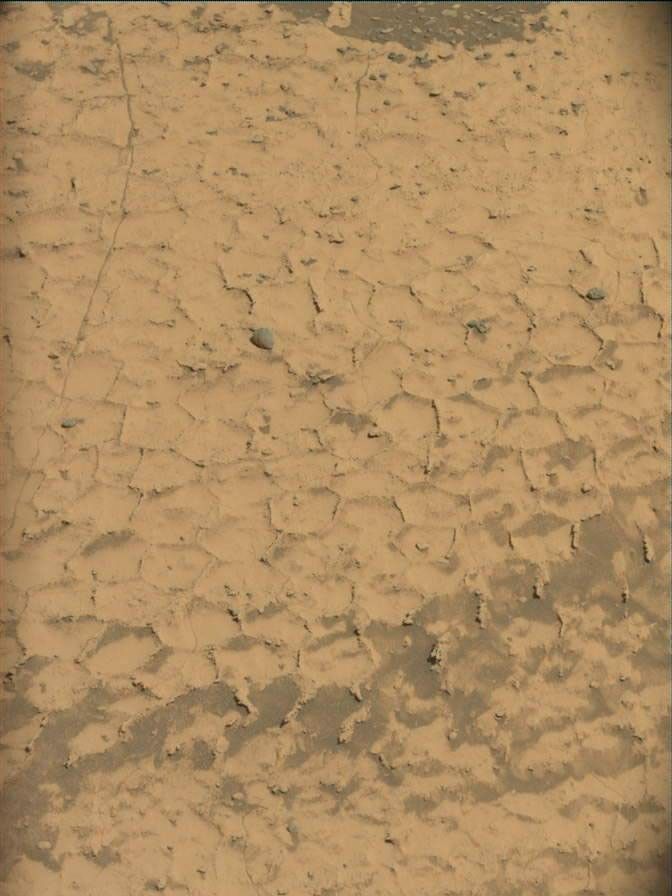
With the drilling campaign behind it, Curiosity is now driving toward terrain marked by polygonal fracture patterns — a surface texture that has drawn scientific attention throughout the mission. These geometric shapes, etched into rock over geological timescales, are thought to result from repeated drying cycles or freeze-thaw processes, making them useful proxies for ancient climate conditions.
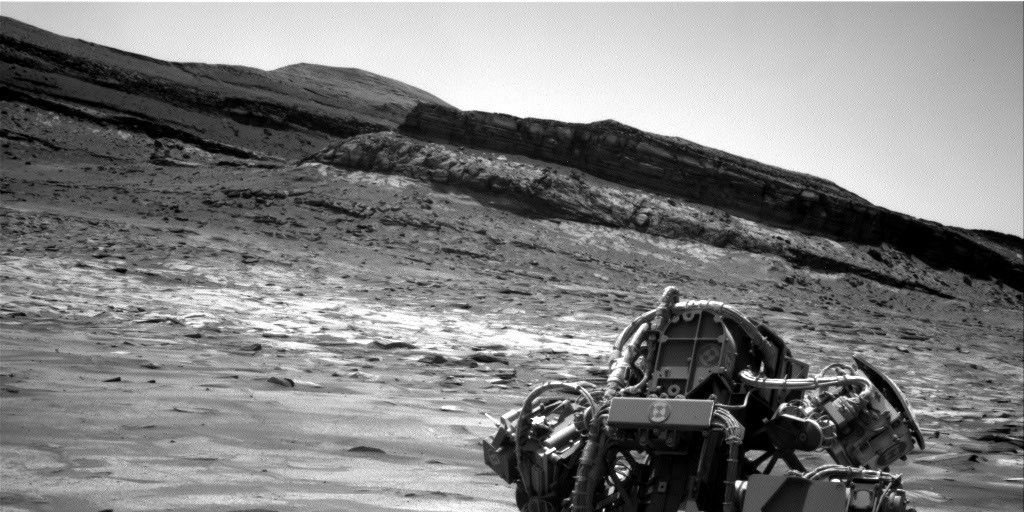
The image of 49 drill holes, lined up in a single collage, is more than a visual curiosity. It represents the cumulative output of a mission that has outlasted its original two-year design life by more than a decade. NASA has extended Curiosity's operations repeatedly, and the rover continues to function well enough to pursue ambitious science. As it rolls toward its next targets on the flanks of Mount Sharp, the question is not whether it will find something new — but how much of Mars's deep past it can still recover before the mission eventually concludes.