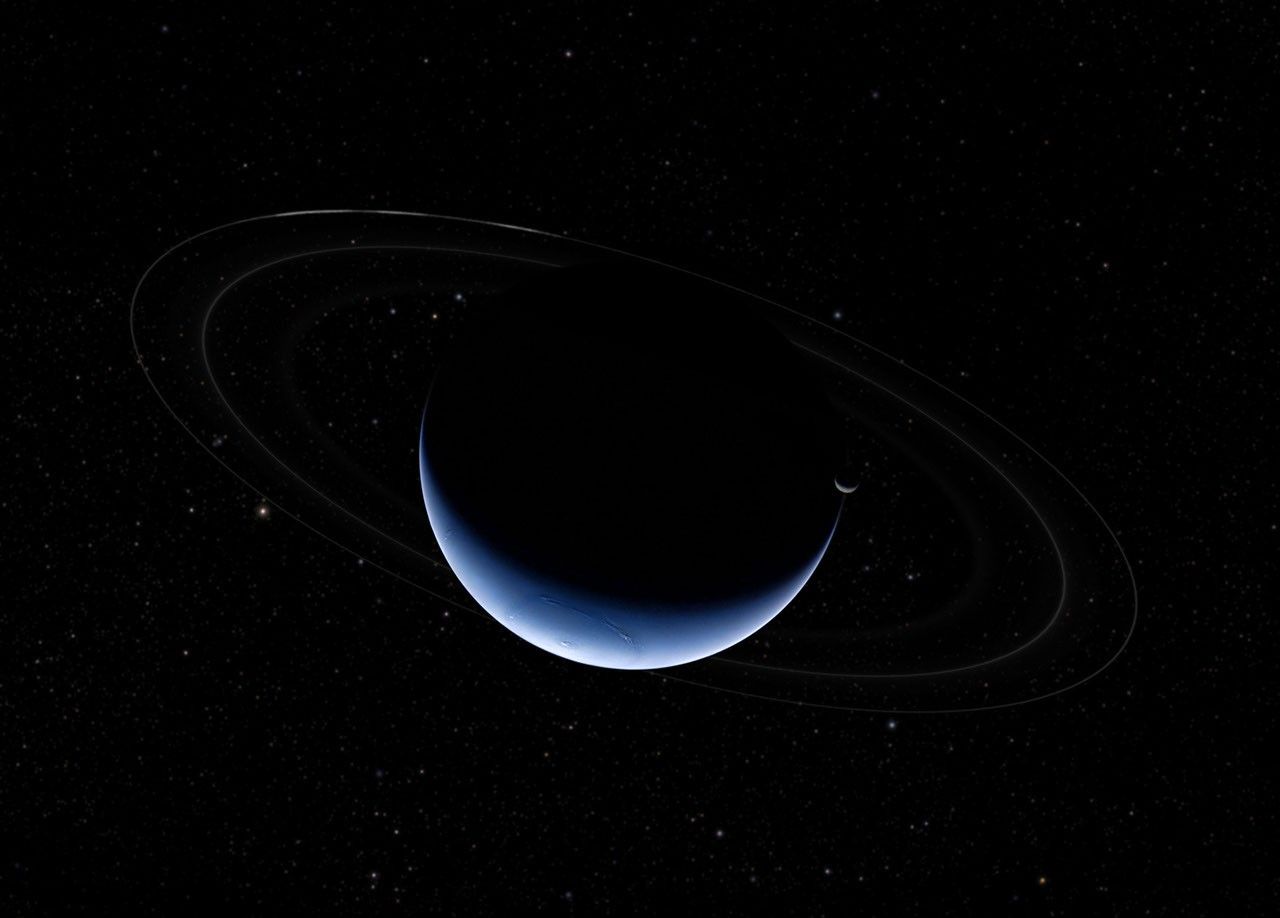
At precisely 10:16:07 UTC on Wednesday, November 18, 2026, NASA's Voyager 1 spacecraft crossed a threshold that few could have envisioned when the probe lifted off in September 1977: a distance of one light-day from Earth. That translates to approximately 25.9 billion kilometers, a figure that stretches well beyond the limits of everyday intuition and stands as a testament to what a well-engineered spacecraft, a little gravitational assistance, and five decades of patience can accomplish.
What one light-day actually means
A light-day is the distance light travels through a vacuum in twenty-four hours — close to 26 billion kilometers. At its current speed of nearly 38,000 miles per hour (roughly 61,000 kilometers per hour), Voyager 1 is receding from the Sun along a trajectory set in stone since its gravitational flybys of Jupiter in 1979 and Saturn in 1980. Those planetary encounters provided the kinetic boost that placed the probe on a permanent escape trajectory from the solar system, which it formally exited in 2012 when it crossed the heliopause and entered interstellar space.
The communications lag that comes with such distance is staggering in practical terms. A radio signal from Voyager 1 now takes more than twelve hours to reach NASA's Deep Space Network antennas on Earth. Any two-way exchange — a command sent and an acknowledgment received — spans a full day or more. The engineers at the Jet Propulsion Laboratory in Pasadena, California, who manage the mission, long ago learned to work in a world where real-time dialogue with the spacecraft is simply not possible.
An aging spacecraft that refuses to go quiet
What makes this milestone especially striking is that Voyager 1 is still working. Built with 1970s-era electronics and carrying instruments that predate the personal computer era, the probe continues to return scientifically valuable data. Its sensors are measuring plasma density, magnetic field variations, and cosmic ray intensity in the local interstellar medium — an environment no other spacecraft has ever sampled directly.
The power source keeping it alive is a radioisotope thermoelectric generator fueled by the radioactive decay of plutonium-238. NASA estimates that the dwindling electrical output will drop below the threshold needed to operate any science instruments sometime in the early 2030s, at which point the mission will effectively come to a close. In recent years, the mission team has demonstrated remarkable ingenuity in managing hardware anomalies — including a memory issue that briefly disrupted communications in 2023 — from a distance that makes any physical repair entirely hypothetical.
Perspective from the edge of the known
Reaching one light-day prompts an uncomfortable sense of scale. Proxima Centauri, the nearest star to our Sun, sits roughly 4.2 light-years away — more than 1,500 times the distance Voyager 1 has covered. At its present speed, the probe would not reach that star system for approximately 73,000 years. The cosmos, in other words, dwarfs even our most ambitious achievements.
November 18, 2026 does not mark a new scientific discovery in itself, but it offers a moment to reflect on a mission that has outlasted careers, exceeded every original expectation, and continued producing results long after most hardware of its generation turned to rust or was decommissioned. Voyager 1 remains, by an enormous margin, the most distant object humanity has ever sent into the universe — and for now, it is still talking.