Saturn leads a busy night sky lineup
October 2026 offers skywatchers a well-stocked calendar. Saturn reaches opposition this month, meaning Earth sits directly between the ringed planet and the Sun. In practical terms, Saturn rises in the east as the Sun sets in the west and remains visible throughout the night. It is the single best time of the year to observe the planet, whether with the naked eye or through a telescope — at opposition, the rings and their shadow on the planet's disk stand out with particular clarity.
Later in the month, the Orionid meteor shower peaks during the night of October 20 into 21. Produced by debris shed by Halley's Comet as Earth crosses its orbital path each year, the Orionids typically generate between twenty and thirty meteors per hour under optimal conditions — a dark, rural sky with minimal moonlight interference. The shower's radiant lies within the constellation Orion, which climbs higher above the eastern horizon as the night progresses into its second half, making the pre-dawn hours the most productive window for meteor hunting.
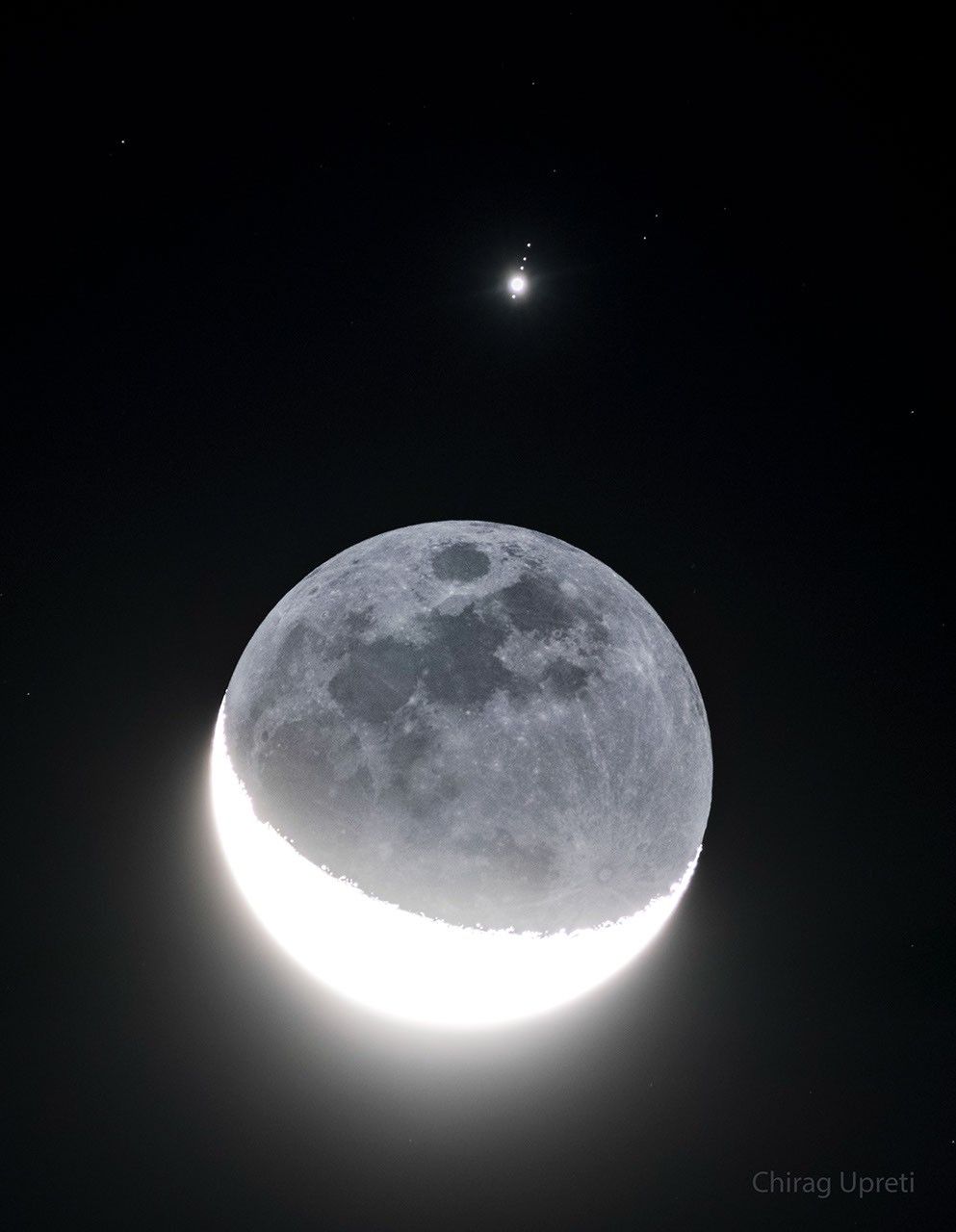
Rounding out the month's highlights, the Moon will pass strikingly close to the Pleiades star cluster — also known as the Seven Sisters — offering a visually appealing pairing that requires no equipment beyond a clear sky. The contrast between the Moon's white glow and the blue-tinged light of this young open cluster makes for a memorable naked-eye or binocular view.
Curiosity photographs itself from Vera Rubin Ridge
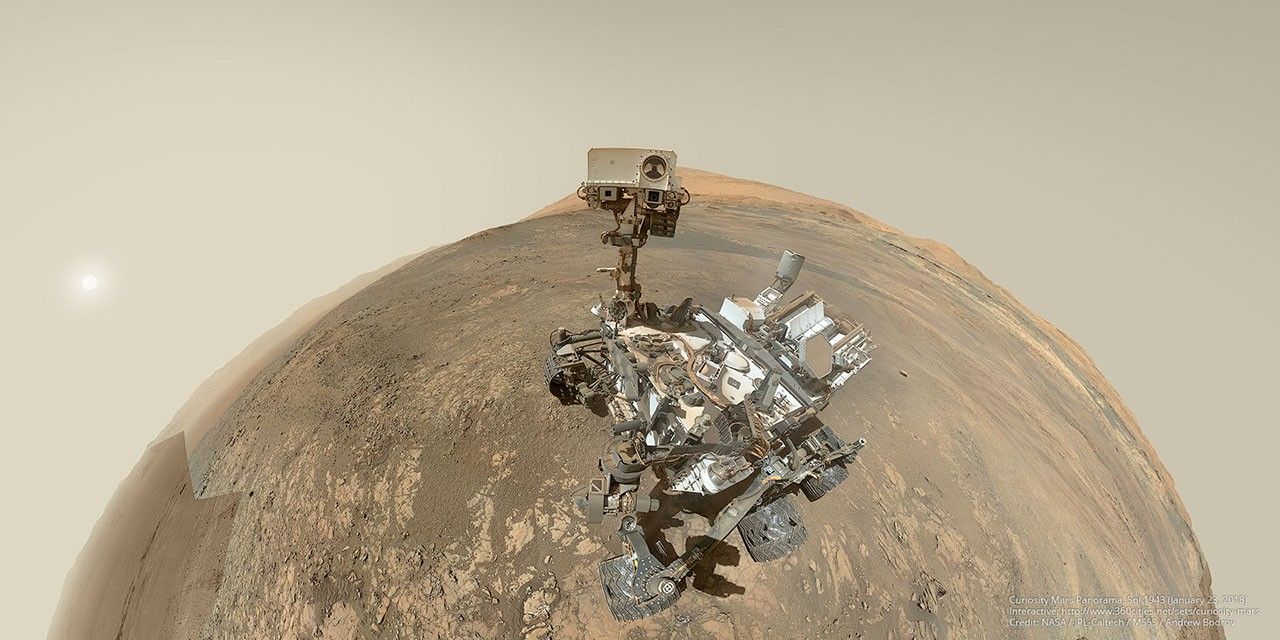
While Earth's sky draws observers outdoors, NASA's Curiosity rover is busy on another world. On October 3, NASA released a self-portrait of the rover taken from Vera Rubin Ridge, a distinctive geological feature within Gale Crater on Mars. The ridge is named after American astrophysicist Vera Rubin, whose observational work in the 1970s provided some of the strongest early evidence for the existence of dark matter.
Curiosity's so-called selfies are not single photographs. They are composites assembled from dozens of individual frames captured by the MAHLI camera — Mars Hand Lens Imager — mounted on the end of the rover's robotic arm. Each frame is taken at a different arm position, and the arm itself is carefully excluded from every shot, producing the visual effect of an image taken from outside the rover. The resulting mosaic shows Curiosity coated in a thin layer of Martian dust but structurally intact, surrounded by the layered, ochre-and-grey rock formations that define the ridge's geology.
Vera Rubin Ridge has been scientifically significant for the mission. Planetary geologists detected notable variations in hematite concentration within the ridge's rocks — a mineral whose formation on Earth is frequently associated with liquid water. These findings contribute to the broader picture of Mars's ancient hydrological history and whether conditions suitable for microbial life may once have existed there.
Two ways of looking outward
Taken together, these two stories point to something consistent about humanity's relationship with space: the impulse to look further does not slow down. Curiosity, launched by NASA in 2011, has far outlasted its original planned mission duration and continues returning scientifically valuable data. Meanwhile, October's planetary and meteor events require nothing more than a clear night and a willingness to step outside. Backyard astronomy and deep-space robotics sit at very different scales, but they share a common direction — outward.