A nine-figure commitment with continental ambitions
The Polish government has confirmed a financial pledge of approximately $745 million toward the development of IRIS² (Infrastructure for Resilience, Interconnectivity and Security by Satellite), the European Union's planned multi-orbit broadband satellite constellation. The announcement from Warsaw marks one of the most substantial national contributions to the program so far, underlining Poland's growing ambitions within European space policy.
IRIS² is designed as a layered constellation spanning both low and medium Earth orbits, with the stated goal of delivering secure, high-speed internet access to government agencies, operators of critical infrastructure, and eventually civilian users across the continent. A central driver of the project is Europe's desire to reduce its reliance on non-European commercial satellite operators — a category currently dominated by SpaceX's Starlink network.
Strategic logic behind Warsaw's investment
Poland's commitment goes beyond a simple expression of European solidarity. For Warsaw, it represents a calculated bet on industrial positioning. Poland has developed a fast-growing aerospace sector over the past decade, and contributions of this size typically translate into proportional industrial participation — meaning contracts, manufacturing roles, and engineering work flowing to domestic companies.
The geopolitical dimension is equally significant. As a country sharing borders with Russia and Belarus, Poland has a direct stake in ensuring that Europe possesses a resilient, interference-resistant communications infrastructure it controls entirely. Recent conflicts have underscored how satellite connectivity can shift from a convenience to a strategic necessity almost overnight, for both military and civilian purposes.
The IRIS² constellation is being developed through a public-private partnership that includes Eutelsat, SES, Hispasat, and Airbus Defence and Space, with Arianespace expected to handle a portion of the launches. Current estimates suggest the first satellites could reach orbit in the latter half of this decade, though the precise schedule remains subject to revision.
Funding momentum, but the program still has ground to cover
Poland's announcement is notable, but it arrives as IRIS² continues to grapple with a history of delays and budget adjustments. The overall cost of the constellation runs into several billion euros, and contributions from EU member states remain uneven. Observers hope that Warsaw's formal pledge could prompt other governments to accelerate their own financial commitments and close what remains a significant funding gap.
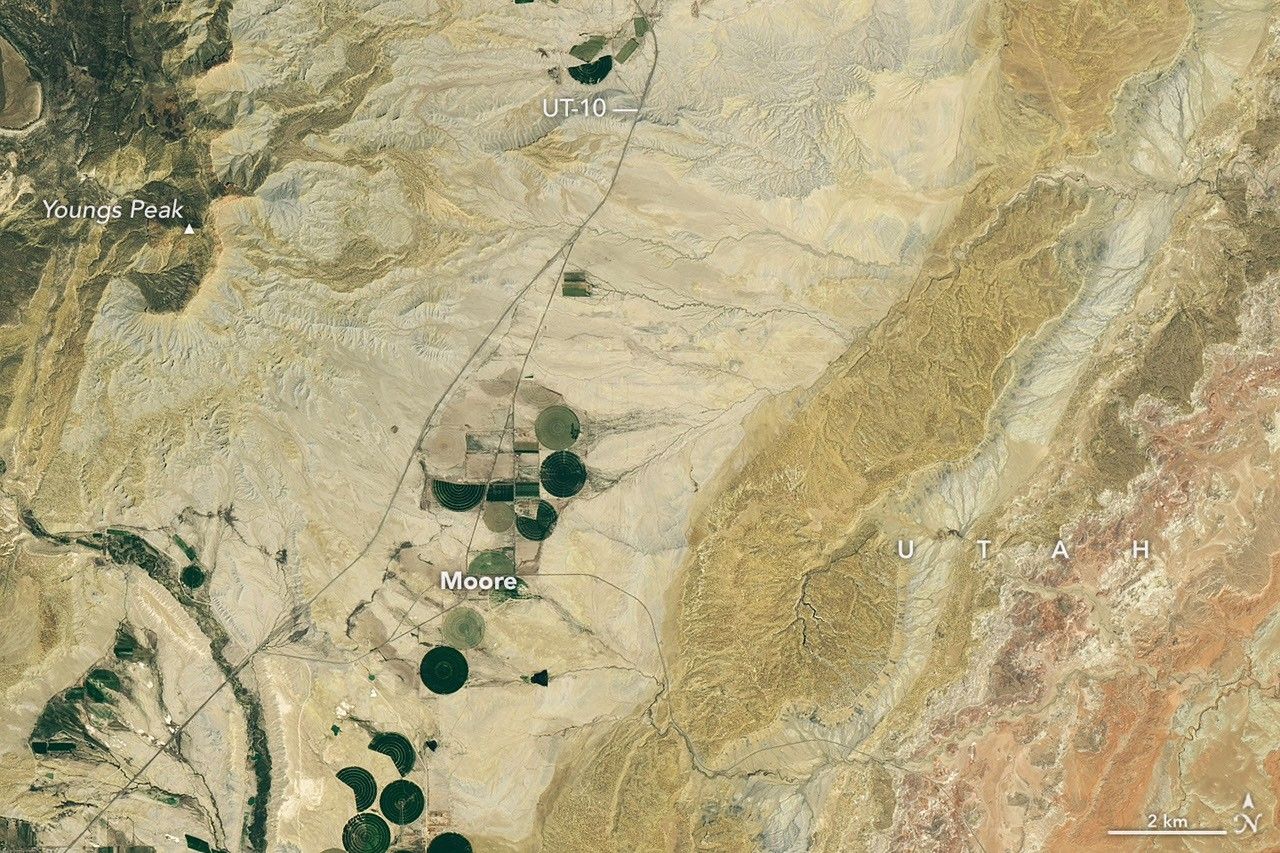
Building large-scale infrastructure programs — whether in space or on the ground — demands sustained coordination between public institutions and private industry over years or decades. A recent example from a very different sector offers an instructive parallel: a vast solar and battery storage facility in Utah, highlighted by NASA's Earth Observatory, demonstrates what concentrated capital and coordinated execution can achieve at scale. IRIS² managers will need that same discipline to stay on track.
Ultimately, the constellation's success will hinge on two parallel challenges: maintaining political will among EU member states throughout a lengthy and expensive development cycle, and ensuring that Europe's industrial base — from satellite manufacturers to launch providers — can deliver on its commitments at a pace competitive with operators like SpaceX and Amazon's Project Kuiper.