Third sea launch, third success for Orienspace
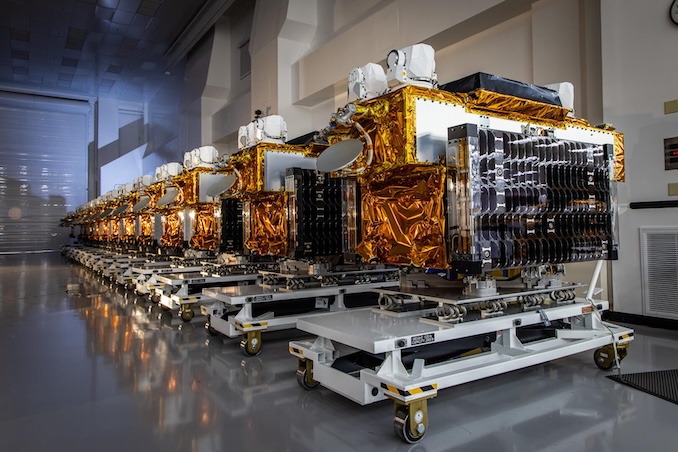
Chinese commercial launch company Orienspace conducted the third flight of its Gravity-1 solid rocket late Tuesday, lifting off from a maritime platform positioned in waters near Shanghai. The 30-meter vehicle placed nine satellites into orbit, marking another milestone for a company that has now strung together a consistent run of successful sea-based missions. Operating from open water gives launch providers meaningful flexibility: it allows them to select trajectories that would be geometrically or legally difficult from inland sites, while keeping populated areas clear of potential debris corridors.
Gravity-1's all-solid propulsion architecture plays a central role in making maritime operations viable. Unlike liquid-fueled rockets, solid motors require no cryogenic or hypergolic propellant loading in the hours before liftoff, which substantially simplifies shipboard logistics. Orienspace now belongs to a still-small group of operators with proven offshore launch capability. Within China, state-owned CASC pioneered the approach in 2019 using a converted barge in the Yellow Sea for its Long March 11 rocket.
A crowded manifest for China's commercial launch industry
This mission lands in the middle of a particularly active stretch for China's private and semi-private launch sector. Multiple vehicles from companies including LandSpace, CAS Space, and iSpace are scheduled to fly in the coming weeks, a pace that would have seemed implausible just five years ago when no Chinese commercial operator had yet reached orbit. The breadth of that roster reflects deliberate industrial policy as much as entrepreneurial energy, with government-backed funding supporting a wide field of competing ventures.
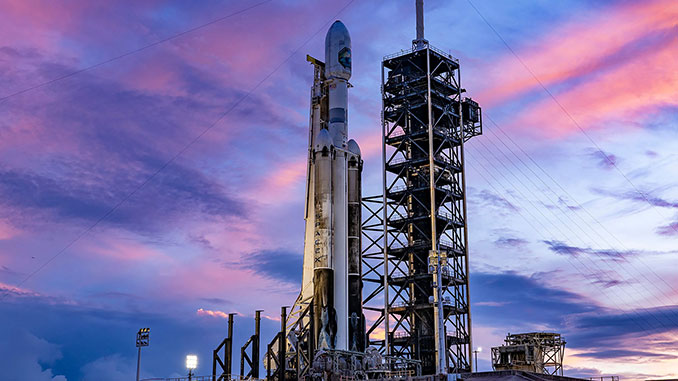
The contrast with some Western programs is notable. SpaceX recently had to call off a launch attempt for Starship Flight 13 before ignition, pushing the next try for the next-generation heavy-lift vehicle to a date that has not been publicly confirmed. SpaceX's Falcon 9 continues to dominate global commercial launch manifests with its high cadence, but the Starship delays are a reminder that even mature organizations encounter development friction on new vehicle programs.
Solid motors and the small-satellite market
The technical choice behind Gravity-1 deserves attention. Solid-propellant rockets cannot be throttled or shut down once ignited, which demands precise pre-flight qualification but delivers mechanical simplicity and rapid readiness. Those characteristics align well with the needs of the small-to-medium satellite segment, where operators increasingly prioritize schedule predictability and cost efficiency over raw payload capacity.
China now fields several distinct commercial solid-launch vehicles, each occupying a specific niche in terms of mass-to-orbit and target inclination. That diversity reduces reliance on any single vehicle type and gives Chinese launch providers a broader menu to offer prospective customers.
With three consecutive sea launches completed, Gravity-1 has moved beyond the demonstration phase. The broader question now is whether Orienspace and its domestic peers can begin capturing international manifest slots currently held by established Western and American operators — a competitive dynamic that the global launch market will be watching closely over the next few years.