A milestone touchdown for China's private sector
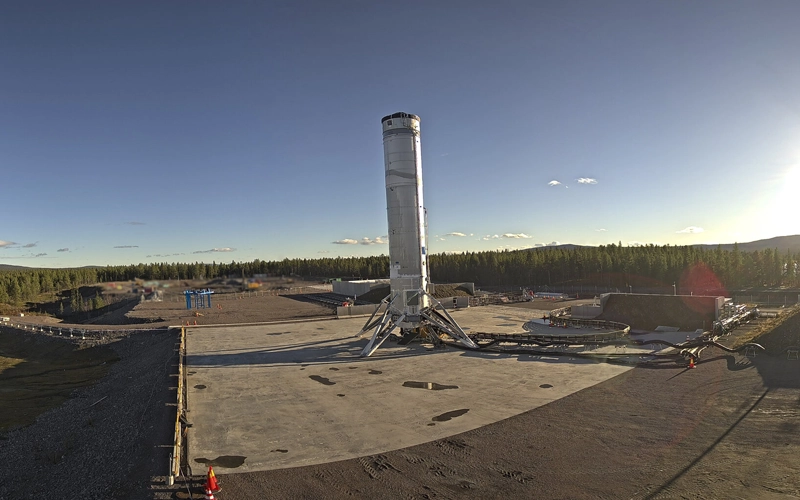
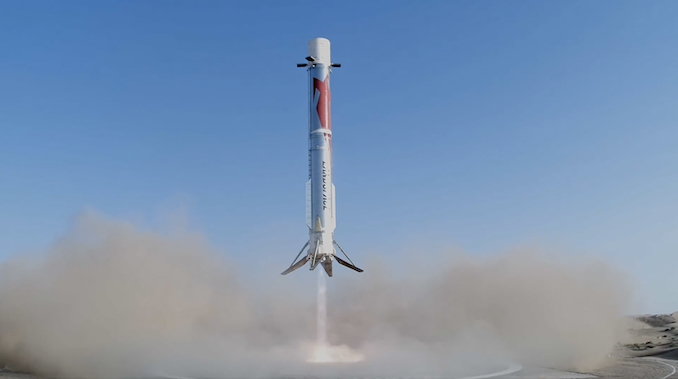
On August 19, 2026, LandSpace — a Beijing-based launch company founded in 2015 — successfully recovered the first stage of its ZhuQue-3 rocket following an orbital-class flight. The feat made LandSpace the first commercial Chinese company to land an orbital booster, and also the first to do so using deployable landing legs, a configuration not previously demonstrated on a Chinese-built launch vehicle.
Landing an orbital booster is technically demanding by any measure. The sequence requires precision engine re-ignition during descent, fine trajectory control through aerodynamic grid fins, deployment of landing legs in the final seconds of flight, and structural integrity capable of absorbing the forces of touchdown. By executing this sequence successfully, LandSpace's engineering team demonstrated a level of vertical landing maturity that few organizations worldwide have achieved.
ZhuQue-3 and the reusability-first design philosophy
ZhuQue-3 is the latest in LandSpace's family of launch vehicles. Where its predecessor ZhuQue-2 — a methane- and liquid oxygen-fueled rocket — made headlines by reaching orbit in 2023, ZhuQue-3 was designed from the ground up with reusability as a primary engineering constraint. Its first stage architecture reflects that priority, optimized to withstand the thermal and mechanical stress of repeated flight cycles.
The trajectory LandSpace has followed draws inevitable comparisons to that of SpaceX with the Falcon 9: gradual capability buildup, setbacks absorbed as learning opportunities, and a breakthrough moment that reshapes industry expectations. The context differs, of course — LandSpace operates within a Chinese ecosystem where state institutions remain influential even over nominally private companies — but the technical achievement stands on its own terms.
What this means for the launch market
The commercial implications are significant. A reusable booster can, in principle, sharply reduce the cost per kilogram to orbit — provided that refurbishment operations between flights are efficient and economically viable. LandSpace is still at an early stage of that journey. A single successful landing does not yet validate a full reuse business model. Key questions remain open: What turnaround cadence is achievable? How many flights can each booster sustain? What does sustained reliability look like over time?
Other players in China's commercial space sector — including Orienspace, Deep Blue Aerospace, and Galactic Energy — are watching this landing closely. Several of them are developing their own partially or fully reusable launch vehicles, and competition within China's domestic launch market is already intensifying.
On a global scale, the achievement reinforces a broader trend: reusable orbital boosters are no longer the exclusive domain of SpaceX, or Rocket Lab with its helicopter recovery program. The field is expanding, and LandSpace has now earned a place on that list.