One theme, two levels of ambition
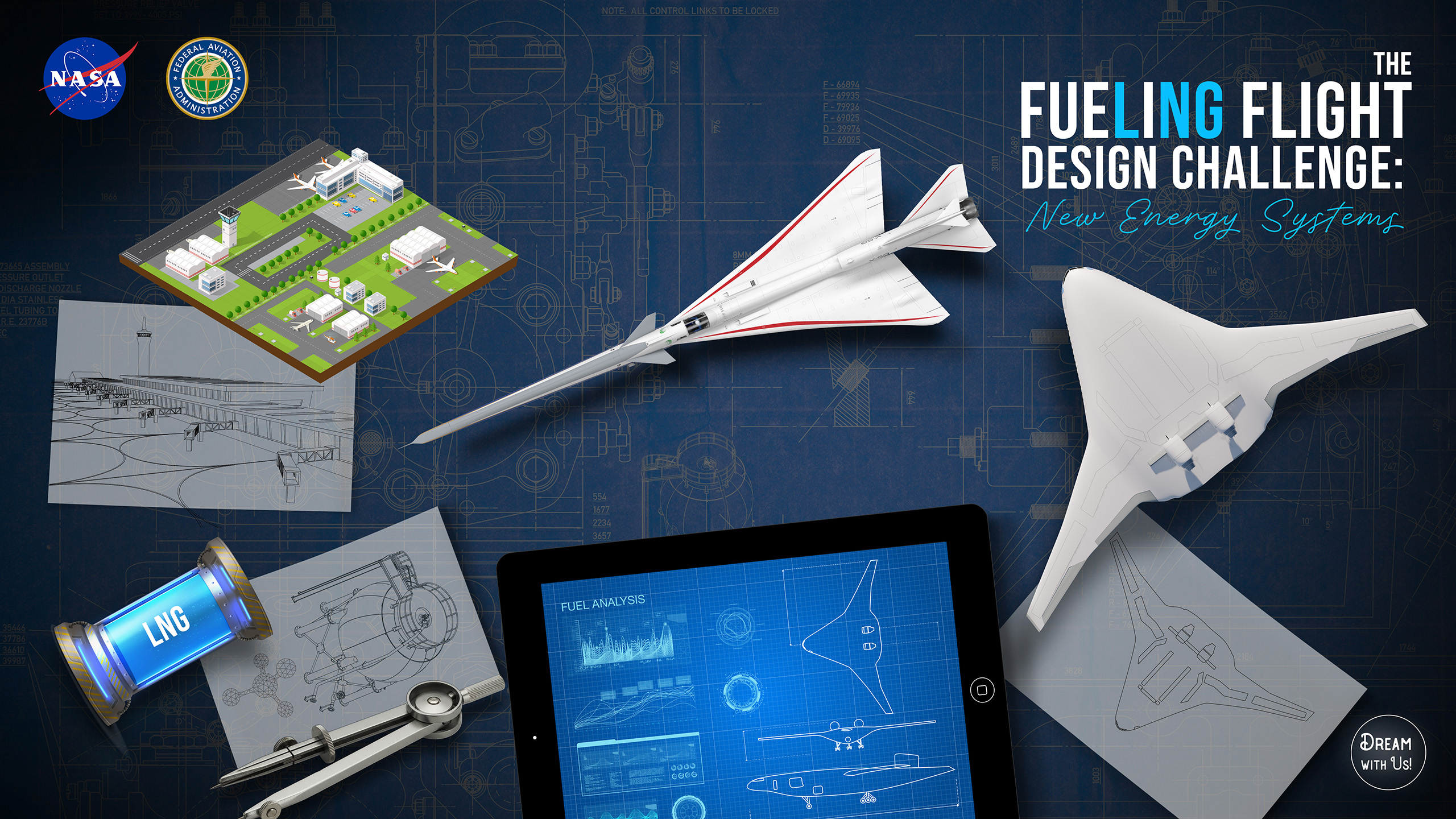
NASA's aeronautics division has officially opened its 2026-2027 Design With Us (DWU) competitions, running two parallel challenges under a shared theme: "Fueling Flight Design Challenge: New Energy Systems." One competition targets middle school students, the other high schoolers — each calibrated to match the participants' technical maturity while addressing the same core question: how do we power aviation differently?
The DWU program is a long-running NASA initiative designed to bridge the gap between classroom learning and real-world engineering problems. Rather than abstract exercises, students are expected to engage with the same constraints and trade-offs that professional engineers face. The middle school challenge leans toward accessible design thinking, while the high school version demands a more rigorous engineering process with tighter technical requirements.
Why energy systems, and why now
The United States' National Airspace System (NAS) is handling more traffic than ever, and the pressure to make aviation safer, quieter, and significantly less carbon-intensive is mounting. NASA is working alongside the Federal Aviation Administration (FAA), research universities, and aviation industry partners to evaluate alternatives to conventional jet fuel.
The range of technologies under consideration is broad: sustainable aviation fuels (SAF), battery-electric propulsion, hydrogen combustion, and hybrid-electric architectures all figure in ongoing research programs. By centering a student competition around these themes, NASA accomplishes two things at once — raising awareness among the next generation of engineers and tapping into unfiltered, unconventional thinking that professional environments don't always produce.
Building a pipeline, one competition at a time
The educational design of both challenges reflects NASA's broader workforce strategy. Students are expected to work in teams, define a problem, develop a solution concept, test their assumptions, and present their findings in a structured format — mirroring the iterative process used by NASA's own engineering teams.
Targeting two distinct age groups simultaneously is deliberate. It creates a pedagogical continuum: students who engage with the middle school challenge at a conceptual level can, two or three years later, tackle the high school version with greater depth and technical vocabulary. This continuity is central to how NASA builds long-term interest in aeronautical careers.
Both competitions were announced on September 25, 2026. Full participation guidelines, evaluation criteria, and supporting educational materials are available through the NASA Aeronautics website. Submission deadlines had not been formally confirmed in the information available at the time of publication.