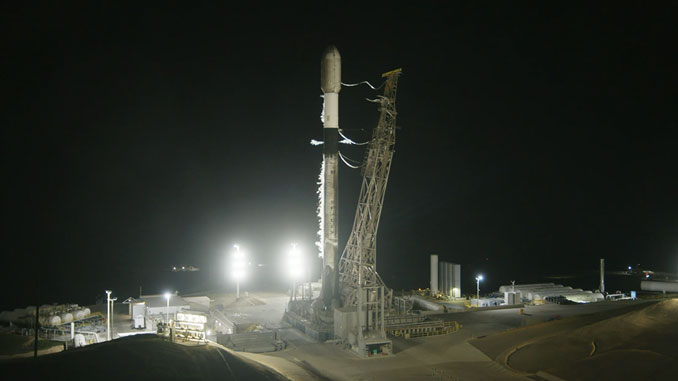
A launch that speaks for itself—because Roscosmos won't
The Progress MS-36 spacecraft is scheduled to launch aboard a Soyuz-2.1a rocket from the Baikonur Cosmodrome in Kazakhstan. It is the fourth and final Russian cargo delivery to the International Space Station planned for the year, carrying the usual mix of propellant, food, water, and scientific equipment for the station's resident crew.
What sets this flight apart from its predecessors is not what is on board, but what surrounds it: an almost complete absence of official communication from Roscosmos. The Russian space agency issued no press release and provided no advance media briefing. When journalists turned to NASA for details, the agency offered only a terse redirect: "I would ask you to please reach out to Roscosmos directly." That response, brief as it is, speaks volumes about the current state of relations between ISS partners.
Routine hardware, anything but routine context
Technically, Progress MS-36 is a standard mission. These uncrewed, automated freighters have been the backbone of ISS resupply for decades, delivering several metric tons of cargo per flight. The propellant fraction alone is critical: it allows ground controllers to periodically reboost the station's orbit, counteracting the drag of the residual upper atmosphere.
The geopolitical backdrop, however, is far from standard. Since Russia's invasion of Ukraine in February 2022, international space cooperation has been placed under severe strain. The ISS program remains one of the few active channels of practical collaboration between Washington and Moscow, but the information-sharing that once accompanied Russian missions has shrunk considerably. The contrast with pre-2022 norms—when Roscosmos regularly publicized its ISS activities—is stark and deliberate.
Counting down to 2030, and beyond
Progress MS-36 arrives at a pivotal moment for the station itself. NASA and its Western partners have committed to deorbiting the ISS by 2030, ending nearly three decades of continuous human presence. Roscosmos, for its part, has signaled its intention to exit the program before that deadline to focus resources on a future national station, known as ROSS—a project whose timeline remains deeply unclear.
Each docking of a Progress freighter is therefore also a quiet countdown. The partnership that built the ISS was itself a product of post-Cold War optimism; what, if anything, comes after it in orbit remains an open question. For now, an automated spacecraft is making its way toward the station, and official Moscow has chosen to let it do so without comment.