Two Classified Launches, Three Days Apart
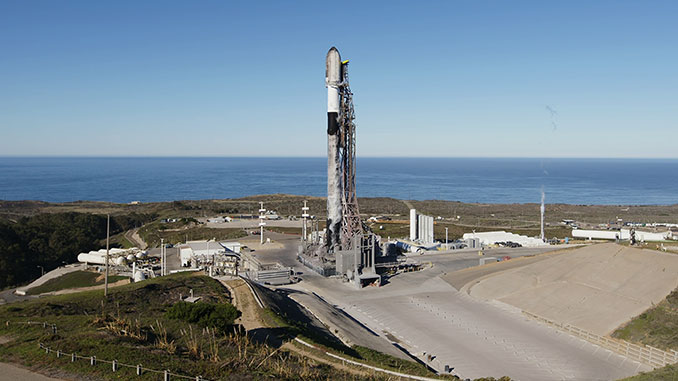
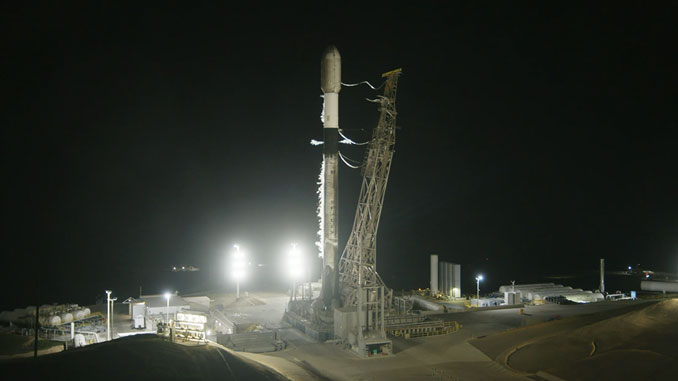
Vandenberg Space Force Base in California served as the backdrop for a tightly spaced pair of military launches in late November 2026. The first lifted off in the early hours of November 20, at 04:32 UTC, carrying a classified payload on behalf of the U.S. Space Force as part of the agency's ongoing series of so-called 'R' missions. Less than two days later, a second Falcon 9 stood ready on pad 4E for the NROL-136 mission, targeting a window opening at 12:16 UTC on November 21, this time serving the National Reconnaissance Office.
Both missions share the defining feature of government intelligence launches: almost nothing about their actual payloads is made public. Satellite mass, orbital parameters, and operational objectives remain shielded by classification. This opacity is standard practice for NRO and Space Force contracts, and it shows no sign of changing as the two agencies expand their orbital footprints.
NROL-136 and the NRO's Proliferated Constellation Strategy
NROL-136 is not an isolated event — it marks the fourth NRO launch of 2026 contributing to what the agency calls its proliferated low Earth orbit architecture. Rather than relying on a handful of large, expensive reconnaissance satellites, the NRO has shifted toward deploying greater numbers of smaller platforms distributed across multiple orbital slots. The underlying logic is resilience: a denser, more distributed network is harder to degrade through either adversarial action or individual technical failures.
The parallels with commercial mega-constellation models are deliberate. The NRO appears to have drawn lessons from the success of large-scale LEO networks and is applying similar thinking to classified intelligence gathering. Whether the specific satellites involved carry optical, radar, or signals intelligence payloads remains undisclosed.
Falcon 9 as the Pentagon's Workhorse Launcher
Taken together, these two missions reinforce what has become a well-established pattern: SpaceX holds a dominant position in U.S. national security launch. The Falcon 9's combination of a strong reliability record, rapid turnaround capability, and competitive pricing through booster reuse makes it a difficult proposition for rivals to displace on volume.
The U.S. Space Force, established in December 2019, has steadily increased its reliance on commercial launch providers for orbital transport. Its classified 'R' mission series — whose precise objectives are not publicly known — reflects this growing convergence between the defense establishment and the commercial space industry. Competitors including United Launch Alliance and Rocket Lab are actively competing for a share of this market, but SpaceX currently leads by a wide margin in launch frequency.
As Washington continues to invest in a larger and more capable military presence in low Earth orbit, the appetite for frequent, reliable access to space will only intensify. These November 2026 launches are a snapshot of that trajectory — though without declassified details, their full operational significance remains, by design, out of public view.