Another Launch, Another 27 Starlinks
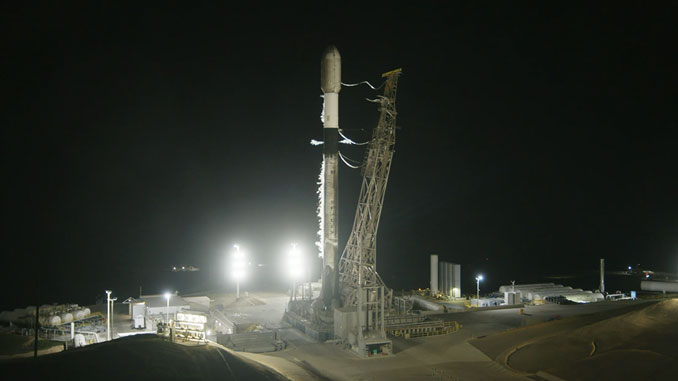
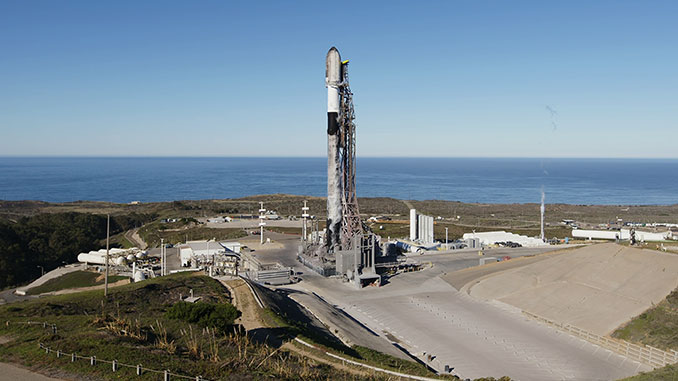
The pace of activity at Vandenberg Space Force Base shows no sign of easing. A Falcon 9 rocket was scheduled to lift off from Space Launch Complex 4E on the night of October 27, 2026, carrying 27 Starlink satellites under the mission designation Starlink 15-16. Liftoff was set for 10:46 p.m. Pacific Time — 05:46 UTC — as SpaceX continues its methodical expansion of the low Earth orbit broadband constellation, which already numbers in the thousands of active spacecraft.
The broader launch landscape this week extended well beyond California. Four rockets were lined up for flight across the United States and India, including a GSLV vehicle from the Indian Space Research Organisation. ISRO's continued presence in the orbital launch cadence serves as a reminder that the commercial space industry is no longer defined by a handful of Western actors alone.
Astranis Bets on a Dedicated Flight for Its Entire Block 4 Fleet
Away from the Starlink routine, a significant commercial decision drew attention on October 26. Astranis, a San Francisco-based company that builds compact geostationary communications satellites, announced it had upgraded its fourth launch agreement with SpaceX into a fully dedicated mission. Scheduled for 2028, the flight will carry the company's complete Block 4 satellite production run aboard a single Falcon 9.
The move is telling. Choosing a dedicated launch over a rideshare slot — the kind SpaceX offers through its Transporter program — carries a higher price tag, but it grants the customer precise control over injection orbit and scheduling. For Astranis, whose satellites are designed to deliver broadband connectivity to specific geographic regions from geostationary orbit, that orbital precision is not optional. It is a core engineering requirement that a shared rideshare trajectory simply cannot guarantee.
One Rocket, Many Masters — and a Market That Raises Questions
Taken together, these developments paint a clear picture of the orbital launch market in 2026: the Falcon 9 is, by almost any metric, the vehicle the industry runs on. Its accumulated reliability record — spanning hundreds of consecutive successful flights — has made it the default choice for operators ranging from SpaceX itself, deploying its own constellation, to NewSpace ventures like Astranis building out commercial satellite infrastructure.
That dominance, however, is not without complexity. A growing share of the global launch manifest riding on a single vehicle type raises legitimate questions about market resilience and strategic diversification — questions that agencies including NASA and ESA, along with sovereign launch programs worldwide, continue to monitor closely. Arianespace is working to restore competitiveness with Ariane 6, while Rocket Lab's Neutron vehicle remains in development with medium-lift ambitions. For now, though, neither has yet displaced Falcon 9 as the industry's backbone.
The week of October 26, 2026 offers a compact portrait of a maturing industry: proven launch vehicles carry the bulk of orbital traffic, while emerging operators attach themselves to those vehicles as the surest path to orbit — and to building a sustainable space business.