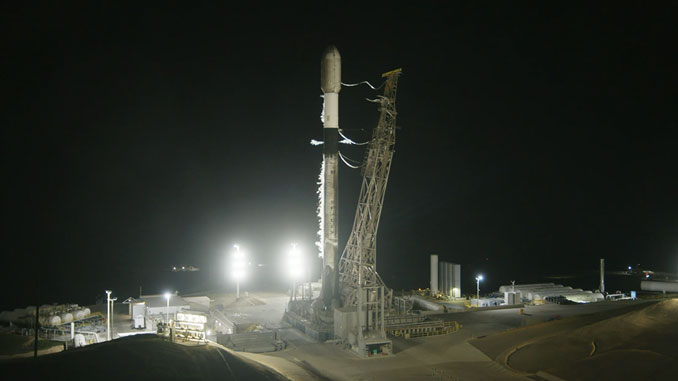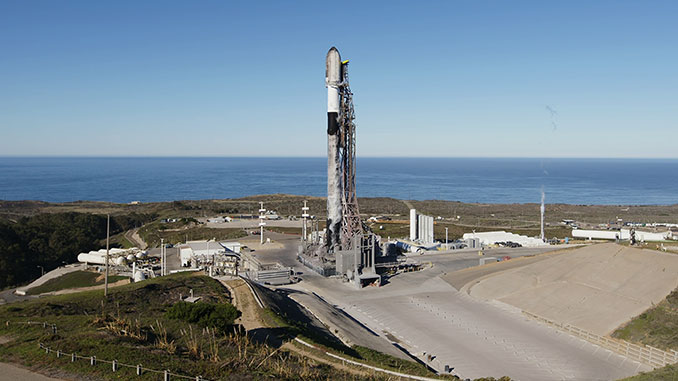
A Falcon 9 lights up the California coast
On the evening of October 30, 2026, a SpaceX Falcon 9 rocket lifted off from Launch Complex 4E at Vandenberg Space Force Base in California, carrying the Starlink 15-18 payload. Liftoff took place at 9:02 p.m. Pacific Time — just past midnight on the East Coast — right on schedule. The mission's objective was straightforward: deliver another 27 satellites to low-Earth orbit and further extend SpaceX's broadband constellation ahead of the year's end.
The launch marked yet another data point in SpaceX's high-frequency operational tempo. By leveraging the reusability of its Falcon 9 first stages, the company has managed to compress turnaround times between missions to a degree that rivals in the launch industry are still working to match.
What makes the V2 Mini Optimized different
The 27 spacecraft aboard this flight belong to SpaceX's V2 Mini Optimized variant, an incremental refinement of the V2 Mini design introduced in 2023. Compared to earlier Starlink generations, these satellites are engineered to deliver higher throughput per unit and make more efficient use of allocated spectrum. The practical result is that SpaceX can grow the network's overall capacity without needing to proportionally increase the raw number of satellites in orbit.
Each successive batch helps close coverage gaps — particularly over polar regions, remote ocean corridors, and areas underserved by conventional terrestrial infrastructure. Demand for this kind of connectivity has been growing steadily, driven by maritime operators, aviation customers, and governments seeking resilient, wide-area communication solutions outside the reach of ground-based networks.
Expansion that comes with open questions
SpaceX's continued build-out is not without friction. The global astronomical community, represented by bodies including the International Astronomical Union, has maintained sustained pressure on satellite operators over the brightness of their spacecraft as seen from Earth. Streaks left by Starlink satellites can compromise ground-based observations, and while SpaceX has introduced mitigation measures — including anti-reflective coatings and adjusted orbital orientations — astronomers argue that the sheer scale of the constellation makes these steps inadequate.
Orbital traffic management and radio frequency coordination represent equally complex challenges. Agencies such as ESA and regulatory bodies like the International Telecommunication Union are monitoring the proliferation of megaconstellations closely. With Amazon's Kuiper project ramping up, OneWeb continuing its own deployments, and Chinese operators developing comparable systems, the long-term sustainability of low-Earth orbit is a question that no single actor can answer unilaterally.
Starlink 15-18 is one mission among many still to come before 2026 draws to a close. SpaceX has shown no indication of easing its launch schedule, and further batches are expected in the weeks ahead.