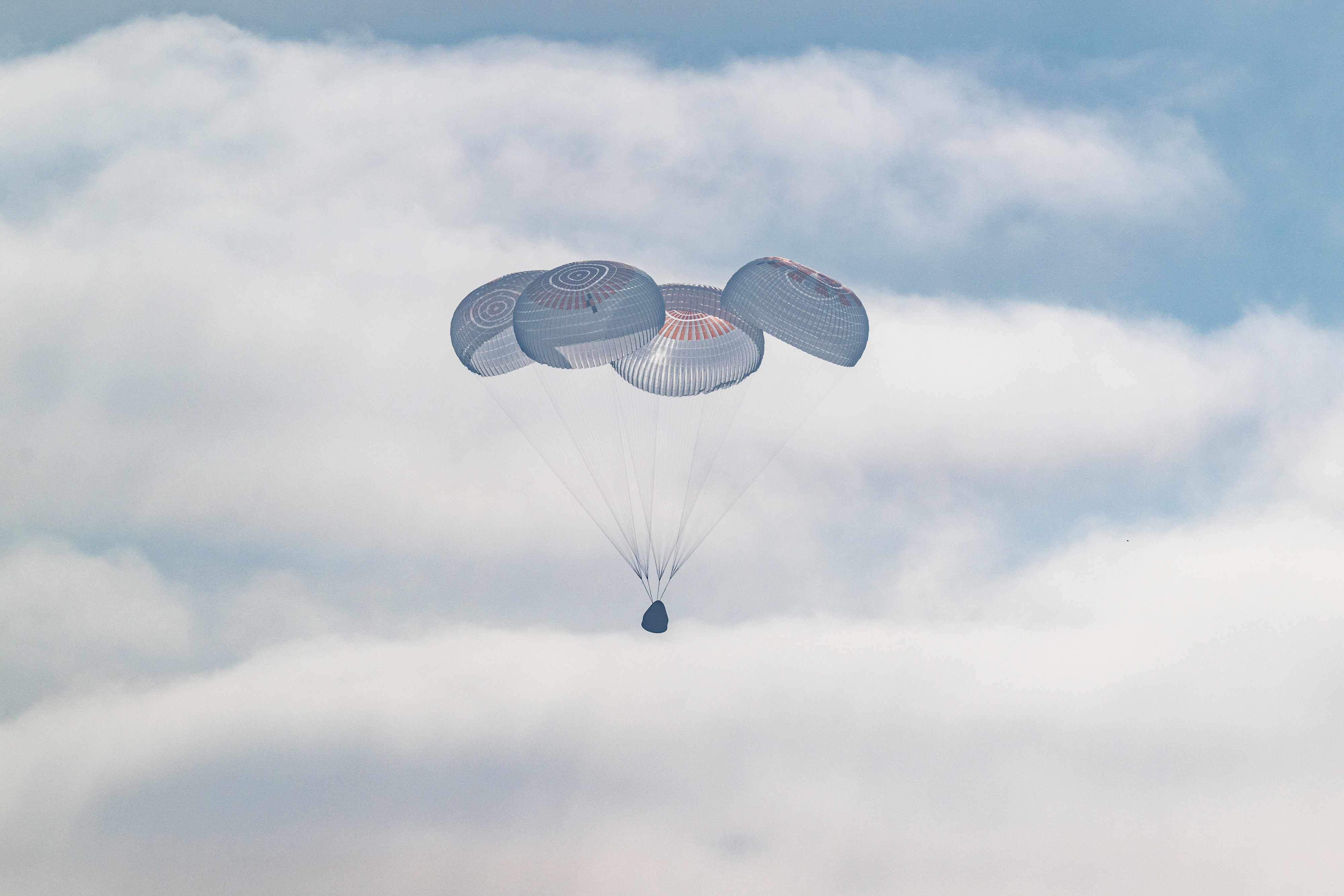
Crew-13 prepares to rotate astronauts to the ISS
NASA has scheduled two press conferences for Monday, August 3, at Johnson Space Center in Houston to brief the public and media on the upcoming SpaceX Crew-13 mission. The first event, set for noon Eastern Time, will feature mission leadership walking through the flight plan and objectives. A second briefing will give the crew an opportunity to speak about their planned work aboard the International Space Station.
Crew-13 is the latest rotation under NASA's Commercial Crew Program, which has relied on SpaceX's Crew Dragon capsule since 2020 to ferry astronauts to and from the orbiting laboratory. Missions typically carry four crew members drawn from partner agencies — including NASA, ESA, JAXA, and others — for stays lasting roughly six months. The precise crew composition and launch date had not been officially confirmed at the time this article was written.
An IPO that turns space ambition into a Wall Street story
Beyond its launch manifest, SpaceX is simultaneously navigating a transition that would have seemed far-fetched not long ago: an initial public offering. According to reporting by SpaceNews, the move marks the moment that space exploration, long a niche investment story, is becoming a mainstream capital markets narrative. For years, SpaceX has functioned as the de facto standard-bearer for the broader industry's ambitions, pitching a vision of an interplanetary civilization to investors, governments, and the public alike.
Going public introduces a new set of pressures. Listed companies must meet quarterly disclosure requirements, manage shareholder expectations, and operate under the scrutiny of short-term market cycles. SpaceX's core strategy, however, is built on long-horizon bets — the continued development of the Starship launch system, the expansion of the Starlink broadband constellation, and eventual crewed missions to the Moon and Mars. Balancing those timelines against market demands will be one of the defining management challenges of the next decade for the company.
One company, two clocks ticking at once
What stands out about SpaceX's situation in the summer of 2026 is the unusual convergence of two narratives that rarely unfold side by side: the operational — a crewed mission to coordinate, a launch window to meet, a crew to train in partnership with NASA — and the financial-strategic, with the documentation, roadshows, and disclosures that a public offering requires. Very few aerospace companies have faced both simultaneously at this scale.
For NASA, which depends heavily on SpaceX as its primary crew transport provider, the financial reinforcement that an IPO brings could be a stabilizing factor. Broader access to equity markets may help fund future vehicle development and sustain the cadence of ISS rotations and beyond. Whether public ownership changes the risk appetite or the stated priorities of a company whose founder has consistently put Mars at the center of its mission statement remains an open question — and one that markets will now have a direct stake in answering.