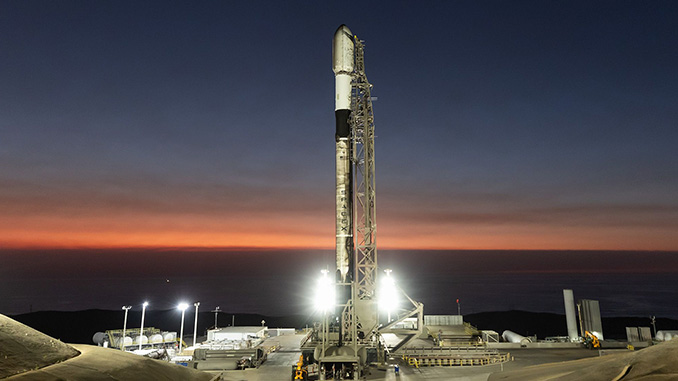
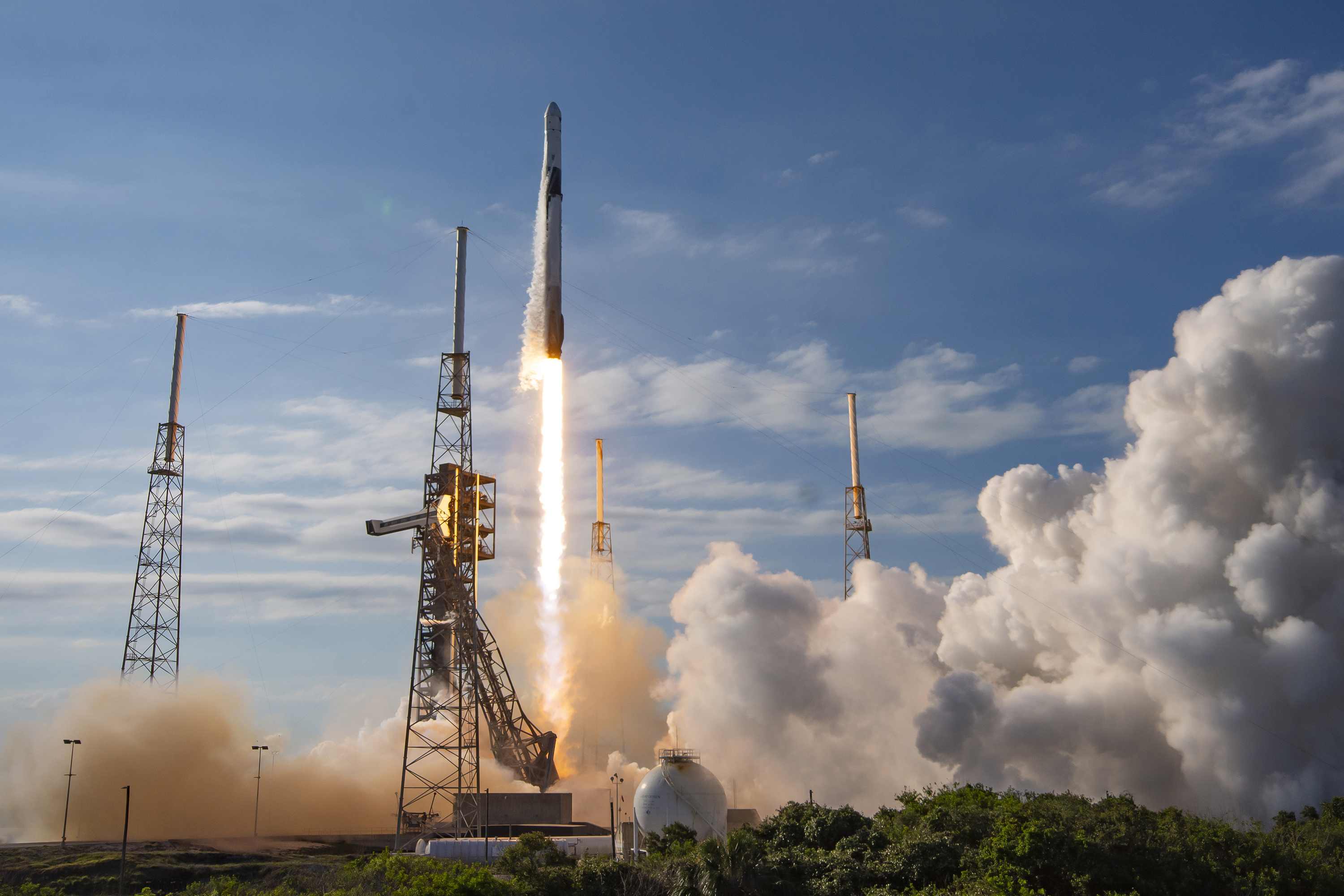
A pre-dawn departure from the California coast
A SpaceX Falcon 9 rocket was set to lift off from Space Launch Complex 4E at Vandenberg Space Force Base in the early hours of Friday, June 19, 2026. The 35-minute launch window opened at 1:40 a.m. Pacific Time — 8:40 UTC — under the characteristically clear skies of the California coast. The rocket's payload: an undisclosed number of satellites destined for the National Reconnaissance Office, the U.S. government agency responsible for designing, building, and operating the nation's intelligence-gathering satellites.
True to form for NRO missions, virtually all specifics regarding the cargo were withheld ahead of liftoff. The number of satellites on board, their intended orbital parameters, and the combined mass of the payload were not officially released — standard practice for missions of this classification level.
Starshield: Starlink's government-grade counterpart
Despite the official silence, informed observers tracking the mission believe the spacecraft belong to the Starshield program. Developed by SpaceX as a purpose-built government derivative of its Starlink broadband constellation, Starshield retains the core manufacturing philosophy of its commercial sibling — compact form factor, high-volume production, low Earth orbit deployment — while incorporating capabilities tailored to federal defense and intelligence requirements. These include hardened communications links, dedicated sensor payloads, and compatibility with classified military networks.
The NRO has steadily expanded its reliance on SpaceX over the past several years, routing an increasing share of its launch manifest through the company. This mirrors a broader shift in U.S. national security space policy, where commercial providers have taken on roles once reserved exclusively for traditional government contractors. Whether that concentration of sensitive missions in the hands of a single private operator poses long-term strategic risks remains an open question within policy circles.
Ten launches in one week: a new orbital tempo
The NRO mission was far from the only event on the week's agenda. According to a launch preview compiled by NASASpaceFlight, ten orbital flights were scheduled globally during the week of June 16, 2026 — a figure that underscores how dramatically the pace of space access has accelerated in recent years.
Launch sites across North America, Europe, and Asia were all active, with a mix of commercial, civil, and government payloads heading to orbit within days of one another. Communication constellations, Earth observation platforms, and institutional spacecraft now compete for slots in an increasingly congested manifest.
In that environment, the Falcon 9 continues to anchor much of the activity. Its combination of demonstrated reliability, rapid turnaround between flights, and proven first-stage recovery makes it the world's most frequently flown orbital vehicle by a considerable margin. Booster recovery was also anticipated for this NRO mission, though exact landing plans were not confirmed in pre-launch documentation.
As orbital cadence climbs and classified contracts grow in number, the line between commercial spaceflight and national security infrastructure continues to blur — a shift with consequences that extend well beyond any single launch window.