From Testing Ground to Operational Mission
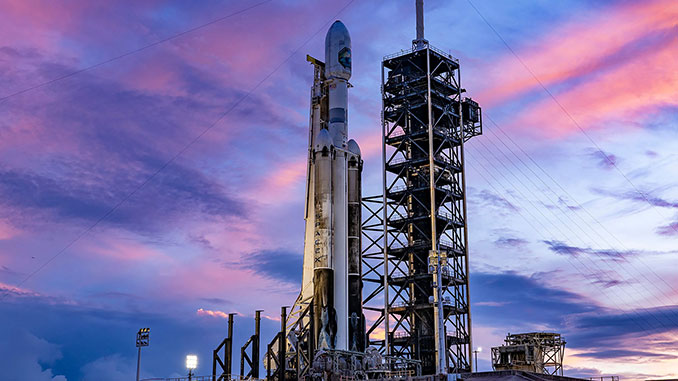
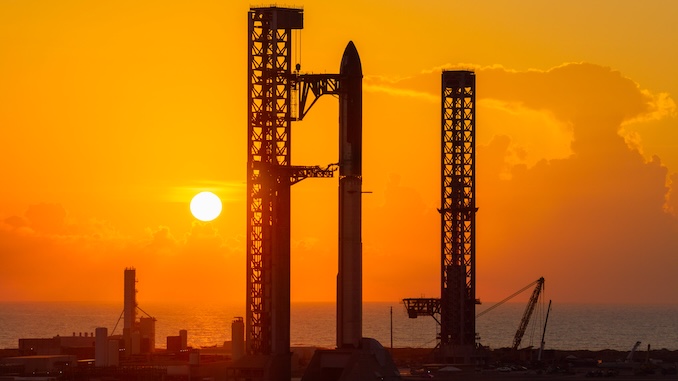
Starship has spent years proving it could survive its own ambition — early prototypes met fiery ends, later vehicles stuck their landings, and successive flights steadily expanded the envelope. Flight 14, set to lift off from Pad 2 at Starbase in South Texas, breaks from that experimental chapter in the most concrete way possible: it carries an operational payload destined for low Earth orbit. Twenty-six Starlink Version 3 satellites will ride inside Starship's cavernous payload bay, marking the commercial debut of the largest rocket ever flown.
The launch window spans 75 minutes, opening at 12:15 UTC. The full stack — Super Heavy booster and Starship upper stage — will work in tandem, with the upper stage responsible for deploying the satellites before attempting its own controlled atmospheric reentry. As of late September, the mission was still awaiting a launch license from the Federal Aviation Administration, though SpaceX had factored that regulatory step into its scheduling.
Why Starlink V3 Changes the Equation
The third-generation Starlink satellites are a meaningful step up from what currently populates SpaceX's constellation. Heavier and built to deliver substantially greater bandwidth per spacecraft, they present a straightforward problem for Falcon 9: the workhorse rocket that has handled the bulk of Starlink launches since 2019 simply cannot lift these platforms in the volumes SpaceX needs. Starship, designed from the outset to haul large quantities of mass to orbit in a single flight, becomes not just a convenient option but a structural necessity for scaling the next layer of the network.
SpaceX has already outlined a near-term flight manifest that anticipates multiple Starship missions in the months following Flight 14, spanning both commercial Starlink deployments and obligations tied to NASA's Artemis program, for which Starship was selected as the human landing system.
A Launch Market at an Inflection Point
Starship's operational entry arrives as the commercial launch industry faces broader pressures. Recent industry commentary has raised the question of whether the long era of steadily declining launch costs — driven largely by Falcon 9's reusability model — may be approaching a ceiling. Satellite operators have grown accustomed to a combination of low pricing and high reliability that may prove harder to sustain as launch demand continues to climb.
Smaller players are navigating their own trajectories: Rocket Lab continues to carve out a durable niche in the small-sat segment, while Astra, after a prolonged operational pause, has pointed toward an early 2027 return to flight. Against that backdrop, Starship represents a different value proposition — not the cheapest ride per kilogram, necessarily, but the ability to move large numbers of satellites in a single operation.
Should Flight 14 meet its objectives, the milestone will extend well beyond a technical achievement for SpaceX. It would signal the arrival of a new launch paradigm: reusable mega-rockets servicing mega-constellations at scale. Whether that paradigm can deliver on its economic promise — and at what cadence — is the question the industry will be watching closely in the months ahead.