A misidentified object hiding in plain sight
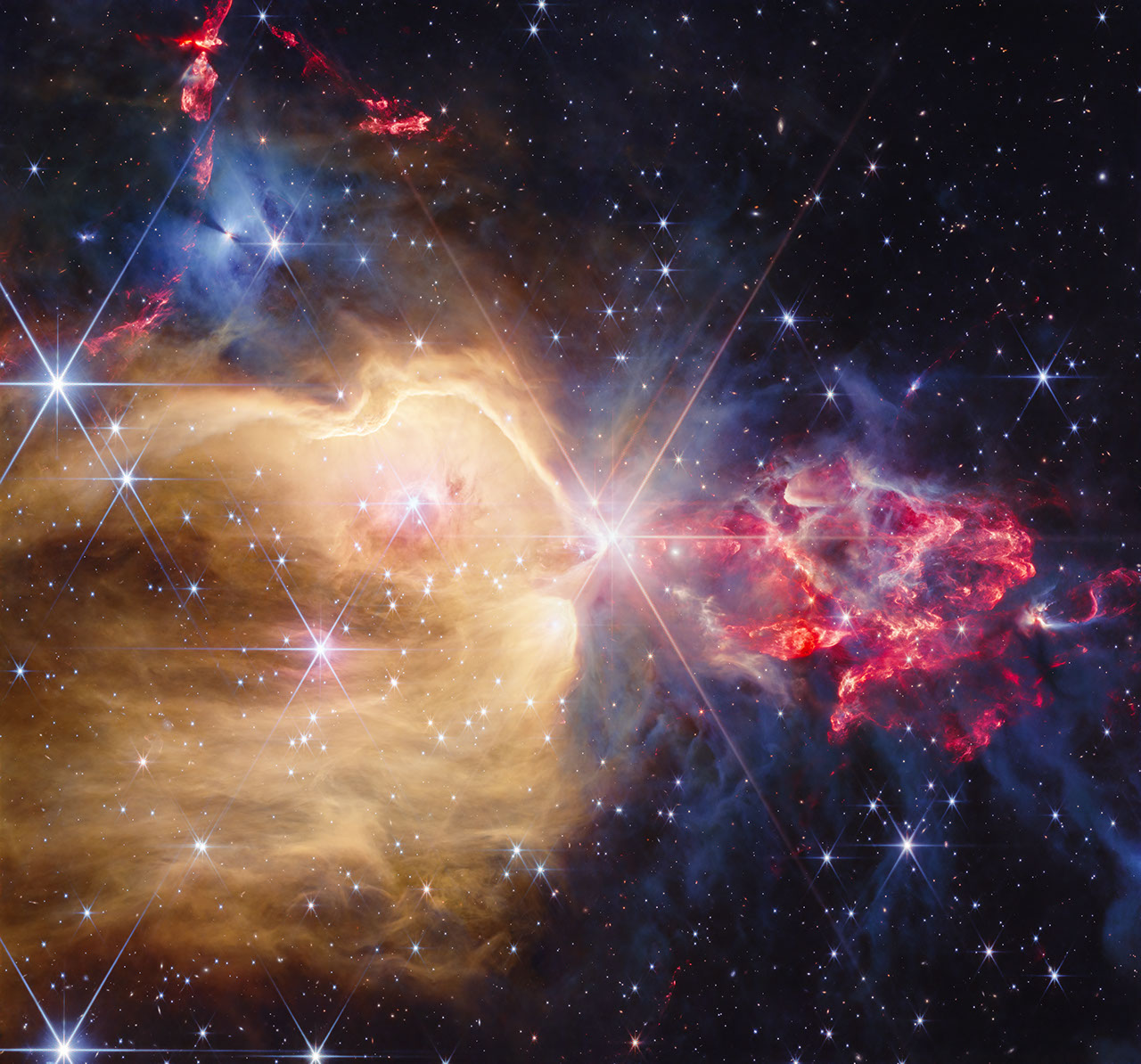
For years, Terzan 5 sat quietly in astronomical catalogues, filed under the familiar label of globular cluster — one of those compact, ancient balls of stars that orbit the outskirts of large galaxies. A new study using the NASA/ESA/CSA James Webb Space Telescope and the NASA/ESA Hubble Space Telescope has now shown that classification to be wrong. Terzan 5 belongs to an entirely different kind of object, one that researchers are calling a bulge fossil fragment — and it appears to be the first confirmed prototype of this newly defined class.
The difference matters enormously. A standard globular cluster contains stars that formed at roughly the same time, giving it a uniform stellar population. Terzan 5, by contrast, hosts stars from at least two distinct epochs of formation, separated by several billion years. That layered history points not to a simple cluster, but to a surviving fragment of the proto-galactic material that built the Milky Way's central bulge.
A window into the galaxy's earliest chapters
The galactic bulge — the dense, swelling core at the center of the Milky Way — took shape during the universe's first few billion years, through a turbulent process of mergers, accretion, and intense star formation. Most of the structures from that era have long since been disrupted or absorbed. Terzan 5 appears to have escaped that fate, preserved deep within the bulge itself as a kind of cosmic time capsule.
Disentangling its stellar populations required the combined power of both observatories. The region is heavily obscured by interstellar dust, which blocks visible light and makes Hubble's capabilities insufficient on their own. Webb's infrared sensitivity proved essential for cutting through that veil and resolving individual stars within one of the densest environments in the galaxy. Together, the two telescopes gave researchers an unprecedented view of Terzan 5's internal structure and age distribution.
Webb's busy week: a roasted giant planet too
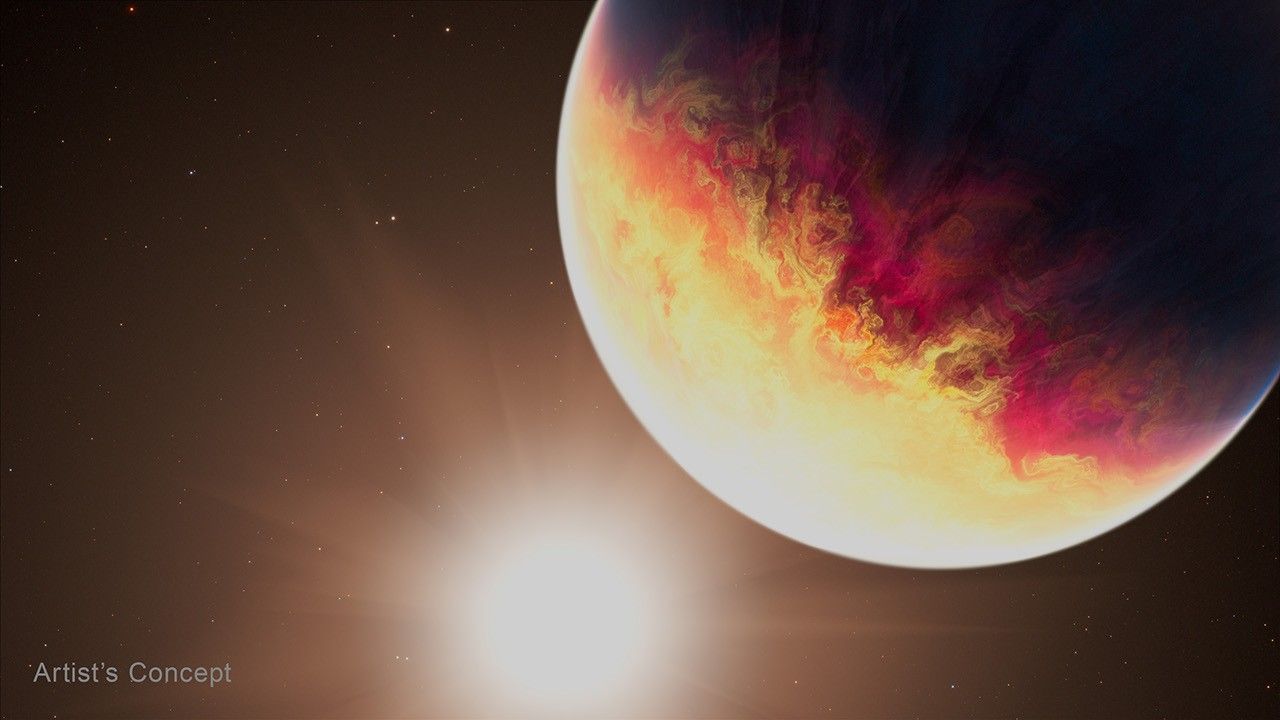
The same week brought another headline from the James Webb Space Telescope. A separate research team presented findings on HD 80606 b, a gas giant roughly four times the mass of Jupiter, orbiting its Sun-like host star on a highly elongated path. That extreme elliptical orbit sends the planet sweeping dangerously close to its star at regular intervals, triggering rapid and dramatic heating of its atmosphere. Webb's instruments were able to track those temperature changes in fine detail — a demonstration of the telescope's growing role in characterizing exoplanet atmospheres under dynamic conditions.
That two such different results emerged on the same day underscores just how broad Webb's scientific reach has become: from real-time atmospheric events on distant worlds to multi-billion-year-old relics embedded in our own galaxy's core.
If other bulge fossil fragments can be identified beyond Terzan 5, astronomers may gain a series of direct observational anchors for understanding how spiral galaxies like the Milky Way were assembled — no need to look to the distant universe when the evidence may be hiding much closer to home.