Critical infrastructure survives, gantry repair begins
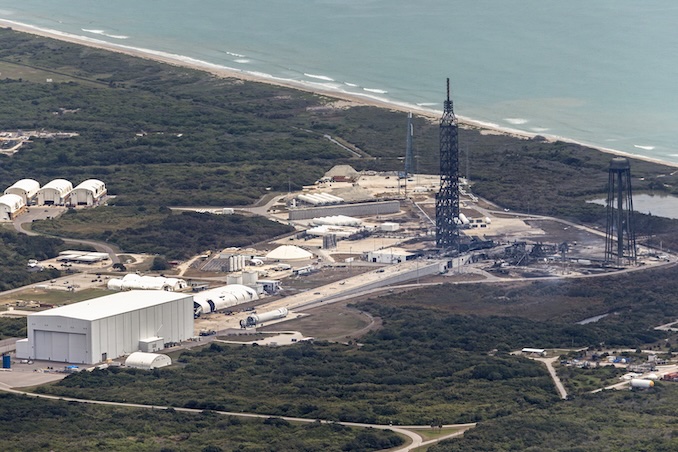
Launch Complex 36 at Cape Canaveral Space Force Station in Florida sustained visible damage following an incident whose precise cause has not yet been officially disclosed. The most consequential finding, however, points toward a manageable recovery. Blue Origin CEO Dave Limp took to social platform X shortly after the event to confirm that the propellant farm — encompassing liquid oxygen, liquid hydrogen, and liquefied natural gas storage tanks — came through the incident without structural compromise. The nearby vehicle processing hangar also emerged largely unscathed.
The main support gantry did sustain damage, but Limp noted that repairs can be carried out in place, avoiding any need to dismantle or relocate the structure. That distinction matters enormously for scheduling purposes. Blue Origin has already mobilized inspection, repair, and reconstruction teams at the site, signaling that the company intends to treat this as an engineering problem with a near-term solution rather than a prolonged setback.
A firm commitment to fly before December 31
Against that backdrop, Limp issued a direct public commitment: New Glenn will fly again before the end of 2026. The internal designation for this effort — Return to Flight, or RTF — carries real commercial weight. Since its debut mission in January 2025, New Glenn has steadily built credibility as a medium-to-heavy lift vehicle capable of serving both low Earth orbit and geostationary transfer orbit customers.
Any extended grounding would put that momentum at risk. The commercial launch market remains intensely competitive, with SpaceX's Falcon 9 holding a dominant position and United Launch Alliance's Vulcan Centaur working to establish its own track record. For Blue Origin, maintaining a predictable launch cadence is not merely a matter of reputation — it directly affects its ability to deliver on existing manifest commitments and compete for future contracts.
Open questions that will shape the timeline
The confidence expressed by Blue Origin's leadership is understandable in the context of crisis communication, but a number of variables remain unresolved. The specific cause of the incident has not been publicly confirmed, and no detailed assessment of the gantry repair scope has been released. Lead times for specialized components, workforce availability, and any safety reviews required by Space Force range authorities could all introduce friction into the stated schedule.
Blue Origin has not yet indicated how payloads already manifested on upcoming New Glenn missions will be handled during the stand-down period — whether they will be held, rescheduled, or redistributed to alternative launch providers. That question will weigh on commercial customers planning satellite deployment timelines.
The company's willingness to commit publicly to a year-end deadline sets a clear benchmark. Whether the pace of reconstruction at LC-36 matches that ambition will become apparent in the weeks ahead.